


Role of acetaldehyde in mediating the pharmacological and behavioral effects of alcohol
- PMID: 17718404
- PMCID: PMC6527032
Role of acetaldehyde in mediating the pharmacological and behavioral effects of alcohol
Abstract
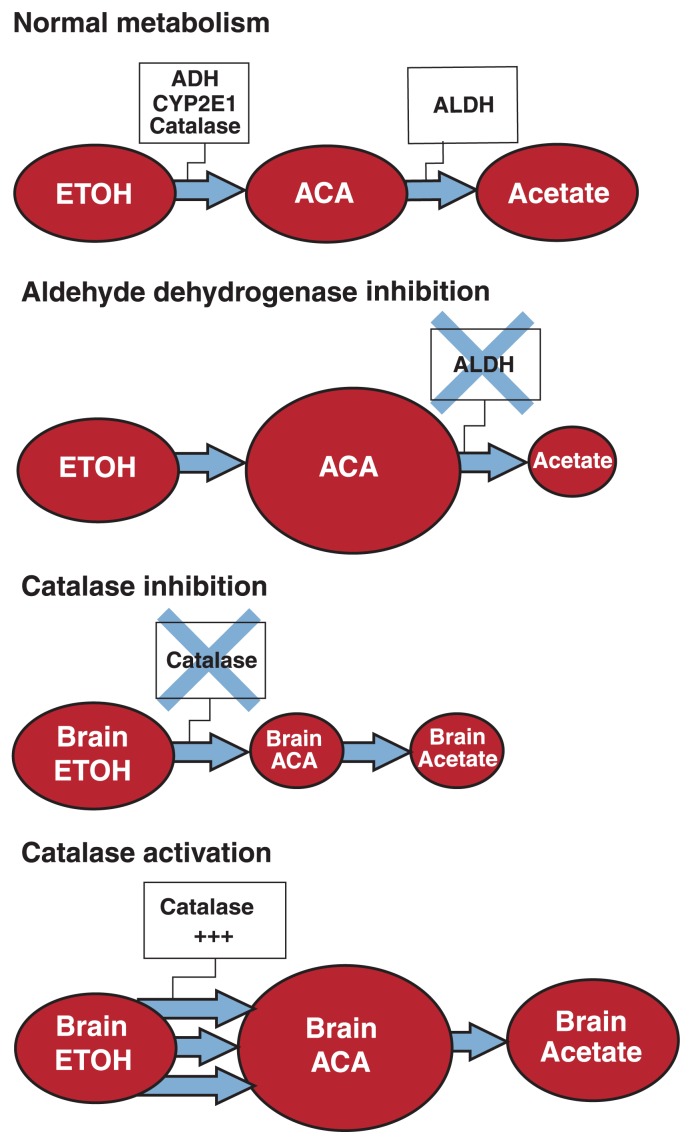
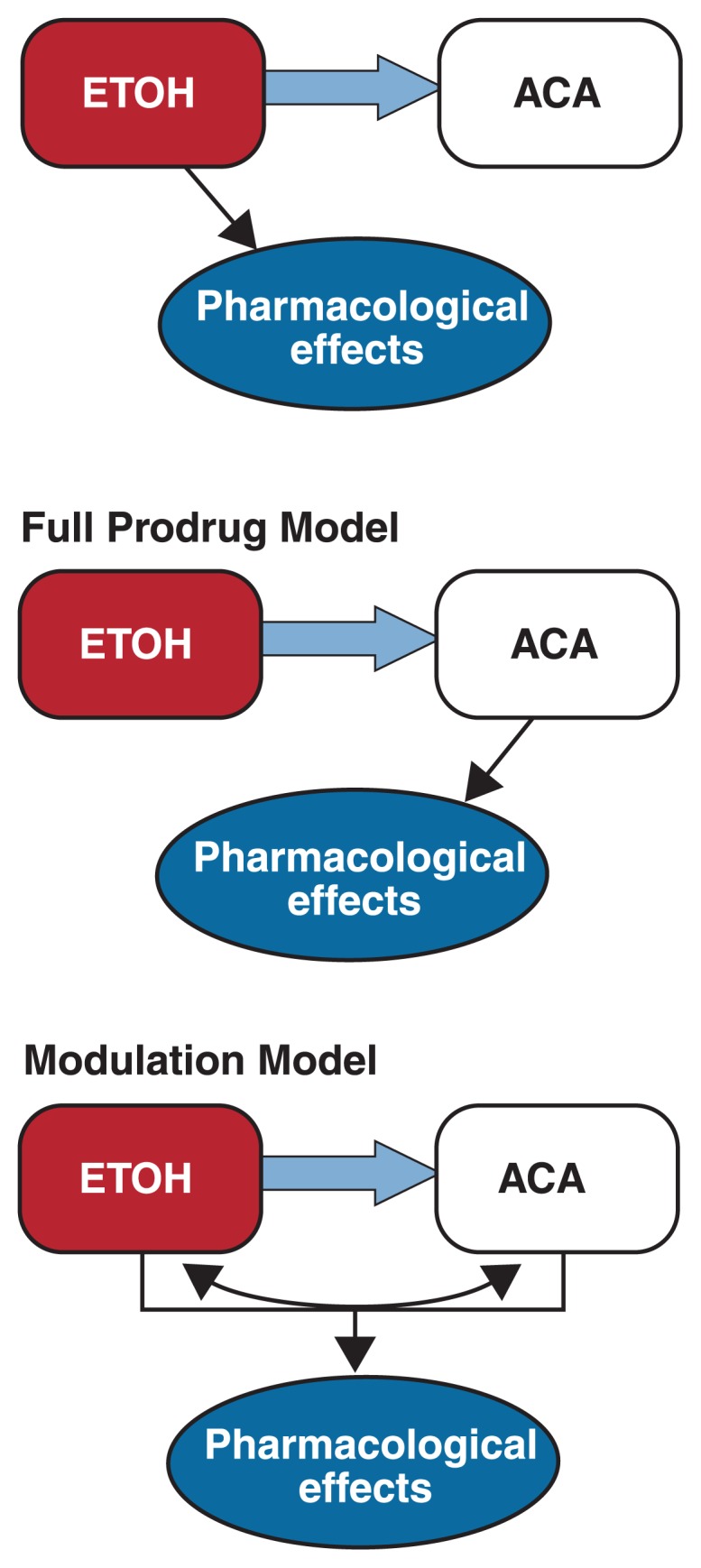
Acetaldehyde is the first active breakdown product (i.e., metabolite) generated during alcohol metabolism. It has toxic properties but also exerts other actions on the body (i.e., has pharmacological properties). Recent studies have shown that the direct administration of acetaldehyde, especially into the brain, induces several effects that mimic those of alcohol. High doses of acetaldehyde induce sedative as well as movement- and memory-impairing effects, whereas lower doses produce behavioral effects (e.g., stimulation and reinforcement) that are characteristic of addictive drugs. When acetaldehyde accumulates outside the brain (i.e., in the periphery), adverse effects predominate and prevent further alcohol drinking. To investigate the role of acetaldehyde in mediating alcohol's effects, investigators have pharmacologically manipulated alcohol metabolism and the production of acetaldehyde within the body (i.e., endogenous acetaldehyde production). Studies manipulating the activity of the enzyme catalase, which promotes acetaldehyde production in the brain, suggest that acetaldehyde contributes to many behavioral effects of alcohol, especially its stimulant properties. However, it remains controversial whether acetaldehyde concentrations obtained under normal physiological conditions are sufficient to induce significant pharmacological effects. Current evidence suggests that the contribution of acetaldehyde to alcohol's effects is best explained by a process in which acetaldehyde modulates, rather than mediates, some of alcohol's effects.
Conflict of interest statement
The authors declare that they have no competing financial interests.
Figures
References
-
- Aragon CMG, Amit Z. The effect of 3amino-1,2,4-triazole on voluntary ethanol consumption: Evidence for brain catalase involvement in the mechanism of action. Neuropharmacology. 1992;31:709–712. - PubMed
-
- Aragon CMG, Pesold CN, Amit Z. Ethanol-induced motor activity in normal and acatalasemic mice. Alcohol. 1992;9:207–211. - PubMed
-
- Arizzi-LaFrance MN, Correa M, Aragon CMG, Salamone JD. Motor stimulant effects of ethanol injected into the substantia nigra pars reticulata: Importance of catalase-mediated metabolism and the role of acetaldehyde. Neuropsychopharmacology. 2006;31:997–1008. - PubMed
-
- Belluzzi JD, Wang R, Leslie FM. Acetaldehyde enhances acquisition of nicotine self-administration in adolescent rats. Neuropsychopharmacology. 2005;30:705–712. - PubMed
-
- Brown ZW, Amit Z, Rockman GE. Intraventricular self-administration of acetaldehyde, but not ethanol, in naïve laboratory rats. Psychopharmacology. 1979;64:271–276. - PubMed
Publication types
MeSH terms
Substances
LinkOut - more resources
Full Text Sources
Medical