


Influence of unilateral disc displacement on the stress response of the temporomandibular joint discs during opening and mastication
- PMID: 17725577
- PMCID: PMC2375827
- DOI: 10.1111/j.1469-7580.2007.00796.x
Influence of unilateral disc displacement on the stress response of the temporomandibular joint discs during opening and mastication
Abstract
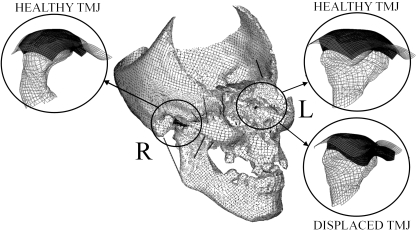
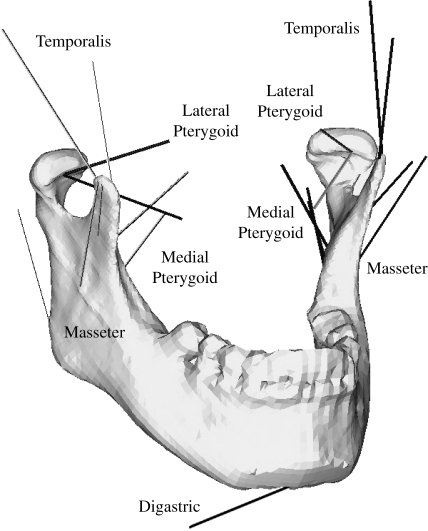
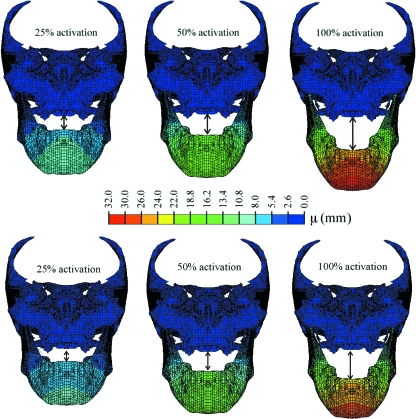
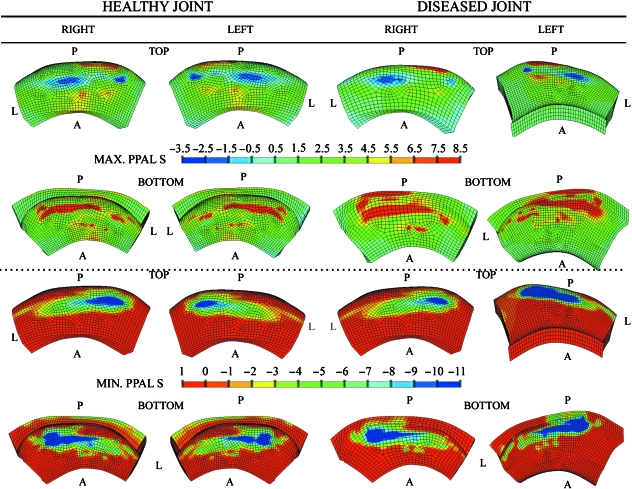
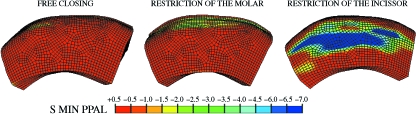
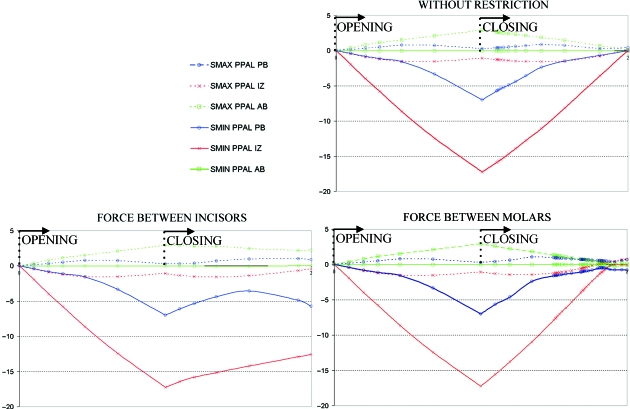
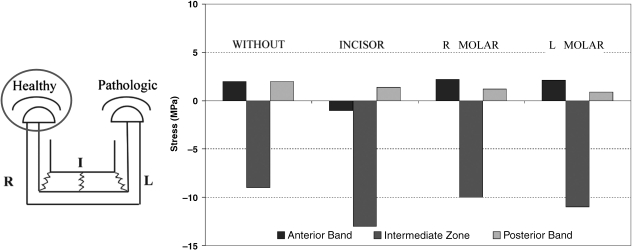
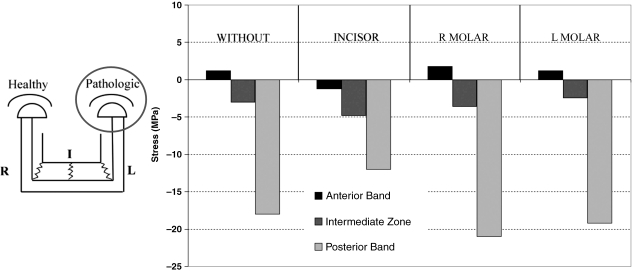
The temporomandibular joint plays a crucial role in human mastication acting as a guide of jaw movements. During these movements, the joint is subjected to loads which cause stresses and deformations in its cartilaginous structures. A perfect balance between the two sides of the joint is essential to maintain the physiological stress level within the tissues. Therefore, it has been suggested that a derangement of the joint is a contributing factor in the development of mandibular asymmetry, especially if problems of the temporomandibular joint start in childhood or adolescence. To analyze the movement of the mandible and the stresses undergone by the discs, two finite element models of the human temporomandibular joint including the masticatory system were developed, one corresponding to a healthy joint and the other with a unilateral anterior disc displacement with their movement controlled by muscle activation. A fibre-reinforced porohyperelastic model was used to simulate the behaviour of the articular discs. The stress distribution was analyzed in both models during free opening and closing, and during the introduction of a resistant force between incisors or molars. It was found that a slight unilateral anterior disc displacement does not lead to mandibular asymmetry but to a slight decrease of the maximum gape. With the introduction of a restriction between incisors, the maximum stresses moved to the anterior band in contrast to what happened if the restriction was imposed between molars where maximum stresses were located more posteriorly. Finally, the presence of a unilateral displacement of the disc involved a strong change in the overall behaviour of the joint including also the healthy side, where the maximum stresses moved to the posterior part.
Figures

References
-
- Ahn SJ, Kim TW, Nahm DS. Cephalometric keys to internal derangement of temporomandibular joint in women with Class II malocclusions. Am J Orthod Dentofacial Orthop. 2004;126:486–94. - PubMed
-
- Annandale T. On displacement of intraarticular cartilage of the lower jaw and its treatment by operation. Lancet. 1987;1:411–412.
-
- Berkovitz BKB. Collagen crimping in the intra-articular disc and articular surfaces of the human temporomandibular joint. Arch Oral Biol. 2000;45:749–756. - PubMed
-
- Byun ES, Ahn SJ, Kim TW. Relationship between internal derangement of the temporomandibular joint and dentofacial morphology in women with anterior open bite. Am J Orthod Dentofacial Orthop. 2005;128:87–95. - PubMed
-
- Eberhard D, Bantleon HP, Steger W. Functional magnetic resonance imaging of temporomandibular joint disorders. European Journal of Orthodontics. 2000;22:489–497. - PubMed
Publication types
MeSH terms
LinkOut - more resources
Full Text Sources
Medical
