


Laparoscopic peritoneal dialysis catheter insertion using a Quinton percutaneous insertion kit
- PMID: 17761082
- PMCID: PMC3015720
Laparoscopic peritoneal dialysis catheter insertion using a Quinton percutaneous insertion kit
Abstract
Objective: We assessed a unique technique of laparoscopic peritoneal dialysis (PD) catheter insertion which can minimize catheter dysfunction.
Methods: We performed a retrospective review of patients undergoing laparoscopic PD catheter placement with a Quinton percutaneous insertion kit between July 2000 and December 2004.
Results: Thirty-one catheters were placed laparoscopically. The mean operating time was 52 minutes. Adhesiolysis was required in 9 (29%) and omentectomy or omentopexy in 3 (10%) cases. Late complications included catheter dysfunction in 2 patients (6.5%), debilitating abdominal pain requiring catheter removal in 1 patient, and 1 trocar-site hernia. The mean follow-up was 17 months.
Conclusions: Laparoscopic PD catheter insertion using a Quinton percutaneous insertion kit is safe, reproducible, and effective. It facilitates placement of the catheter tip into the pelvis and allows adhesiolysis, omentectomy, or omentopexy when necessary. Utilization of this technique results in a low rate of PD catheter dysfunction.
Figures
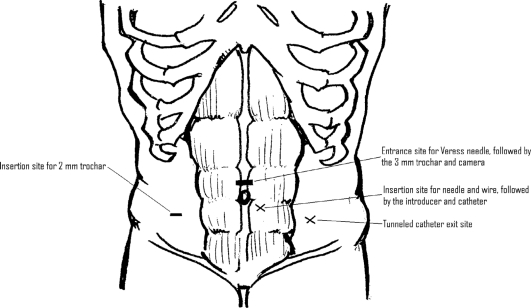
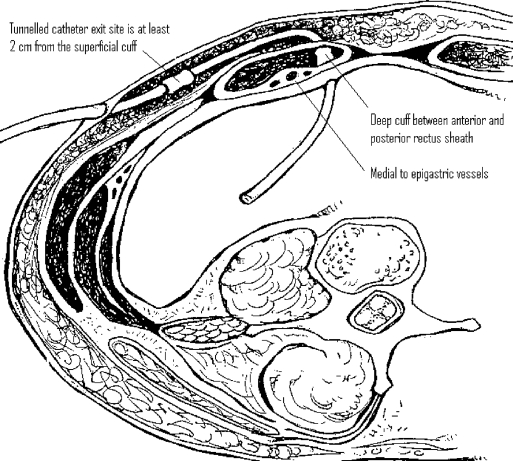
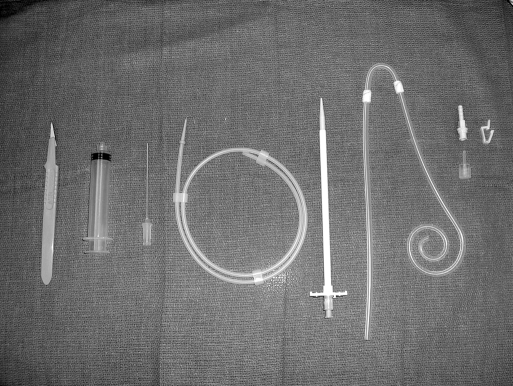
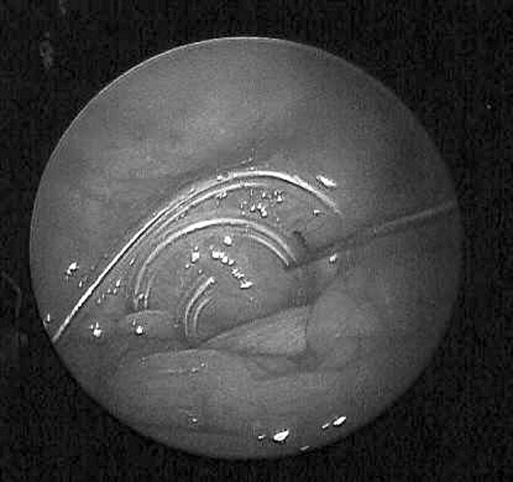
References
-
- Tenckhoff H, Schechter H. A bacteriologically safe perito-neal access device. Trans Am Soc Artif Intern Organs. 1968;14:181–187 - PubMed
-
- Nghiem DD. A technique of catheter insertion for uncomplicated peritoneal dialysis. Surg Gynecol Obstet. 1983;157:573–576 - PubMed
-
- Cronen PW, Moss JP, Simpson T, Rao M, Cowles L. Tenck-hoff catheter placement: surgical aspects. Am Surg. 1985;51(11):627–629 - PubMed
-
- Bullmaster JR, Miller SF, Finley RK, Jones LM. Surgical aspects of the Tenckhoff peritoneal dialysis catheter. A 7 year experience. Am J Surg. 1985;149:339–342 - PubMed
-
- Olcott C, Feldman CA, Coplon NS, Oppenheimer ML, Mehigan JT. Continuous ambulatory peritoneal dialysis: Technique of catheter insertion and management of associated surgical complications. Am J Surg. 1983;146(1):98–102 - PubMed
MeSH terms
LinkOut - more resources
Full Text Sources
Medical