Black-White mortality from HIV in the United States before and after introduction of highly active antiretroviral therapy in 1996
- PMID: 17761583
- PMCID: PMC1994194
- DOI: 10.2105/AJPH.2005.081489
Black-White mortality from HIV in the United States before and after introduction of highly active antiretroviral therapy in 1996
Abstract
Objectives: We sought to describe Black-White differences in HIV disease mortality before and after the introduction of highly active antiretroviral treatment (HAART).
Methods: Black-White mortality from HIV is described for the nation as a whole. We performed regression analyses to predict county-level mortality for Black men aged 25-84 years and the corresponding Black:White male mortality ratios (disparities) in 140 counties with reliable Black mortality for 1999-2002.
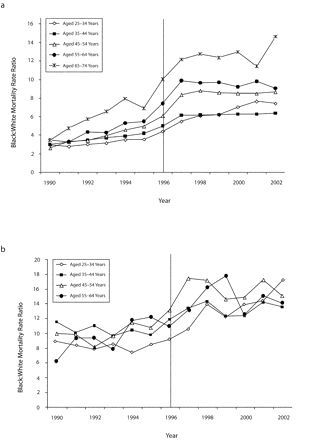
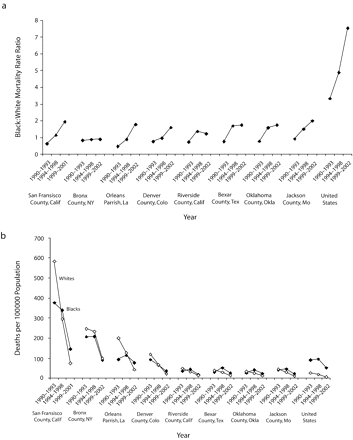
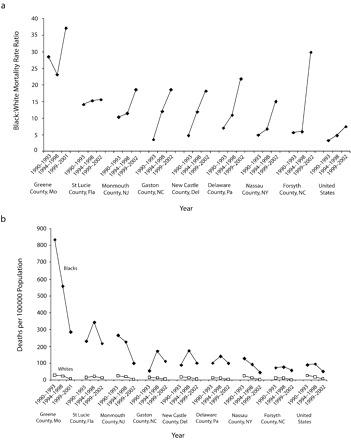
Results: National Black-White disparities widened significantly after the introduction of HAART, especially among women and the elderly. In county regression analyses, contextual socioeconomic status (SES) was not a significant predictor of Black:White mortality rate ratio after we controlled for percentage of the population who were Black and percentage of the population who were Hispanic, and neither contextual SES nor race/ethnicity were significant predictors after we controlled for pre-HAART mortality. Contextual SES, race, and pre-HAART mortality were all significant and independent predictors of mortality among Black men.
Conclusions: Although nearly all segments of the Black population experienced widened post-HAART disparities, disparities were not inevitable and tended to reflect pre-HAART levels. Public health policymakers should consider the hypothesis of unequal diffusion of the HAART innovation, with place effects rendering some communities more vulnerable than others to this potential problem.
Figures
References
-
- Institute of Medicine. Unequal Treatment: Confronting Racial and Ethnic Disparities in Health Care. Washington, DC: National Academies Press; 2002. - PubMed
-
- Wong MD, Shapiro MF, Bascardin WI, et al. Contribution of major diseases to disparities in mortality. N Engl J Med. 2002;347:1585–1592. - PubMed
-
- Health, United States, 2004, With Chartbook on Trends in the Health of Americans. Hyattsville, Md: National Center for Health Statistics; 2004. - PubMed
-
- US Centers for Disease Control and Prevention. Basic statistics. Available at: http://www.cdc.gov/hiv/stats.htm#aidsrace. Accessed June 17, 2007.
-
- Nakashima AK, Fleming PL. HIV/AIDS surveillance in the United States, 1981–2001. J Acquir Immune Defic Syndr. 2003;32:S68–S85. - PubMed
Publication types
MeSH terms
Grants and funding
LinkOut - more resources
Full Text Sources
Medical