Muscular exercise can cause highly pathological liver function tests in healthy men
- PMID: 17764474
- PMCID: PMC2291230
- DOI: 10.1111/j.1365-2125.2007.03001.x
Muscular exercise can cause highly pathological liver function tests in healthy men
Abstract
What is already known about this subject: The occurrence of idiosyncratic drug hepatotoxicity is a major problem in all phases of clinical drug development and the leading cause of postmarketing warnings and withdrawals. Physical exercise can result in transient elevations of liver function tests. There is no consensus in the literature on which forms of exercise may cause changes in liver function tests and to what extent.
What this study adds: Weightlifting results in profound increases in liver function tests in healthy men used to moderate physical activity, not including weightlifting. Liver function tests are significantly increased for at least 7 days after weightlifting. It is important to impose relevant restrictions on heavy muscular exercise prior to and during clinical studies.
Aim: To investigate the effect of intensive muscular exercise (weightlifting) on clinical chemistry parameters reflecting liver function in healthy men.
Methods: Fifteen healthy men, used to moderate physical activity not including weightlifting, performed an 1 h long weightlifting programme. Blood was sampled for clinical chemistry parameters [aspartate aminotransferase (AST), alanine aminotransferase (ALT), lactate dehydrogenase (LD), gamma-glutamyl transferase (gamma GT), alkaline phosphatase (ALP), bilirubin, creatine kinase (CK) and myoglobin] at repeated intervals during 7 days postexercise and at a follow-up examination 10-12 days postexercise.
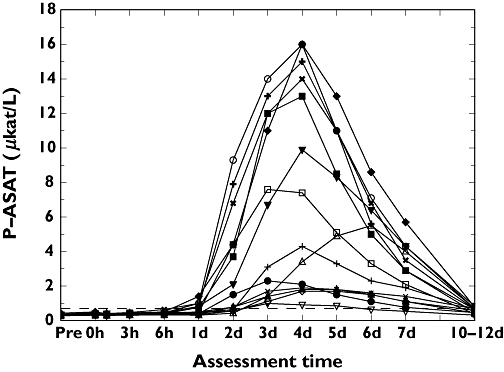
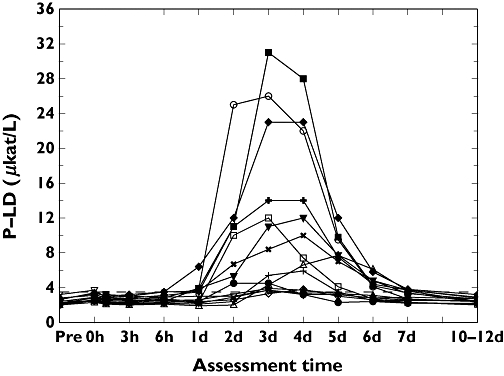
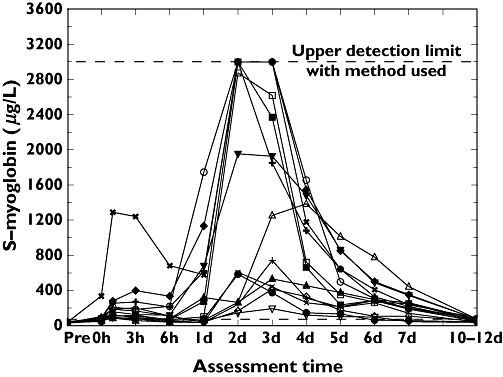
Results: Five out of eight studied clinical chemistry parameters (AST, ALT, LD, CK and myoglobin) increased significantly after exercise (P < 0.01) and remained increased for at least 7 days postexercise. Bilirubin, gamma GT and ALP remained within the normal range.
Conclusion: The liver function parameters, AST and ALT, were significantly increased for at least 7 days after the exercise. In addition, LD and, in particular, CK and myoglobin showed highly elevated levels. These findings highlight the importance of imposing restrictions on weightlifting prior to and during clinical studies. Intensive muscular exercise, e.g. weightlifting, should also be considered as a cause of asymptomatic elevations of liver function tests in daily clinical practice.
Figures



Comment in
-
Enzyme elevations with muscle injury: know what to look for!Br J Clin Pharmacol. 2008 Nov;66(5):725. doi: 10.1111/j.1365-2125.2008.03244.x. Epub 2008 Jul 28. Br J Clin Pharmacol. 2008. PMID: 18662292 Free PMC article. No abstract available.
References
-
- Giboney PT. Mildly elevated liver transaminase levels in the asymptomatic patient. Am Fam Physician. 2005;71:1105–10. - PubMed
-
- Loll H, Hilscher A. Change of substrate concentration and enzyme activity in serum by physical activity [in German] Artzl Forsch. 1958;12:II/85–6. - PubMed
-
- Halonen P, Konttinen A. Effect of physical exercise on some enzymes in the serum. Nature. 1962;193:942–4. - PubMed
-
- Hong CZ, Lien IN. Metabolic effects of exhaustive training of athletes. Arch Phys Med Rehabil. 1984;65:362–5. - PubMed
Publication types
MeSH terms
Substances
LinkOut - more resources
Full Text Sources
Research Materials
Miscellaneous