


Reed bunting females increase fitness through extra-pair mating with genetically dissimilar males
- PMID: 17785270
- PMCID: PMC2288684
- DOI: 10.1098/rspb.2007.0799
Reed bunting females increase fitness through extra-pair mating with genetically dissimilar males
Abstract
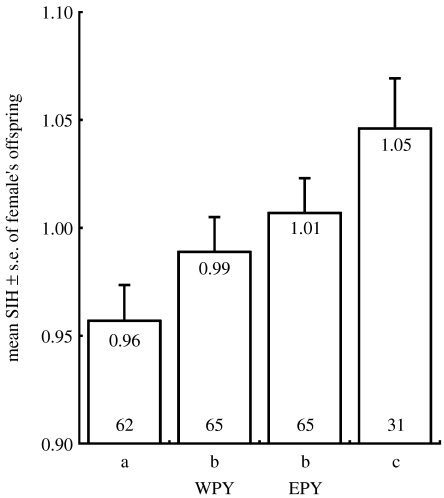
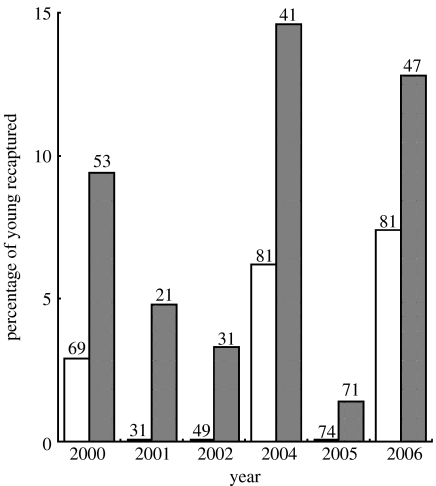
Females of many socially monogamous species accept or even actively seek copulations outside the social pair bond. As females cannot increase the number of offspring with promiscuous behaviour, the question arises why they engage in extra-pair mating. We used microsatellite data to determine paternity, heterozygosity and genetic relatedness in the reed bunting (Emberiza schoeniclus), a species with high levels of extra-pair paternity (EPP). We found that extra-pair young (EPY) were more heterozygous than within-pair young (WPY). The high heterozygosity of the EPY resulted from a low genetic similarity between females and their extra-pair mates. EPY were heavier and larger when compared with their maternal half-siblings shortly before they left the nest. Recapture data indicated a higher fledgling survival of EPY compared with WPY. Our data suggest that reed bunting females increase the viability of their offspring and thus fitness through extra-pair mating with genetically dissimilar males.
Figures
References
-
- Amos W, Wilmer J.W, Fullard K, Burg T.M, Croxall J.P, Bloch D, Coulson T. The influence of parental relatedness on reproductive success. Proc. R. Soc. B. 2001;268:2021–2027. doi:10.1098/rspb.2001.1751 - DOI - PMC - PubMed
-
- Andersson M. Princeton University Press; Princeton, NJ: 1994. Sexual selection.
-
- Arnqvist G, Kirkpatrick M. The evolution of infidelity in socially monogamous passerines: the strength of direct and indirect selection on extrapair copulation behavior in females. Am. Nat. 2005;168:26–37. doi:10.1086/429350 - DOI - PubMed
-
- Barber C.A, Robertson R.J. Timing of copulations and the pattern of paternity in relation to laying order in tree swallows Tachycineta bicolor. J. Avian Biol. 2007;38:249–254. doi:10.1111/j.0908-8857.2007.04042.x - DOI
-
- Birkhead T.R, Pizzari T. Postcopulatory sexual selection. Nat. Rev. Genet. 2002;3:262–273. doi:10.1038/nrg774 - DOI - PubMed
Publication types
MeSH terms
LinkOut - more resources
Full Text Sources
Research Materials
