


Accelerated telomere erosion is associated with a declining immune function of caregivers of Alzheimer's disease patients
- PMID: 17785865
- PMCID: PMC2262924
- DOI: 10.4049/jimmunol.179.6.4249
Accelerated telomere erosion is associated with a declining immune function of caregivers of Alzheimer's disease patients
Abstract
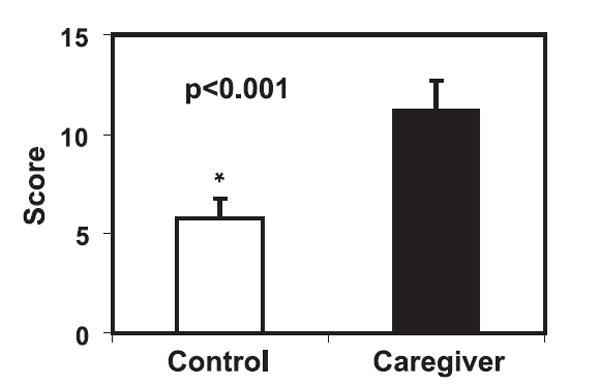
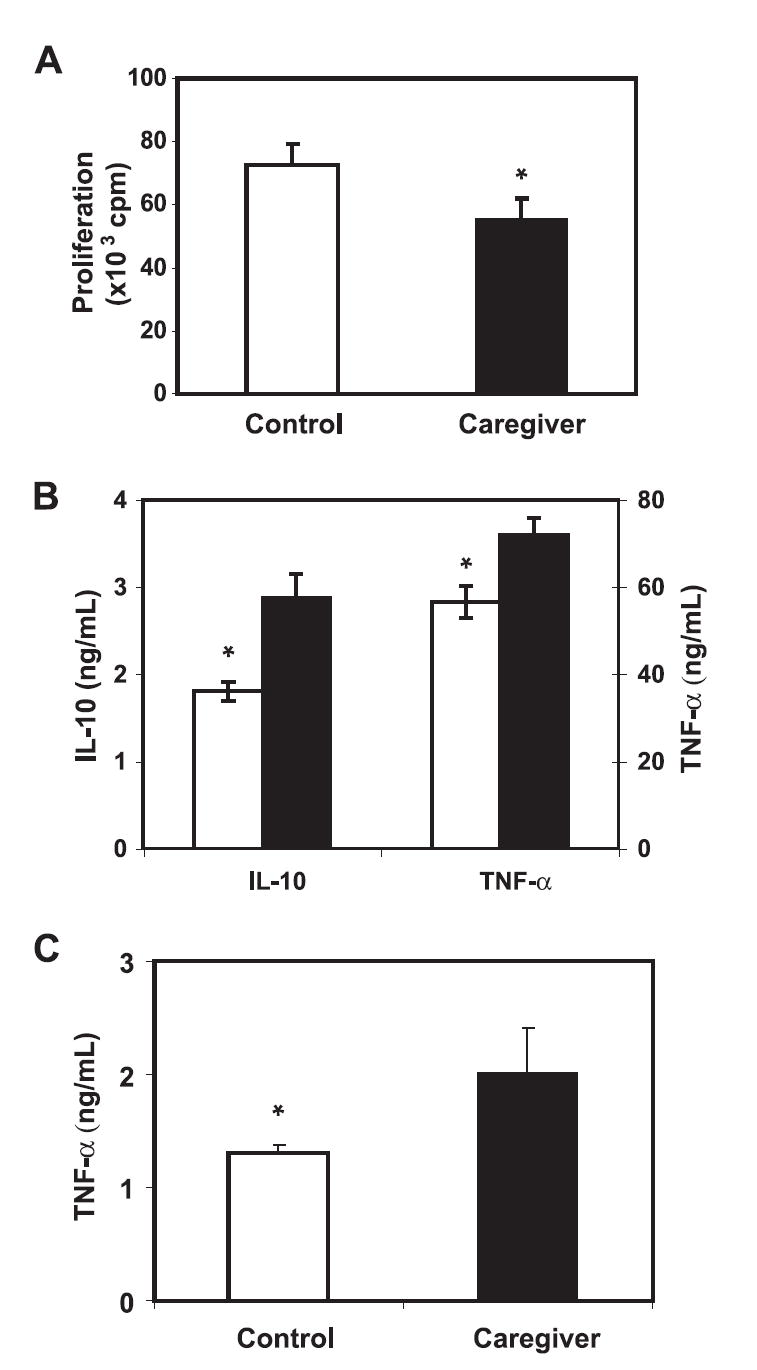
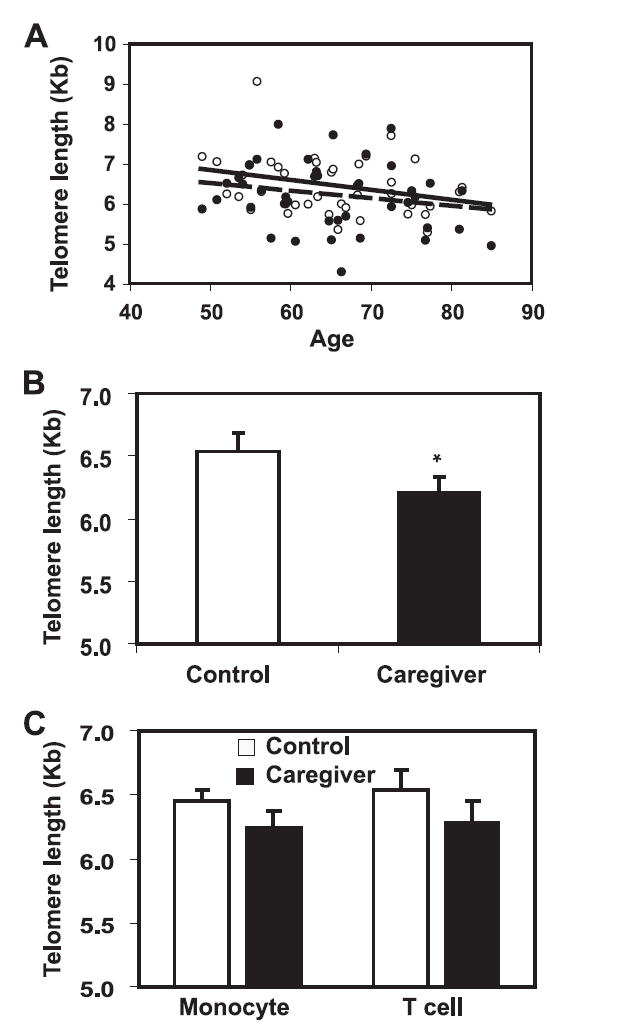
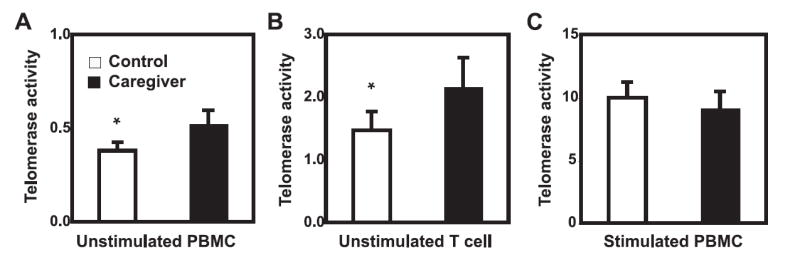
Caregivers of Alzheimer's disease patients endure chronic stress associated with a decline of immune function. To assess the psychological and immunological changes of caregivers, we compared depressive symptoms, PBMC composition, in vitro activation-induced proliferation and cytokine production, and telomere length and telomerase activity of 82 individuals (41 caregivers and 41 age- and gender-matched controls). We found depressive symptoms were significantly higher in caregivers than in controls (p < 0.001). Correspondingly, caregivers had significantly lower T cell proliferation but higher production of immune-regulatory cytokines (TNF-alpha and IL-10) than controls in response to stimulation in vitro. We examined the impact of these changes on cellular replicative lifespan and found that caregivers had significantly shorter telomere lengths in PBMC than controls (6.2 and 6.4 kb, respectively, p < 0.05) with similar shortening in isolated T cells and monocytes and that this telomere attrition in caregivers was not due to an increase of shorter telomere possessing T cell subsets in PBMC. Finally, we showed that basal telomerase activity in PBMC and T cells was significantly higher in caregivers than in controls (p < 0.0001), pointing to an unsuccessful attempt of cells to compensate the excessive loss of telomeres in caregivers. These findings demonstrate that chronic stress is associated with altered T cell function and accelerated immune cell aging as suggested by excessive telomere loss.
Conflict of interest statement
Figures
References
-
- Glaser R, Kiecolt-Glaser JK. Stress-induced immune dysfunction: implications for health. Nat Rev Immunol. 2005;5:243–251. - PubMed
-
- Pedersen WA, Wan R, Mattson MP. Impact of aging on stress-responsive neuroendocrine systems. Mech Ageing Dev. 2001;122:963–983. - PubMed
-
- Mayer EA, Fanselow MS. Dissecting the components of the central response to stress. Nat Neurosci. 2003;6:1011–1012. - PubMed
-
- Blackburn EH. Switching and signaling at the telomere. Cell. 2001;106:661–673. - PubMed
Publication types
MeSH terms
Substances
Grants and funding
LinkOut - more resources
Full Text Sources
Other Literature Sources
Medical
