


A neuroligin-3 mutation implicated in autism increases inhibitory synaptic transmission in mice
- PMID: 17823315
- PMCID: PMC3235367
- DOI: 10.1126/science.1146221
A neuroligin-3 mutation implicated in autism increases inhibitory synaptic transmission in mice
Abstract
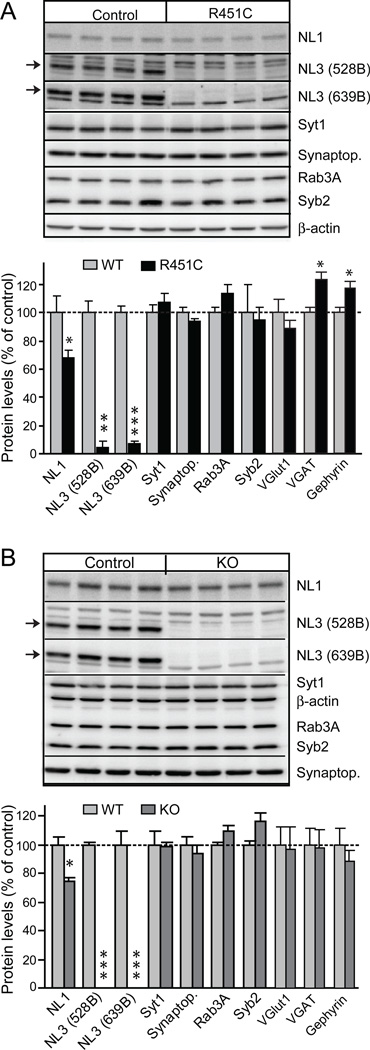
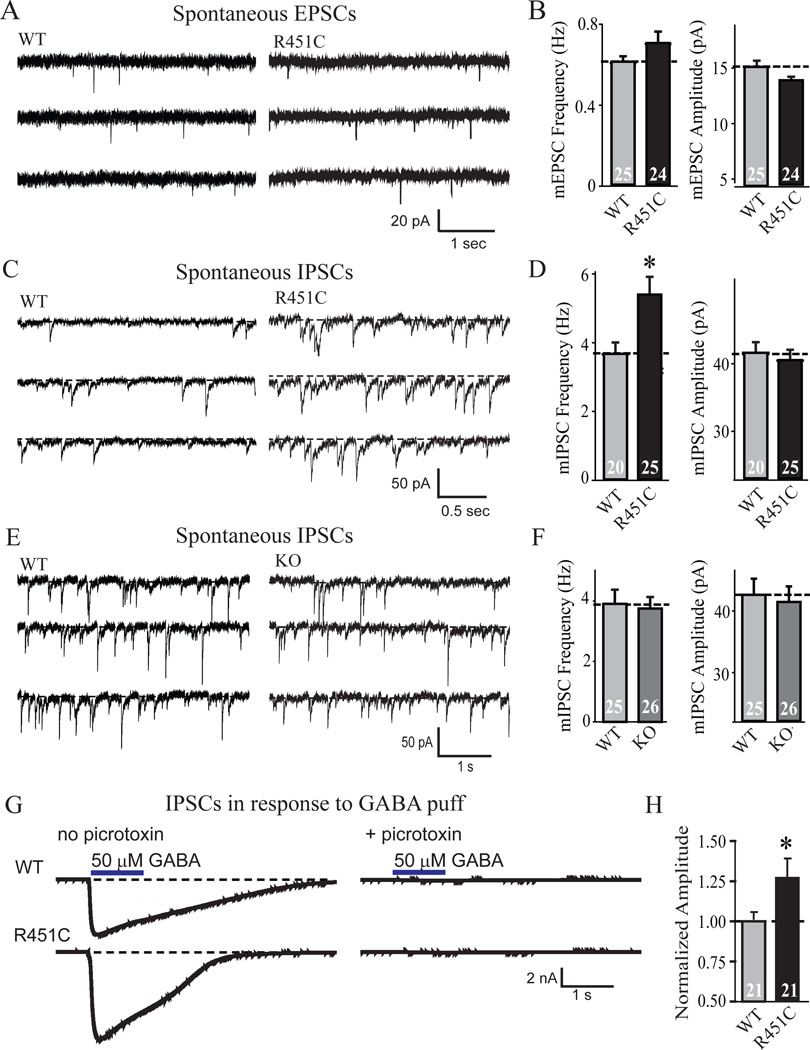
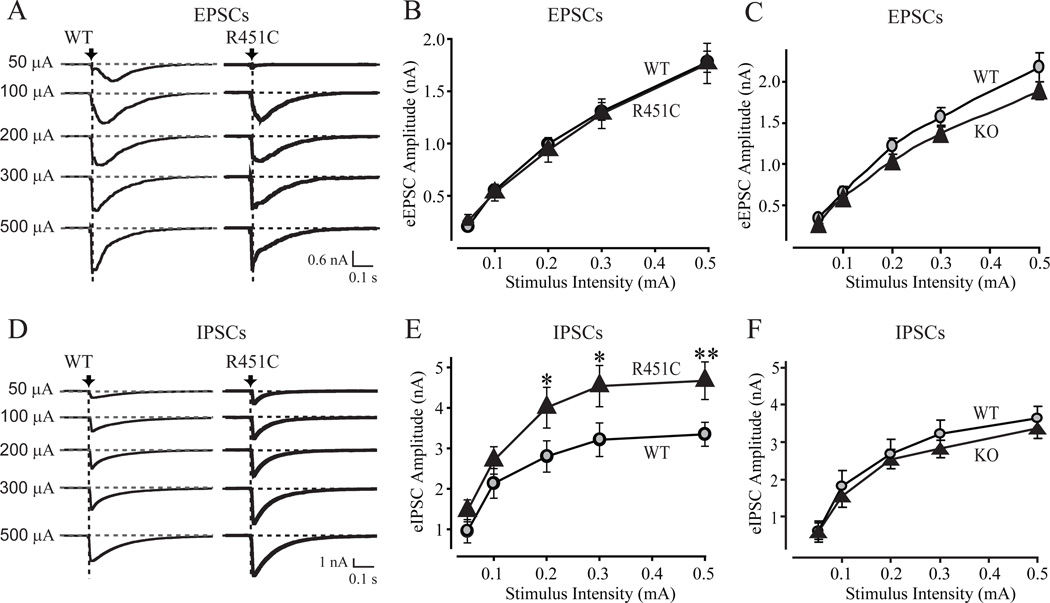
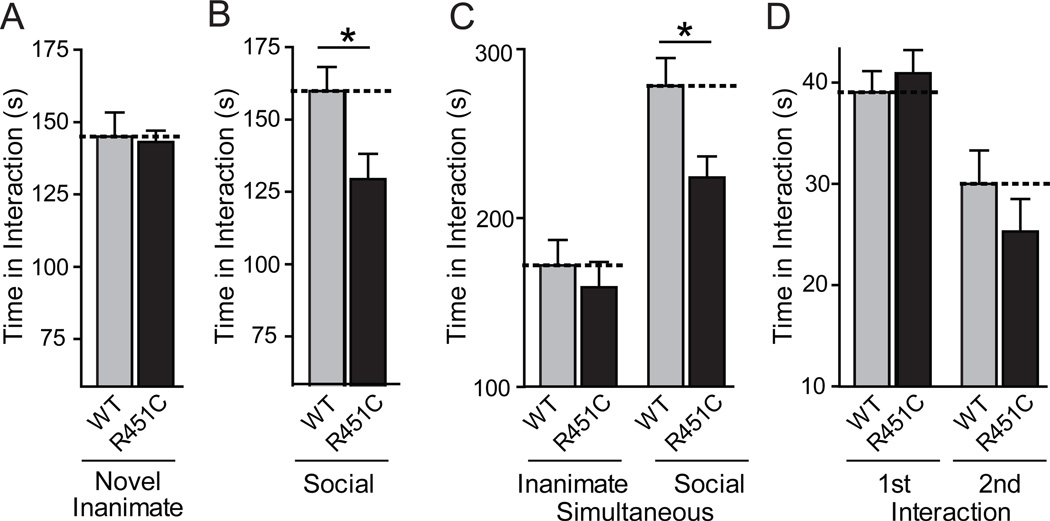
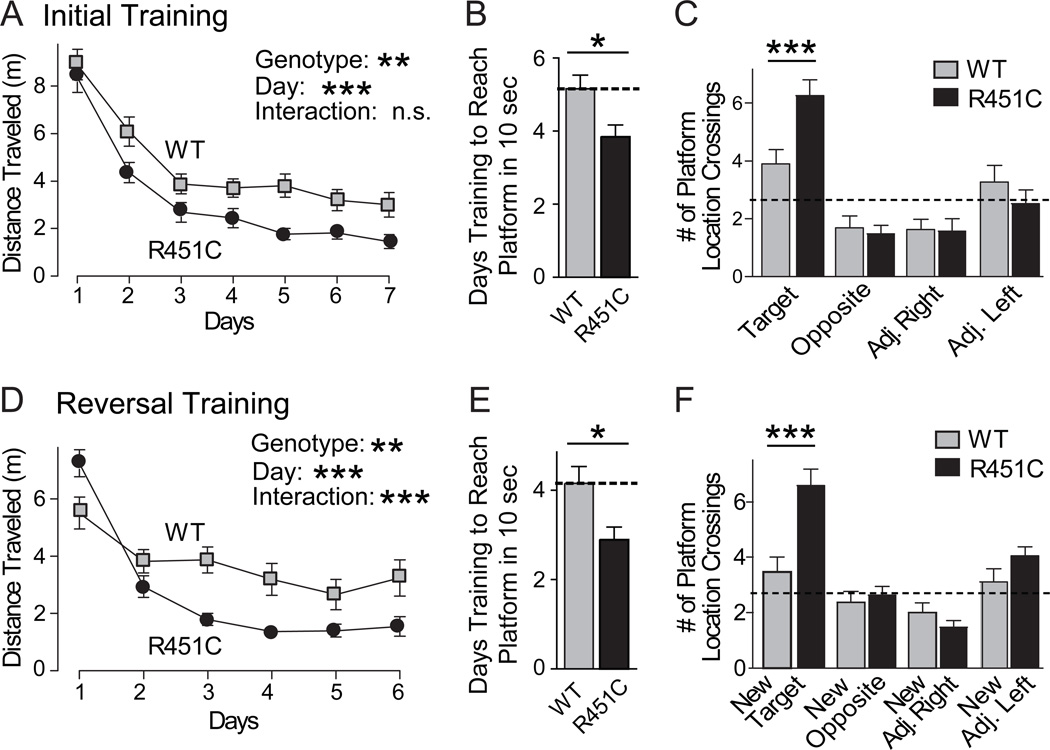
Autism spectrum disorders (ASDs) are characterized by impairments in social behaviors that are sometimes coupled to specialized cognitive abilities. A small percentage of ASD patients carry mutations in genes encoding neuroligins, which are postsynaptic cell-adhesion molecules. We introduced one of these mutations into mice: the Arg451-->Cys451 (R451C) substitution in neuroligin-3. R451C mutant mice showed impaired social interactions but enhanced spatial learning abilities. Unexpectedly, these behavioral changes were accompanied by an increase in inhibitory synaptic transmission with no apparent effect on excitatory synapses. Deletion of neuroligin-3, in contrast, did not cause such changes, indicating that the R451C substitution represents a gain-of-function mutation. These data suggest that increased inhibitory synaptic transmission may contribute to human ASDs and that the R451C knockin mice may be a useful model for studying autism-related behaviors.
Figures

Comment in
-
Medicine. Testing hypotheses about autism.Science. 2007 Oct 5;318(5847):56-7. doi: 10.1126/science.1149801. Science. 2007. PMID: 17916718 No abstract available.
References
-
- Geschwind DH, Levitt P. Curr Opin Neurobiol. 2007;17:103. - PubMed
-
- Persico AM, Bourgeron Bourgeron T. Trends Neurosci. 2006;29:349. - PubMed
-
- American Psychiatric Association Diagnostic and Statistical Manual of Mental Disorders. 2002 [ISBN 0890420254]
-
- O'Connor N, Hermelin B. Br J Psychol. 1989;80:97. - PubMed
-
- Moretti P, Zoghbi HY. Curr Opin Genet Dev. 2006;16:276. - PubMed
Publication types
MeSH terms
Substances
Grants and funding
LinkOut - more resources
Full Text Sources
Other Literature Sources
Molecular Biology Databases
