


Tumor pH-responsive flower-like micelles of poly(L-lactic acid)-b-poly(ethylene glycol)-b-poly(L-histidine)
- PMID: 17826863
- PMCID: PMC2196406
- DOI: 10.1016/j.jconrel.2007.08.006
Tumor pH-responsive flower-like micelles of poly(L-lactic acid)-b-poly(ethylene glycol)-b-poly(L-histidine)
Abstract
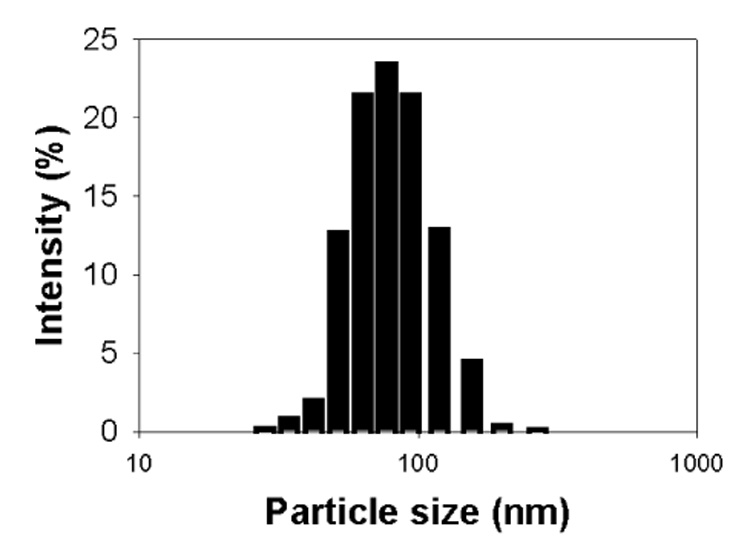
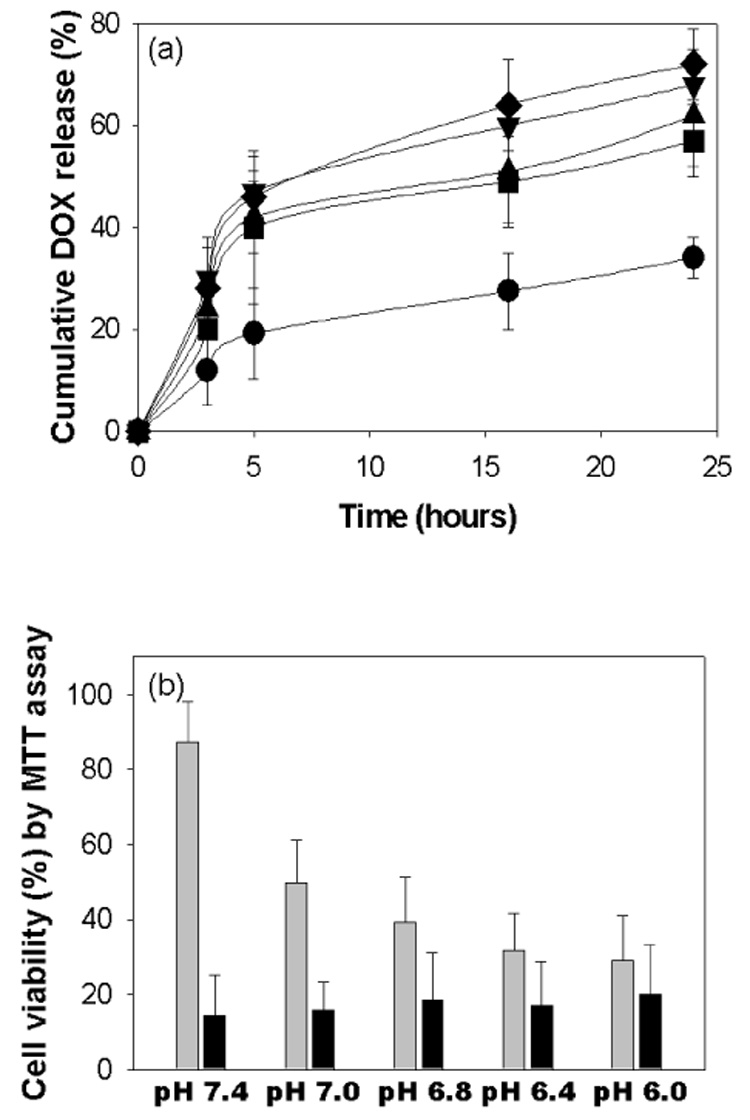
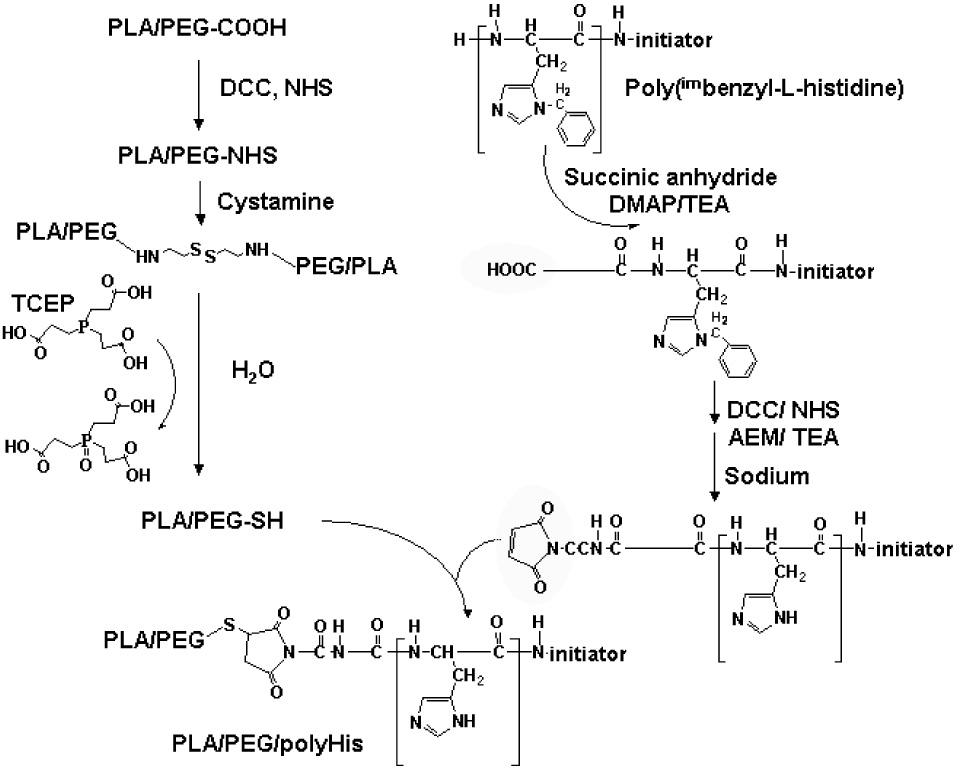
Polymeric micelles were constructed from poly(l-lactic acid) (PLA; M(n) 3K)-b-poly(ethylene glycol) (PEG; M(n) 2K)-b-poly(l-histidine) (polyHis; M(n) 5K) as a tumor pH-specific anticancer drug carrier. Micelles (particle diameter: approximately 80 nm; critical micelle concentration (CMC): 2 microg/ml) formed by dialysis of the polymer solution in dimethylsulfoxide (DMSO) against pH 8.0 aqueous solution, are assumed to have a flower-like assembly of PLA and polyHis blocks in the core and PEG block as the shell. The pH-sensitivity of the micelles originates from the deformation of the micellar core due to the ionization of polyHis at a slightly acidic pH. However, the co-presence of pH-insensitive lipophilic PLA block in the core prevented disintegration of the micelles and caused swelling/aggregation. A fluorescence probe study showed that the polarity of pyrene retained in the micelles increased as pH was decreased from 7.4 to 6.6, indicating a change to a more hydrophilic environment in the micelles. Considering that the size increased up to 580 nm at pH 6.6 from 80 nm at pH 7.4 and that the transmittance of micellar solution increased with decreasing pH, the micelles were not dissociated but rather swollen/aggregated. Interestingly, the subsequent decline of pyrene polarity below pH 6.6 suggested re-self-assembly of the block copolymers, most likely forming a PLA block core while polyHis block relocation to the surface. Consequently, these pH-dependent physical changes of the PLA-b-PEG-b-polyHis micelles provide a mechanism for triggered drug release from the micelles triggered by the small change in pH (pH 7.2-6.5).
Figures



References
-
- Huh KM, Lee SC, Cho YW, Lee J, Jeong JH, Park K. Hydrotropic polymer micelle system for delivery of paclitaxel. J. Control. Release. 2005;101:59–68. - PubMed
-
- Nakanishi T, Fukushima S, Okamoto K, Suzuki M, Matsumura Y, Yokoyama M, Okano T, Sakurai Y, Kataoka K. Development of the polymer micelle carrier system for doxorubicin. J. Control. Release. 2001;74:295–302. - PubMed
-
- Maeda H, Wu J, Sawa T, Matsumura Y, Hori K. Tumor vascular permeability and the EPR effect in macromolecular therapeutics: a review. J. Control. Release. 2000;65:271–284. - PubMed
-
- Ponce AM, Vujaskovic Z, Yuan F, Needham D, Dewhirst MW. Hyperthermia mediated liposomal drug delivery. Int. J. Hyperthermia. 2006;22:205–213. - PubMed
Publication types
MeSH terms
Substances
Grants and funding
LinkOut - more resources
Full Text Sources
Other Literature Sources
