


Sequence-specific triple helix formation with genomic DNA
- PMID: 17845009
- PMCID: PMC2536773
- DOI: 10.1021/bi700580y
Sequence-specific triple helix formation with genomic DNA
Abstract
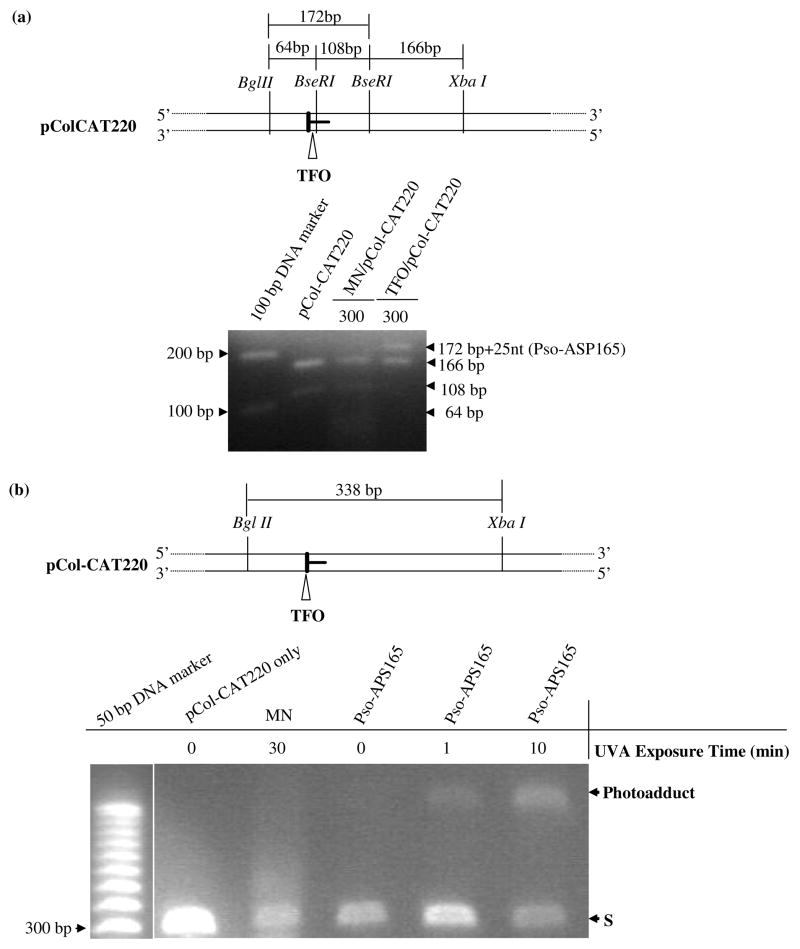
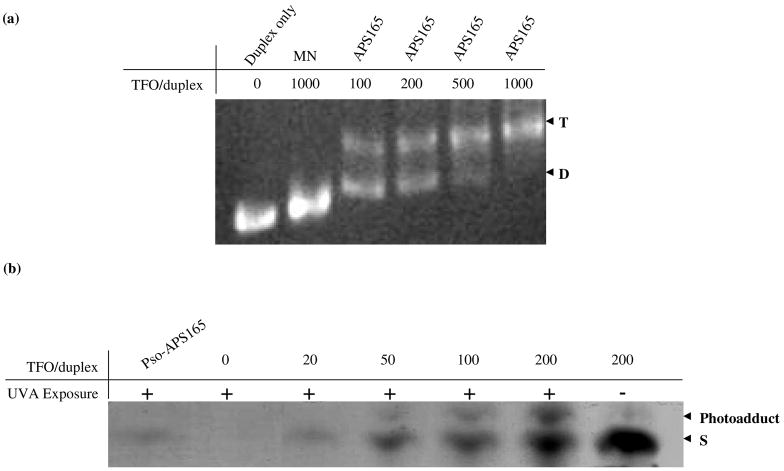
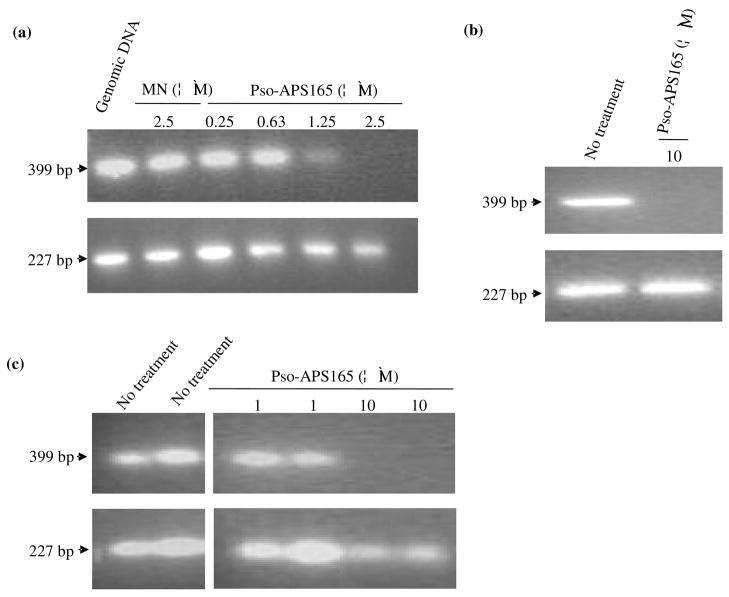
We have previously demonstrated site-specific delivery of antiparallel phosphorothioate triplex forming oligonucleotide (TFO) specific to -165 to -141 promoter region of alpha1(I) collagen (abbreviated as APS165) to hepatic stellate cells (HSCs) of fibrotic rats after conjugation with mannose 6-phosphate-bovine serum albumin. However, we still need to determine whether there is correlation between transcription inhibition and triplex formation with genomic DNA. In this study, APS165 was modified with psoralen and the extent of triplex formation with alpha1(I) collagen DNA was determined in naked genomic DNA, isolated nuclei of HSC-T6 cells and whole cells by using a simple real-time PCR based method. In this method, a purification step was added to remove unbound APS165, which eliminated the possible artifacts during real-time PCR. Psoralen photoadduct formation was shown to be essential to retain triplex structure under denaturing conditions. On naked genomic DNA, 82.2% of DNA formed triplex and 36.7% of genomic DNA in isolated nuclei at 90 min contained triplex structure. As quantified by real-time PCR, 50% of genomic DNA in living cells at 12 h postincubation contained triplex structures. Furthermore, the triplex formation was dose-dependent with 26.5% and 50% of DNA having triplex structure at concentrations of 1 microM and 5 microM, respectively. Moreover, on a plasmid pCol-CAT220 containing rat alpha1(I) gene promoter (-225 to +113), 75.3% of triplex formation was observed, which was correlated with a 73.6% of transcription inhibition. These findings will further strengthen the therapeutic applications of APS165.
Figures



References
-
- Casey BP, Glazer PM. Gene targeting via triple-helix formation. Prog Nucleic Acid Res Mol Biol. 2001;67:163–92. - PubMed
-
- Guntaka RV, Varma BR, Weber KT. Triplex-forming oligonucleotides as modulators of gene expression. Int J Biochem Cell Biol. 2003;35:22–31. - PubMed
-
- Faria M, Giovannangeli C. Triplex-forming molecules: from concepts to applications. J Gene Med. 2001;3:299–310. - PubMed
-
- Rogers FA, Lloyd JA, Glazer PM. Triplex-forming oligonucleotides as potential tools for modulation of gene expression. Curr Med Chem Anticancer Agents. 2005;5:319–26. - PubMed
Publication types
MeSH terms
Substances
Grants and funding
LinkOut - more resources
Full Text Sources
Other Literature Sources
Research Materials
