


A randomised controlled study of an audiovisual patient information intervention on informed consent and recruitment to cancer clinical trials
- PMID: 17848908
- PMCID: PMC2360384
- DOI: 10.1038/sj.bjc.6603943
A randomised controlled study of an audiovisual patient information intervention on informed consent and recruitment to cancer clinical trials
Abstract
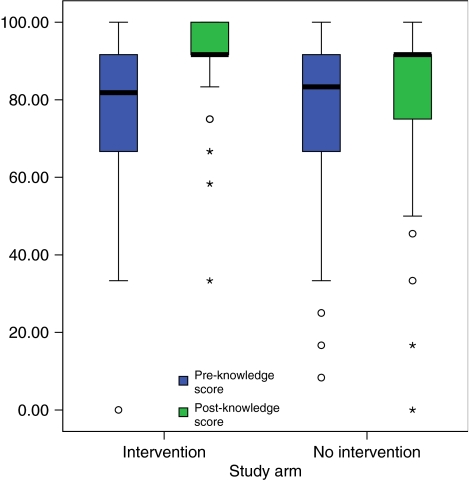
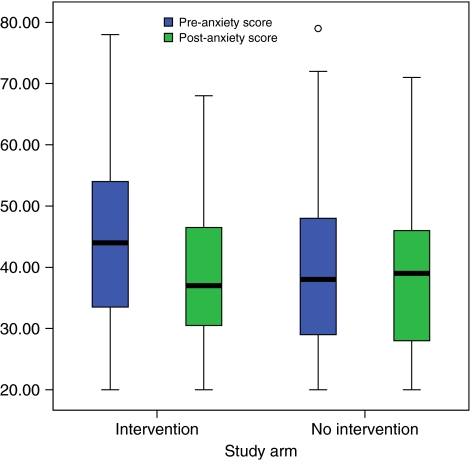
Recruitment to cancer clinical trials needs to be improved, as does patient knowledge and understanding about clinical trials, in order for patients to make an informed choice about whether or not to take part. Audiovisual patient information (AVPI) has been shown to improve knowledge and understanding in various areas of practice, but there is limited information about its effect in the cancer clinical trial setting, particularly in relation to consent rates. In this study, 173 patients were randomised to receive either the AVPI, in addition to the standard trial-specific written information, or the written information alone. There was no difference in clinical trial recruitment rates between the two groups with similar study entry rates: 72.1% in the AVPI group and 75.9% in the standard information group. The estimated odds ratio for refusal (intervention/no intervention) was 1.19 (95% CI 0.55-2.58, P=0.661). Knowledge scores increased more in the AVPI group compared to the standard group (P=0.0072). The change in anxiety score between the arms was also statistically significant (P=0.011) with anxiety improving in the intervention arm more than in the no intervention arm. Audiovisual patient information was shown to be a useful tool in improving patient knowledge and anxiety, but further work is necessary in relation to its effect on clinical trial recruitment rates.
Figures
References
-
- Agre P, Dougherty J, Pirone J (2002) Creating a CD-ROM program for cancer-related patient education. Oncol Nurs Forum 29(3): 573–580 - PubMed
-
- Carstairs V, Morris R (1991) Deprivation and Health in Scotland. Aberdeen: Aberdeen University Press
-
- Curbow B, Fogarty LA, McDonnell KA, Chill J, Scott LB (2006) The role of physician characteristics in clinical trial acceptance: testing pathways of influence. J Health Commun 11(2): 199–218 - PubMed
-
- Daugherty C, Kass N, Fogarty LA, Sugarman J, Hlubocky F (2003) A randomised trial of a CD-ROM educational intervention for advanced cancer patients enrolling in early phase trials. Proc Am Soc Clin Oncol 22: 521
-
- Ellis PM, Butow PN, Tattersall MHN, Dunn SM, Houssami N (2001) Randomised clinical trials in oncology: understanding and attitudes that predict willingness to participate. J Clin Oncol 19(15): 3554–3561 - PubMed
Publication types
MeSH terms
LinkOut - more resources
Full Text Sources
