


[18F]2-fluoro-2-deoxy-D-glucose incorporation by AGS gastric adenocarcinoma cells in vitro during response to epirubicin, cisplatin and 5-fluorouracil
- PMID: 17848947
- PMCID: PMC2360409
- DOI: 10.1038/sj.bjc.6603971
[18F]2-fluoro-2-deoxy-D-glucose incorporation by AGS gastric adenocarcinoma cells in vitro during response to epirubicin, cisplatin and 5-fluorouracil
Abstract
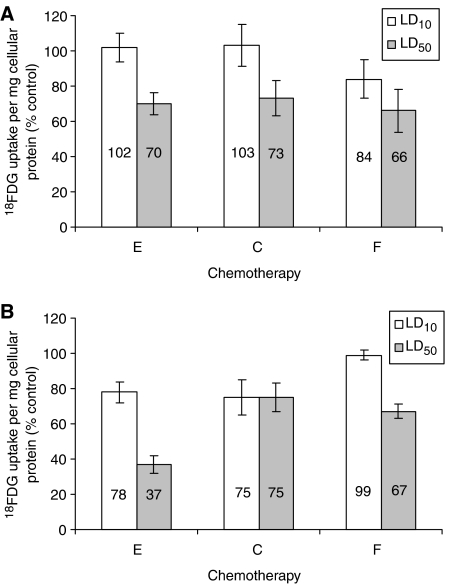
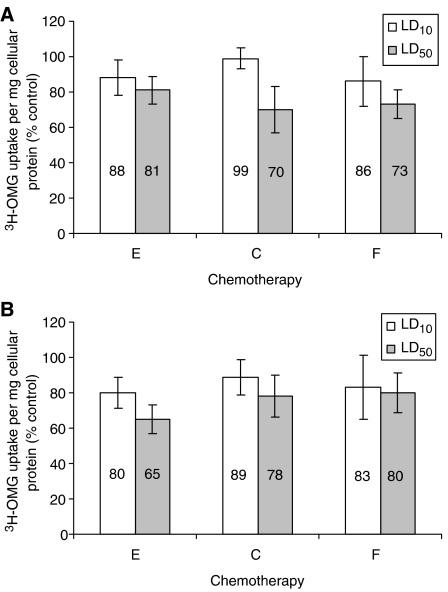
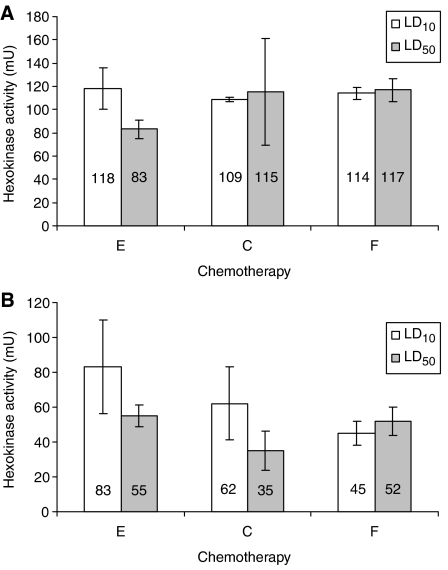
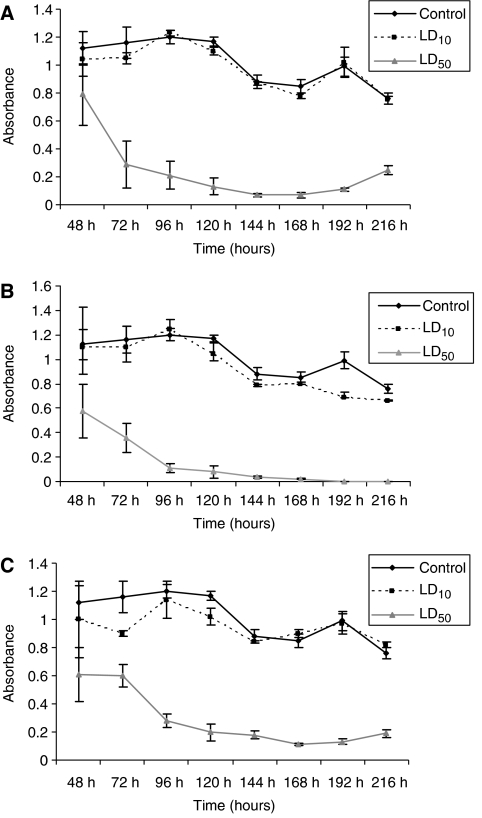
Decreased tumour [(18)F]2-fluoro-2-deoxy-D-glucose ((18)FDG) incorporation is related to response however its significance at the cell level in gastro-oesophageal cancer and how it relates to cell death is unknown. Here human gastric adenocarcinoma (AGS) cells were treated with lethal dose 10 and 50 (LD(10) and LD(50)), determined by using the MTT assay, of the three drugs, epirubicin, 5-fluorouracil and cisplatin, commonly used in the treatment of patients with gastro-oesophageal cancer. (18)FDG incorporation was determined after 48 and 72 h of treatment with each drug and related to drug-induced changes in glucose transport, hexokinase activity, cell cycle distribution and annexin V-PE binding (a measure of apoptosis). Treatment of cells for 48 and 72 h with LD(50) doses of cisplatin resulted in reductions in (18)FDG incorporation of 27 and 25% respectively and of 5-fluorouracil reduced (18)FDG incorporation by 34 and 33% respectively: epirubicin treatment reduced incorporation by 30 and 69% respectively. Cells that had been treated for 72 h with each drug were incubated in drug-free media for a further 6 days to determine their ability to recover. Comparison of the ability to recover from the chemotherapy agent, with (18)FDG incorporation before the recovery period allowed an assessment of the predictive ability of (18)FDG incorporation. Cells treated with either 5-fluorouracil or cisplatin demonstrated recovery on removal of the drug. In contrast, cells treated with epirubicin did not recover corresponding with the greatest 72 h treatment decrease in (18)FDG incorporation. In contrast to adherent cells treated with cisplatin or 5-fluorouracil, adherent epirubicin-treated cells also exhibited very high levels of apoptosis. Glucose transport was decreased after each treatment whilst hexokinase activity was only decreased after 72 h of treatment with each drug. There was no consistent relationship observed between (18)FDG incorporation and cell cycle distribution. Our results show that at the tumour cell level in gastric tumour cells, decreased (18)FDG incorporation and glucose transport, accompanies therapeutic growth inhibition. (18)FDG incorporation is particularly diminished in cells exhibiting apoptosis.
Figures

References
-
- Al-Saeedi F, Welch AE, Smith TA (2005) [methyl-(3)H]Choline incorporation into MCF7 tumour cells: correlation with proliferation. Eur J Nucl Med Mol Imaging 32: 660–667 - PubMed
-
- Aloj L, Caraco C, Jagoda E, Eckelman WC, Neumann RD (1999) Glut-1 and hexokinase expression: relationship with 2-fluoro-2-deoxy-D-glucose uptake in A431 and T47D cells in culture. Cancer Res 59: 4709–4714 - PubMed
-
- Barros LF, Porras OH, Bittner CX (2005) Why glucose transport in the brain matters for PET. Trends Neurosci 28: 117–119 - PubMed
-
- Barry MA, Behnke CA, Eastman A (1990) Activation of programmed cell death (apoptosis) by cisplatin, other anticancer drugs, toxins and hyperthermia. Biochem Pharmacol 40: 2353–2362 - PubMed
-
- Bartkowiak D, Hemmer J, Rottinger E (1992) Dose dependence of the cytokinetic and cytotoxic effects of epirubicin in vitro. Cancer Chemother Pharmacol 30: 189–192 - PubMed
Publication types
MeSH terms
Substances
LinkOut - more resources
Full Text Sources
Medical
Research Materials
