


The impact of gonadectomy and adrenalectomy on acute withdrawal severity in male and female C57BL/6J and DBA/2J mice following a single high dose of ethanol
- PMID: 17850218
- PMCID: PMC2807885
- DOI: 10.1111/j.1530-0277.2007.00509.x
The impact of gonadectomy and adrenalectomy on acute withdrawal severity in male and female C57BL/6J and DBA/2J mice following a single high dose of ethanol
Abstract
Background: Steroid hormones can influence neuronal excitability and subsequent seizure susceptibility through genomic and nongenomic mechanisms. For example, there are proconvulsant steroids such as estradiol and corticosterone and anticonvulsant steroids such as testosterone, progesterone, and their GABAergic metabolites. Recent findings indicated that a single, acute administration of ethanol increased levels of GABAergic steroids and that the source of this increase was peripheral organs such as the adrenals and gonads. Thus, the purpose of the present study was to determine the impact of removal of the adrenals and/or gonads on withdrawal severity following a single high dose of ethanol in 2 genotypes that differ in ethanol withdrawal severity.
Method: Male and female C57BL/6J (B6) and DBA/2J (D2) mice were either left intact (SHAM), adrenalectomized (ADX), gonadectomized (GDX), or underwent ADX/GDX surgery. Seven days following surgery, baseline handling-induced convulsions (HICs) were measured prior to administration of a 4 g/kg dose of ethanol. HICs were assessed following the ethanol injection, then hourly for 12 hours and at 24 hours. A separate group of mice were used to measure the impact of surgical status on ethanol metabolism at 30, 60, 120, and 240 minutes after a single 4 g/kg dose of ethanol.
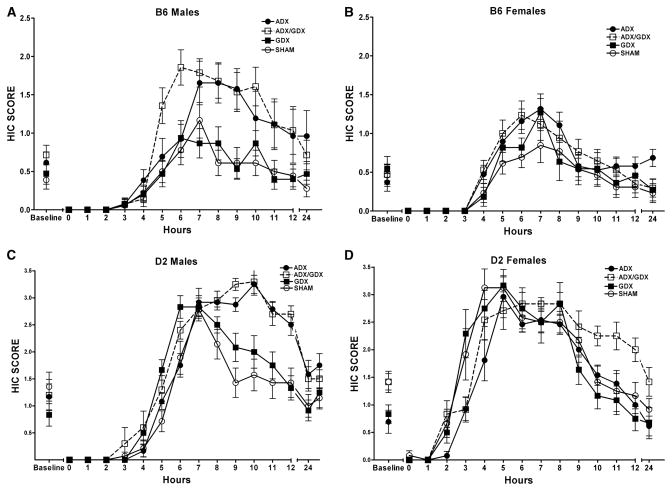
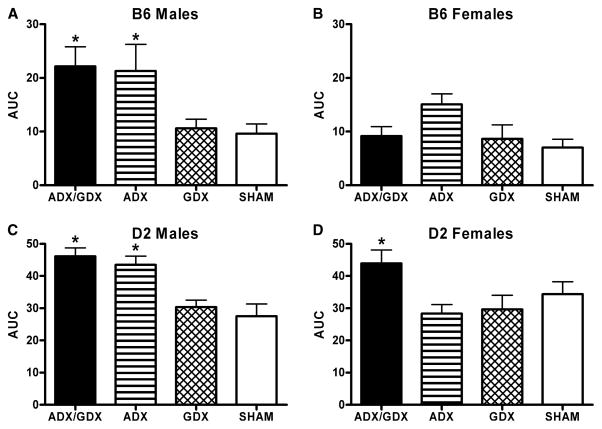
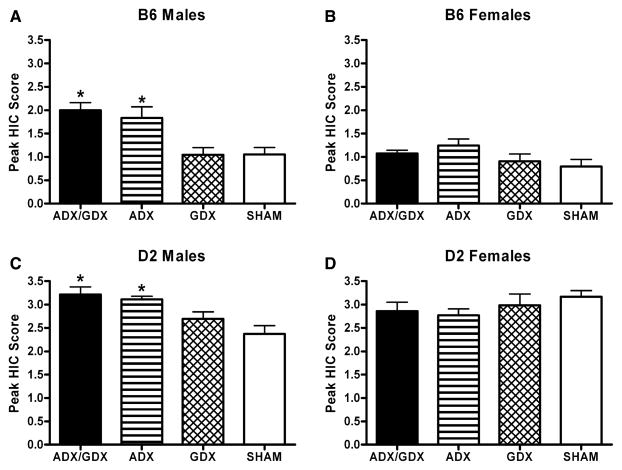
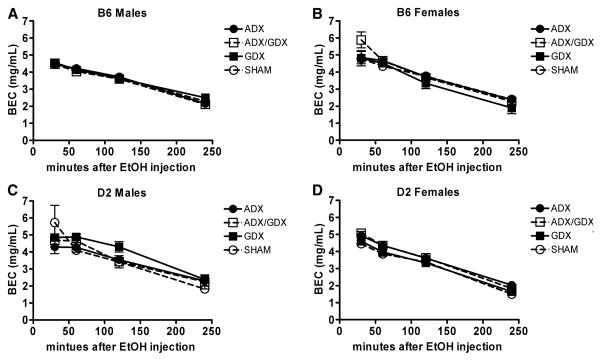
Results: ADX and ADX/GDX treatments in male B6 and D2 mice increased ethanol withdrawal severity following a single dose of ethanol, measured by area under the withdrawal curve and peak HIC scores. Acute ethanol withdrawal also was increased in female D2 mice that had undergone ADX/GDX. In contrast, surgical status did not alter ethanol withdrawal severity in female B6 mice. Surgical status had only minor effects on ethanol metabolism.
Conclusions: Removal of peripherally derived steroids with anticonvulsant properties significantly increased HIC scores during acute ethanol withdrawal following a single dose of ethanol in male and female D2 mice and in male B6 mice. These increases were not due to changes in ethanol metabolism.
Figures
References
-
- Barbaccia ML, Affricano D, Trabucchi M, Purdy RH, Colombo G, Agabio R, Gessa GL. Ethanol markedly increases “GABAergic” neurosteroids in alcohol-preferring rats. Eur J Pharmacol. 1999;384:R1–R2. - PubMed
-
- Baulieu EE. Neurosteroids: a novel function of the brain. Psychoneuroendocrinology. 1998;23:963–987. - PubMed
-
- Becker HC, Anton RF, De Trana C, Randall CL. Sensitivity to ethanol in female mice: effects of ovariectomy and strain. Life Sci. 1985;37:1293–1300. - PubMed
-
- Beers M, Berkow R. The Merk Manual. 2. Merck & Co; White-house Station, NJ: 2005.
-
- Belelli D, Bolger MB, Gee KW. Anticonvulsant profile of the progesterone metabolite 5 α-pregnan-3 α-ol-20-one. Eur J Pharmacol. 1989;166:325–329. - PubMed
Publication types
MeSH terms
Substances
Grants and funding
LinkOut - more resources
Full Text Sources
