


Epidural stimulation: comparison of the spinal circuits that generate and control locomotion in rats, cats and humans
- PMID: 17850791
- PMCID: PMC2288525
- DOI: 10.1016/j.expneurol.2007.07.015
Epidural stimulation: comparison of the spinal circuits that generate and control locomotion in rats, cats and humans
Abstract
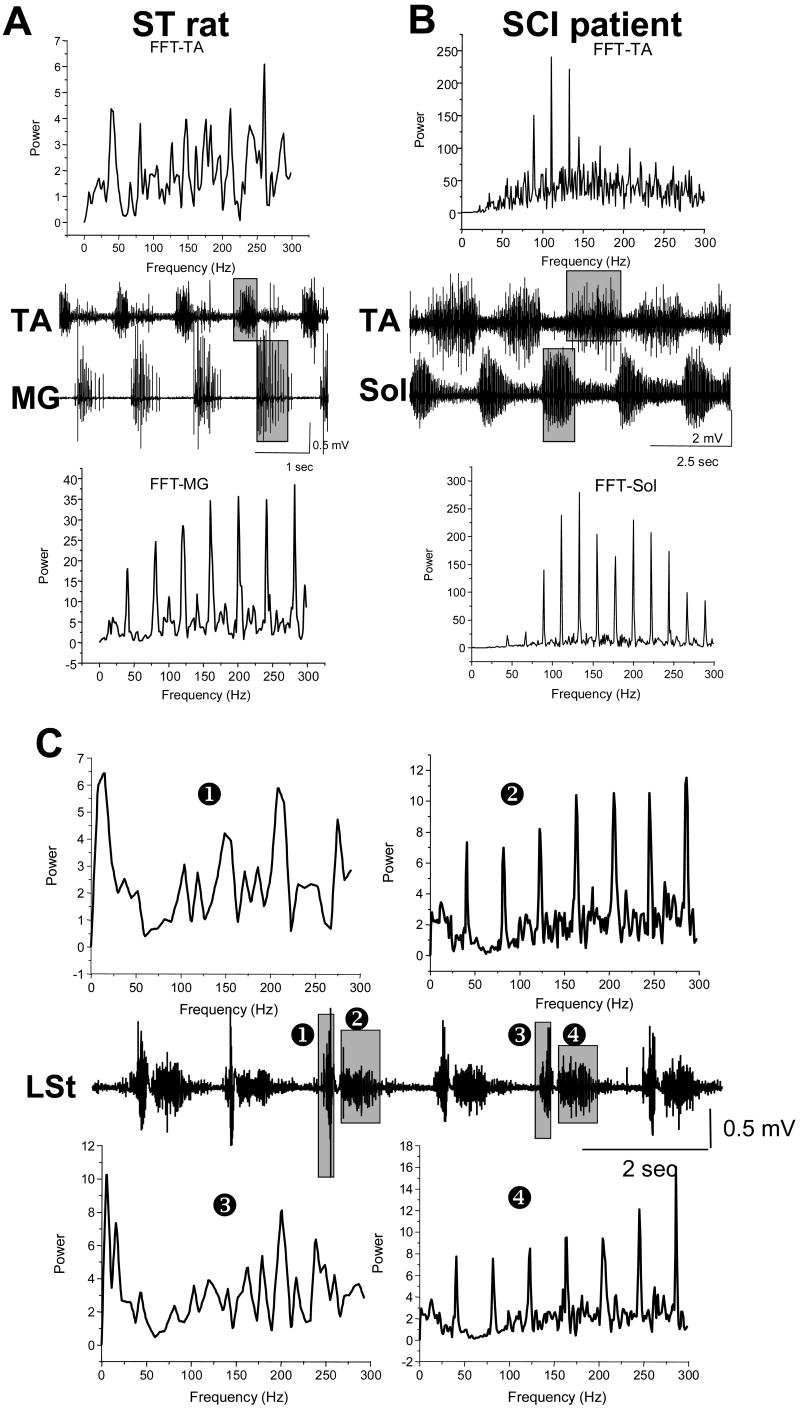
Although epidural stimulation is a technique that has been used for a number of years to treat individuals with a spinal cord injury, the intended outcome has been to suppress plasticity and pain. Over the last decade considerable progress has been made in realizing the potential of epidural stimulation to facilitate posture and locomotion in subjects with severe spinal cord injury who lack the ability to stand or to step. This progress has resulted primarily from experiments with mice, rats and cats having a complete spinal cord transection at a mid-thoracic level and in humans with a complete spinal cord injury. This review describes some of these experiments performed after the complete elimination of supraspinal input that demonstrates that the circuitry necessary to control remarkably normal locomotion appears to reside within the lumbosacral region of the spinal cord. These experiments, however, also demonstrate the essential role of processing proprioceptive information associated with weight-bearing stepping or standing by the spinal circuitry. For example, relatively simple tonic signals provided to the dorsum of the spinal cord epidurally can result in complex and highly adaptive locomotor patterns. Experiments emphasizing a significant complementary effect of epidural stimulation when combined with pharmacological facilitation, e.g., serotonergic agonists, and/or chronic step training also are described. Finally, a major point emphasized in this review is the striking similarity of the lumbosacral circuitry controlling locomotion in the rat and in the human.
Figures


References
-
- Barthélemy D, Leblond H, Rossignol S. Characteristics and mechanisms of locomotion induced by intraspinal microstimulation and dorsal root stimulation in spinal cats. J Neurophysiol. 2007;97:1986–2000. - PubMed
-
- Barbeau H, Rossignol S. Initiation and modulation of the locomotor pattern in the adult chronic spinal cat by noradrenergic, serotonergic and dopaminergic drugs. Brain Research. 1991;546:250–260. - PubMed
-
- Deliagina TG, Orlovsky GN, Pavlova GA. The capacity for generation of rhythmic oscillations is distributed in the lumbosacral spinal cord of the cat. Exp Brain Res. 1983;53:81–90. - PubMed
-
- De Leon RD, Hodgson JA, Roy RR, Edgerton VR. Full weight-bearing hindlimb standing following stand training in the adult spinal cat. J Neurophysiol. 1998;80:83–91. - PubMed
Publication types
MeSH terms
Grants and funding
LinkOut - more resources
Full Text Sources
Other Literature Sources
Miscellaneous
