


The positive effect of posterolateral lumbar spinal fusion is preserved at long-term follow-up: a RCT with 11-13 year follow-up
- PMID: 17851701
- PMCID: PMC2365547
- DOI: 10.1007/s00586-007-0494-8
The positive effect of posterolateral lumbar spinal fusion is preserved at long-term follow-up: a RCT with 11-13 year follow-up
Abstract
Introduction: Few studies have investigated the long-term effect of posterolateral lumbar spinal fusion on functional outcome.
Aim: To investigate the long-term result after posterolateral lumbar spinal fusion with and without pedicle screw instrumentation.
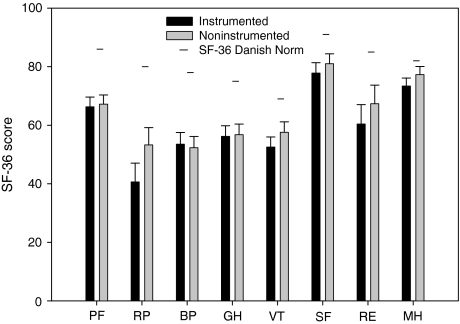
Methods: Questionnaire survey of 129 patients originally randomised to posterolateral lumbar spinal fusion with or without pedicle screw instrumentation. Follow-up included Dallas Pain Questionnaire (DPQ), Oswestry Disability Index (ODI), SF-36 and a question regarding willingness to undergo the procedure again knowing the result as global outcome parameter.
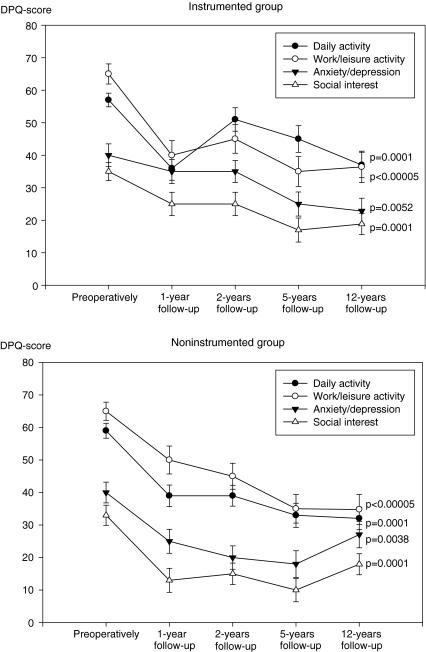
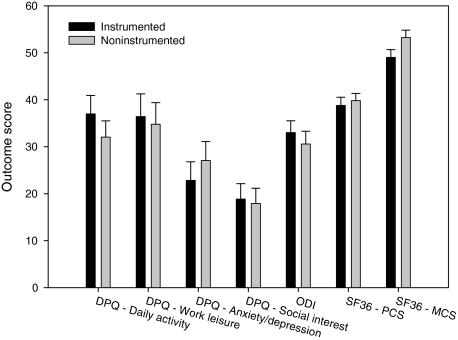
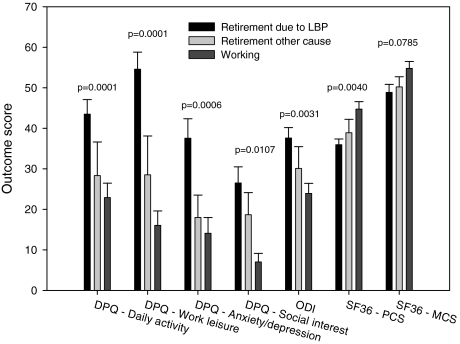
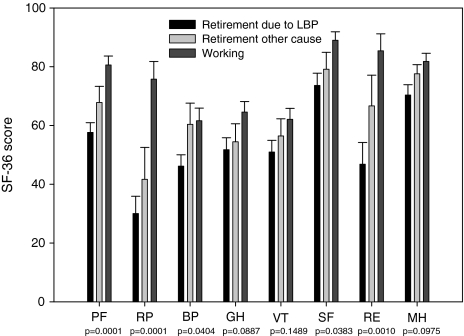
Results: Follow-up was 83% of the original study population (107 patients). Average follow-up time was 12 years (range 11-13 years). DPQ-scores were significantly lower than preoperatively in both groups (P < 0.005) and no drift towards the preoperative level was seen. No difference between the two groups were observed (instrumented vs. non-instrumented): DPQ Daily Activity mean 37.0 versus 32.0, ODI mean 33.4 versus 30.6, SF-36 PCS mean 38.8 versus 39.8, SF-36 MCS mean 49.0 versus 53.3. About 71% in both groups were answered positively to the global outcome question. Patients who had retired due to low back pain had poorer outcome than patients retired for other reasons, best outcome was seen in patients still at work (P = 0.01 or less in all questionnaires, except SF-36 MCS P = 0.08).
Discussion: Improvement in functional outcome is preserved for 10 or more years after posterolateral lumbar spinal fusion. No difference between instrumented fusion and non-instrumented fusion was observed. Patients who have to retired due to low back pain have the smallest improvement.
Figures
References
-
- Brox J.I, Sorensen R, Friis A, Nygaard O, Indahl A, Keller A, Ingebrigtsen T, Eriksen HR, Holm I, Koller AK, Riise R, Reikeras O. Randomized clinical trial of lumbar instrumented fusion and cognitive intervention and exercises in patients with chronic low back pain and disc degeneration. Spine. 2003;28:1913–1921. doi: 10.1097/01.BRS.0000083234.62751.7A. - DOI - PubMed
-
- Brox JI, Reikeras O, Nygaard O, Sorensen R, Indahl A, Holm I, Keller A, Ingebrigtsen T, Grundnes O, Lange JE, Friis A. Lumbar instrumented fusion compared with cognitive intervention and exercises in patients with chronic back pain after previous surgery for disc herniation: a prospective randomized controlled study. Pain. 2006;122:145–155. doi: 10.1016/j.pain.2006.01.027. - DOI - PubMed
Publication types
MeSH terms
LinkOut - more resources
Full Text Sources
Medical
