


Properties of persistent postnatal cortical subplate neurons
- PMID: 17855610
- PMCID: PMC6672634
- DOI: 10.1523/JNEUROSCI.1536-07.2007
Properties of persistent postnatal cortical subplate neurons
Abstract
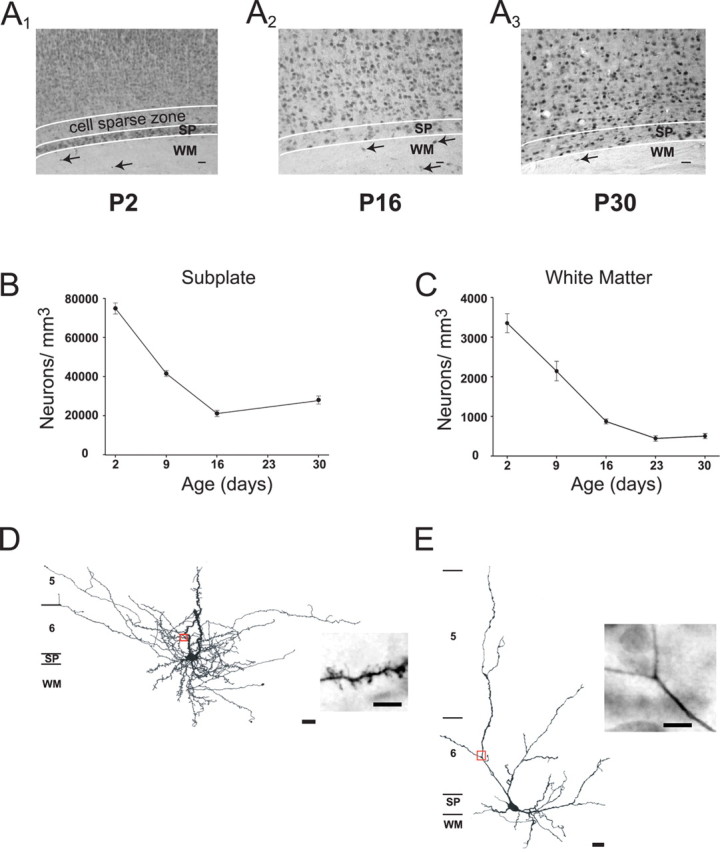
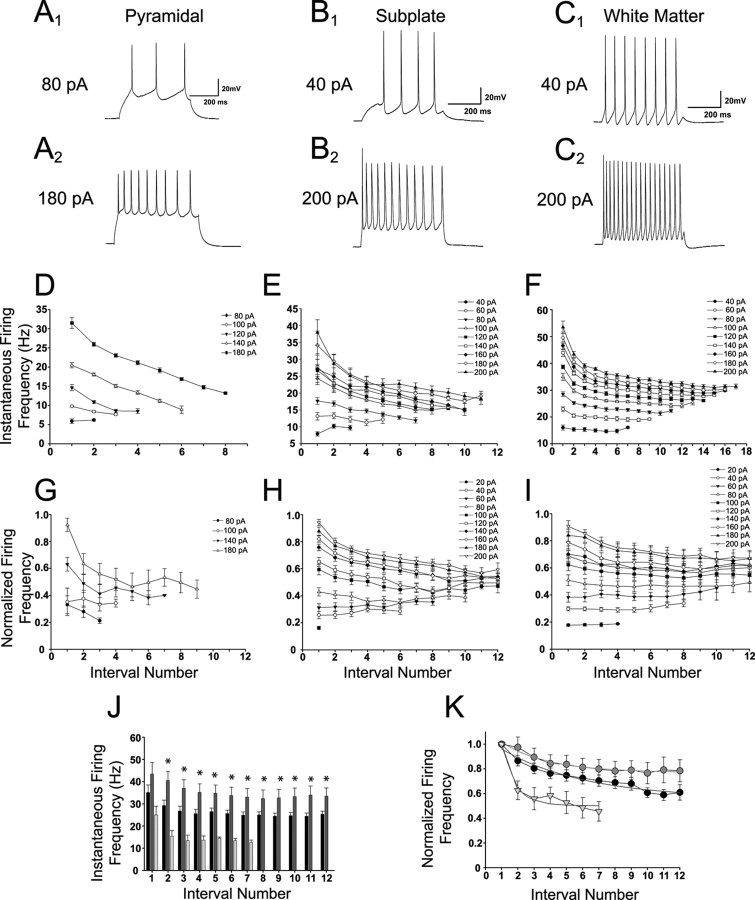
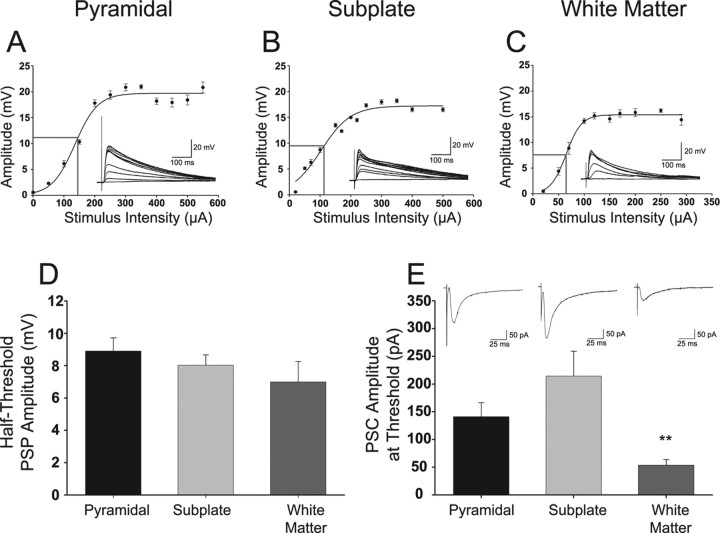
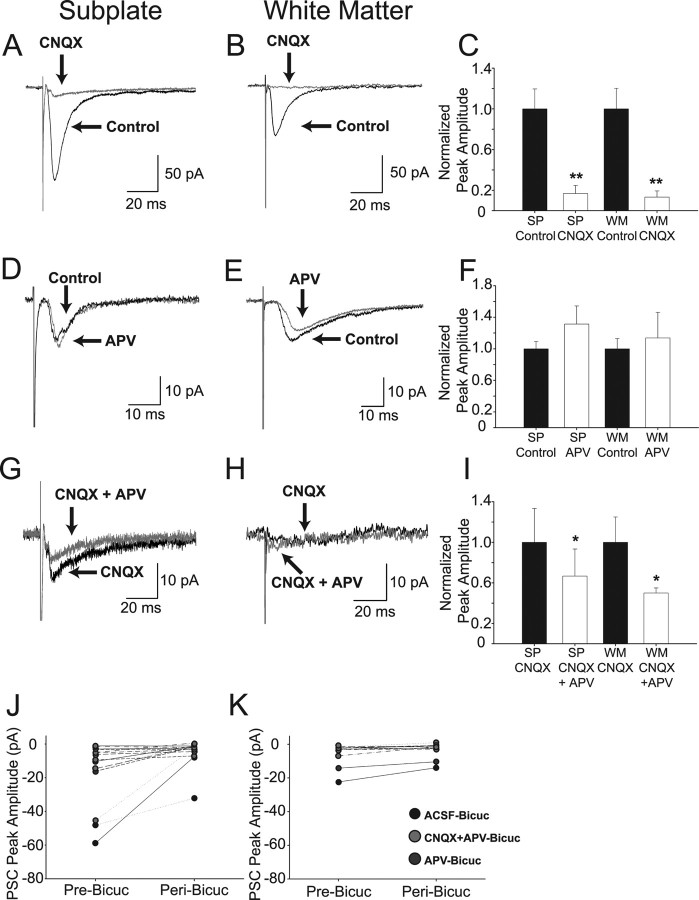
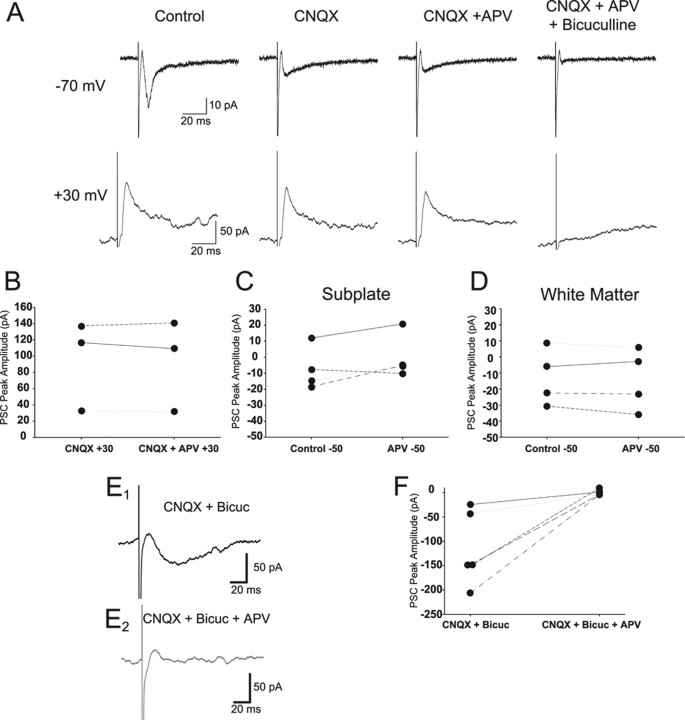
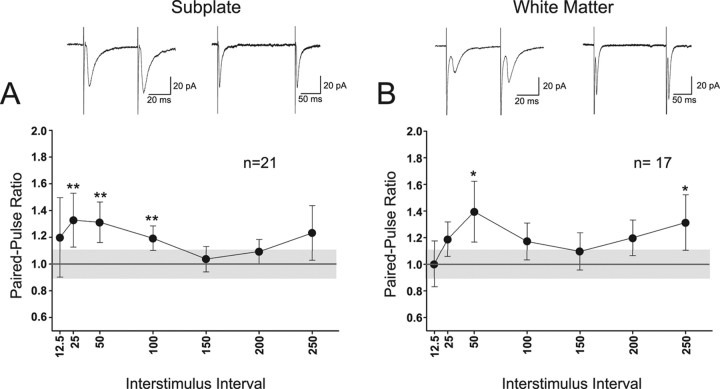
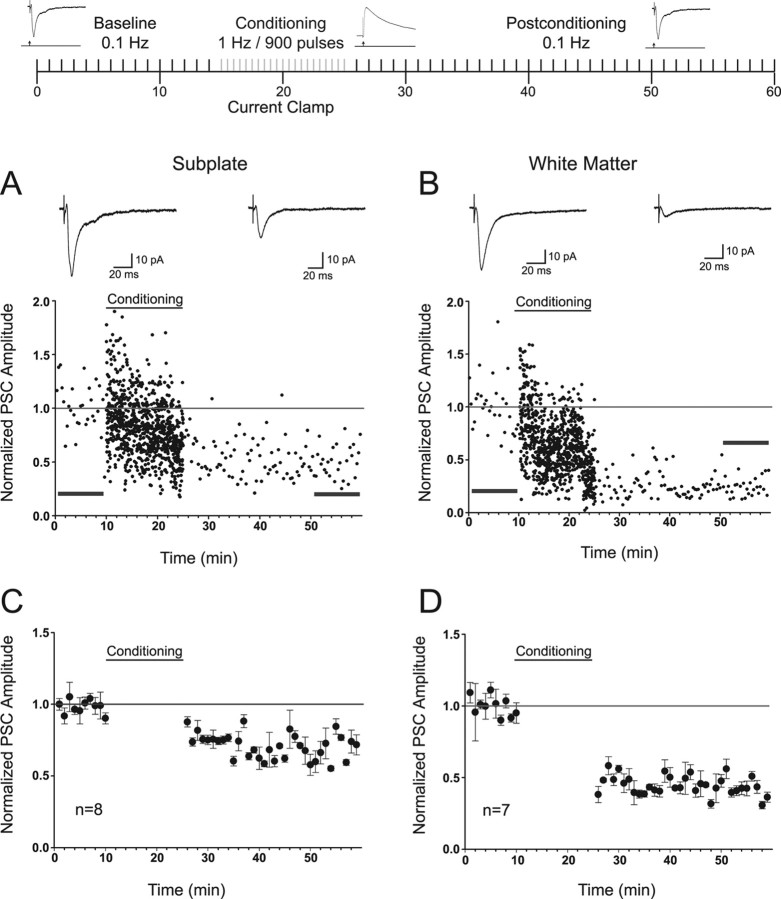
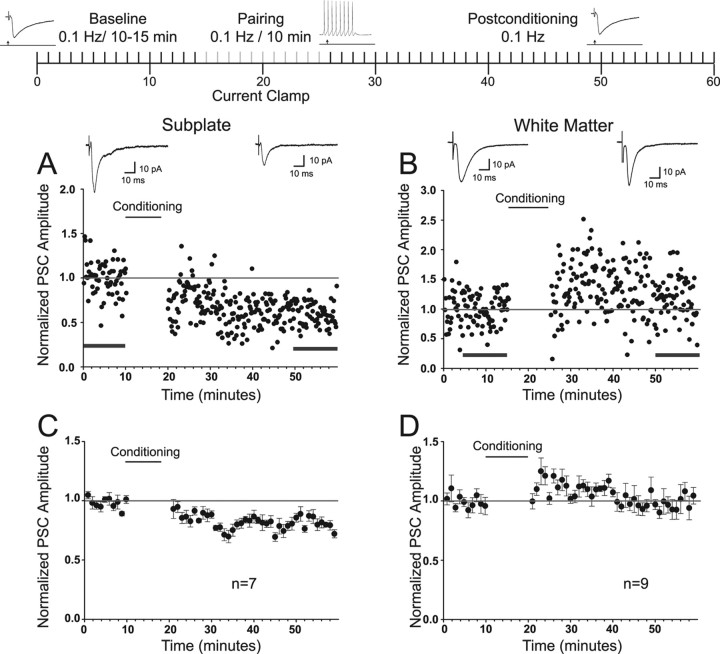
Subplate (SP) neurons are important for the proper development of thalamocortical innervation. They are necessary for formation of ocular dominance and orientation columns in visual cortex. During the perinatal period, many SP neurons die. The surviving cohort forms interstitial cells in the white matter (WM) and a band of horizontally oriented cells below layer VI (layer VIb, layer VII, or subplate cells). Although the function of embryonic SP neurons has been well established, the functional roles of WM and postnatal SP cells are not known. We used a combination of anatomical, immunohistochemical, and electrophysiological techniques to explore the dendritic morphology, neurotransmitter phenotype, intrinsic electrophysiological, and synaptic input properties of these surviving cells in the rat visual cortex. The density of SP and WM cells significantly decreases during the first month of life. Both populations express neuronal markers and have extensive dendritic arborizations within the SP, WM, and to the overlying visual cortex. Some intrinsic electrophysiological properties of SP and WM cells are similar: each generates high-frequency slowly adapting trains of action potentials in response to a sustained depolarization. However, SP cells exhibit greater frequency-dependent action potential broadening than WM neurons. Both cell types receive predominantly AMPA/kainate receptor-mediated excitatory synaptic input that undergoes paired-pulse facilitation as well as NMDA receptor and GABAergic input. Synaptic inputs to these cells can also undergo long-term synaptic plasticity. Thus, surviving SP and WM cells are functional electrogenic neurons integrated within the postnatal visual cortical circuit.
Figures
References
-
- Abraham WC, Bear MF. Metaplasticity: the plasticity of synaptic plasticity. Trends Neurosci. 1996;19:126–130. - PubMed
-
- Aggoun-Aouaoui D, Kiper DC, Innocenti GM. Growth of callosal terminal arbors in primary visual areas of the cat. Eur J Neurosci. 1996;8:1132–1148. - PubMed
-
- Al Ghoul WM, Miller MW. Transient expression of Alz-50 immunoreactivity in developing rat neocortex: a marker for naturally occurring neuronal death? Brain Res. 1989;481:361–367. - PubMed
-
- Allendoerfer KL, Shatz CJ. The subplate, a transient neocortical structure: its role in the development of connections between thalamus and cortex. Annu Rev Neurosci. 1994;17:185–218. - PubMed
Publication types
MeSH terms
Grants and funding
LinkOut - more resources
Full Text Sources
