


Bupropion dose-dependently reverses nicotine withdrawal deficits in contextual fear conditioning
- PMID: 17868796
- PMCID: PMC2049067
- DOI: 10.1016/j.pbb.2007.08.004
Bupropion dose-dependently reverses nicotine withdrawal deficits in contextual fear conditioning
Abstract
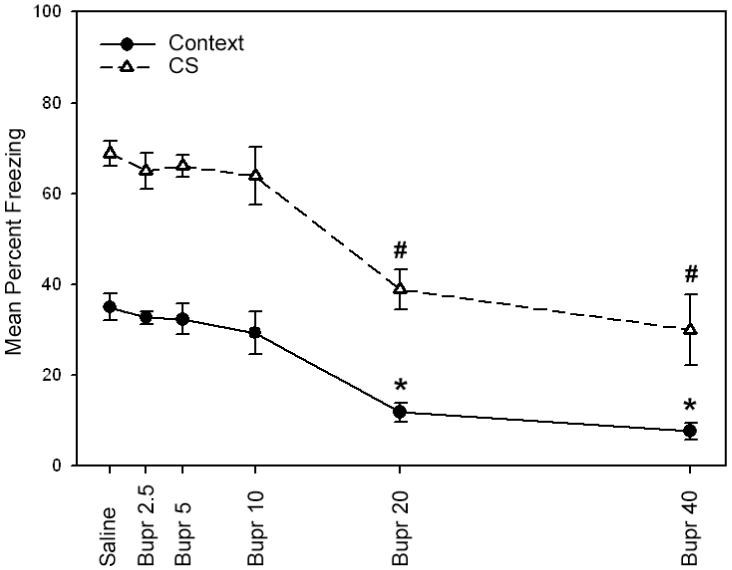
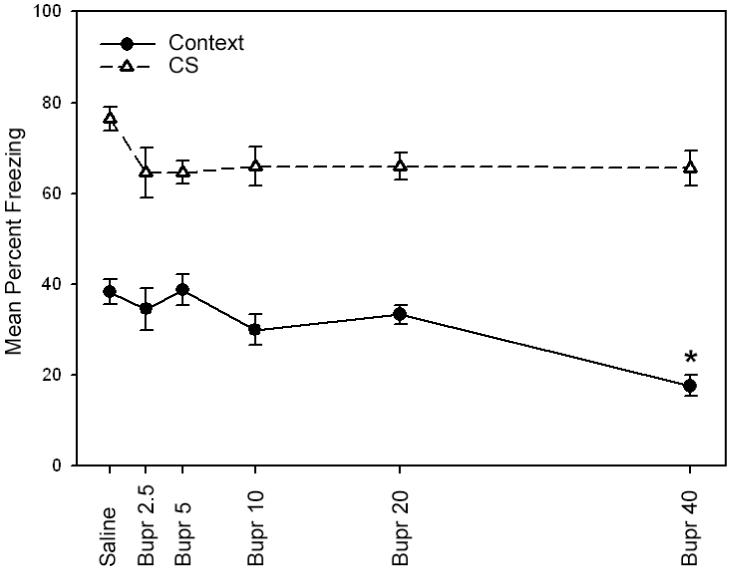
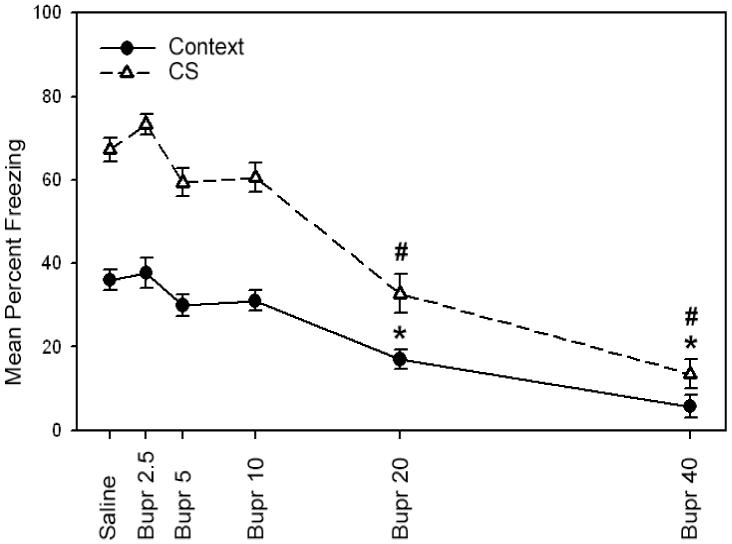
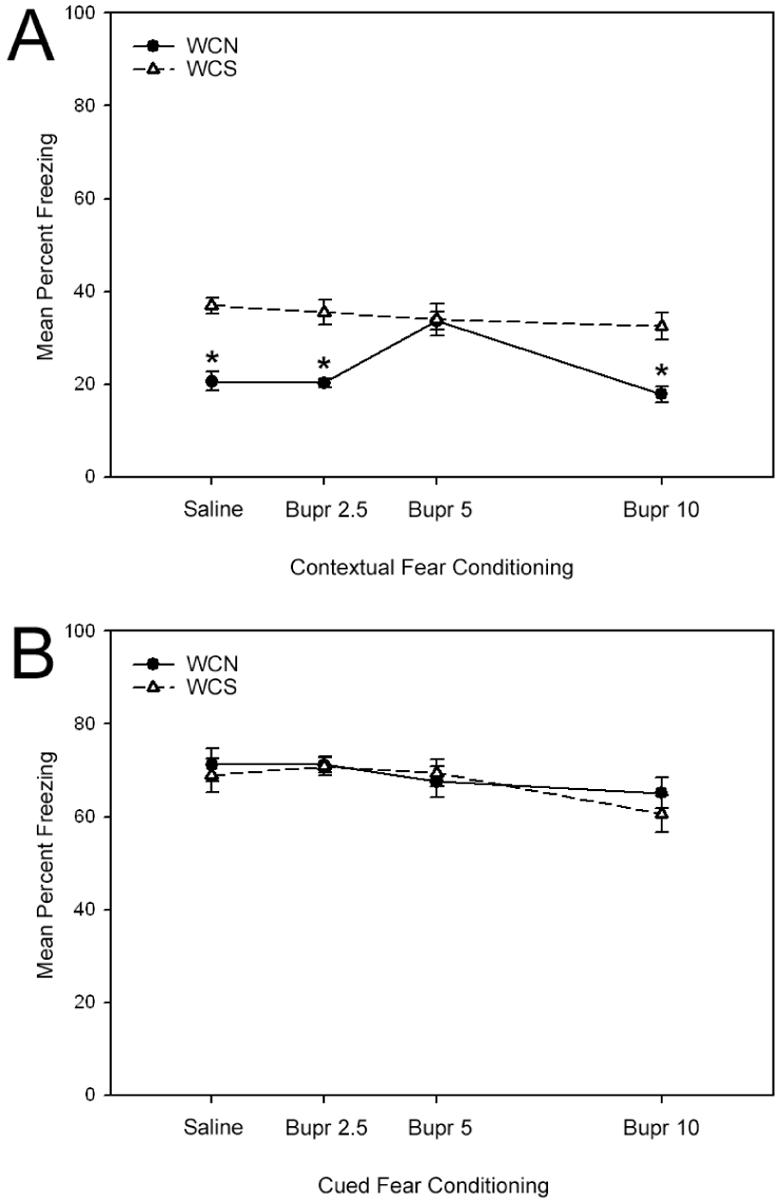
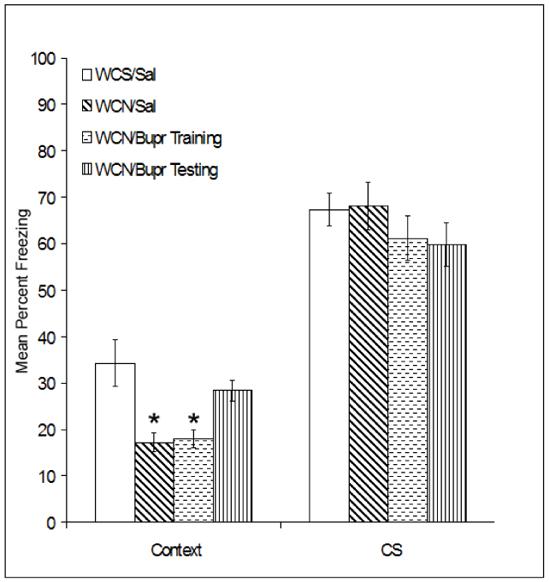
Bupropion, a norepinephrine and dopamine reuptake inhibitor and nicotinic acetylcholine receptor antagonist, facilitates smoking cessation and reduces some symptoms of nicotine withdrawal. However, the effects of bupropion on nicotine withdrawal-associated deficits in learning remain unclear. The present study investigated whether bupropion has effects on contextual and cued fear conditioning following withdrawal from chronic nicotine or when administered alone. Bupropion was administered alone for a range of doses (2.5, 5, 10, 20 or 40 mg/kg), and dose-dependent impairments in contextual and cued fear conditioning were observed (20 or 40 mg/kg). Follow-up studies investigated if bupropion disrupted acquisition or expression of fear conditioning. Bupropion (40 mg/kg) administration on training day only produced deficits in contextual fear conditioning. Alternatively, bupropion (20 or 40 mg/kg) administration during testing dose-dependently produced deficits in contextual and cued fear conditioning. To test the effect of bupropion on nicotine withdrawal, mice were withdrawn from 12 days of chronic nicotine (6.3 mg/kg/day) or saline treatment. Withdrawal from chronic nicotine disrupted contextual fear conditioning; however, 5 mg/kg bupropion reversed this deficit. Overall, these results indicate that a low dose of bupropion can reverse nicotine withdrawal deficits in contextual fear conditioning, but that high doses of bupropion produce deficits in fear conditioning.
Figures
References
-
- Arnold HM, Nelson CL, Sarter M, Bruno JP. Sensitization of cortical acetylcholine release by repeated administration of nicotine in rats. Psychopharmacology. 2003;165:346–58. - PubMed
-
- Azam L, McIntosh JM. Characterization of nicotinic acetylcholine receptors that modulate nicotine-evoked [3H]norepinephrine release from mouse hippocampal synaptosomes. Mol Pharmacol. 2006;70:967–76. - PubMed
-
- Balfour DJ, Benwell ME, Birrell CE, Kelly RJ, Al-Aloul M. Sensitization of the mesoaccumbens dopamine response to nicotine. Pharmacol Biochem Behav. 1998;59:1021–30. - PubMed
-
- Barik J, Wonnacott S. Indirect modulation by alpha7 nicotinic acetylcholine receptors of noradrenaline release in rat hippocampal slices: interaction with glutamate and GABA systems and effect of nicotine withdrawal. Mol Pharmacol. 2006;69:618–28. - PubMed
-
- Benowitz NL, Porchet H, Jacob P., 3rd. Nicotine dependence and tolerance in man: pharmacokinetic and pharmacodynamic investigations. Prog Brain Res. 1989;79:279–87. - PubMed
Publication types
MeSH terms
Substances
Grants and funding
LinkOut - more resources
Full Text Sources
