doi: 10.1136/gut.2006.115402.
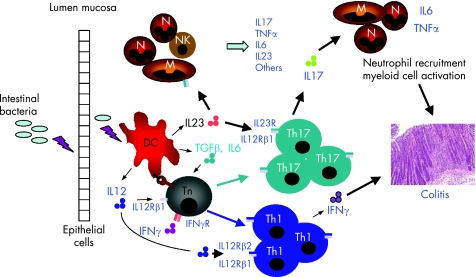
The IL23 axis plays a key role in the pathogenesis of IBD
Affiliations
- PMID: 17872562
- PMCID: PMC2000291
- DOI: 10.1136/gut.2006.115402
Item in Clipboard
The IL23 axis plays a key role in the pathogenesis of IBD
Gut.
2007 Oct.
Abstract
Exciting new results from a genetic study in humans and functional studies in mice have pinpointed interleukin 23 (IL23) and its receptor as a key pathway in the pathogenesis of inflammatory bowel disease (IBD). These findings reveal a hitherto unappreciated role for the IL23 axis in intestinal inflammation and may open new avenues for development of therapeutic strategies in IBD.
Conflict of interest statement
Competing interests: None.
References
-
- Bouma G, Strober W. The immunological and genetic basis of inflammatory bowel disease. Nat Rev Immunol 20033521–533. - PubMed
-
- Simpson S J, Shah S, Comiskey M.et al T cell‐mediated pathology in two models of experimental colitis depends predominantly on the interleukin 12/signal transducer and activator of transcription (Stat)‐4 pathway, but is not conditional on interferon gamma expression by T cells. J Exp Med 19981871225–1234. - PMC - PubMed
-
- Oppmann B, Lesley R, Blom B.et al Novel p19 protein engages IL‐12p40 to form a cytokine, IL‐23, with biological activities similar as well as distinct from IL‐12. Immunity 200013715–725. - PubMed
Publication types
MeSH terms
Substances
LinkOut - more resources
Full Text Sources
Other Literature Sources