


Hematopoietic cell transplantation specific comorbidity index as an outcome predictor for patients with acute myeloid leukemia in first remission: combined FHCRC and MDACC experiences
- PMID: 17873123
- PMCID: PMC2234788
- DOI: 10.1182/blood-2007-06-096966
Hematopoietic cell transplantation specific comorbidity index as an outcome predictor for patients with acute myeloid leukemia in first remission: combined FHCRC and MDACC experiences
Abstract
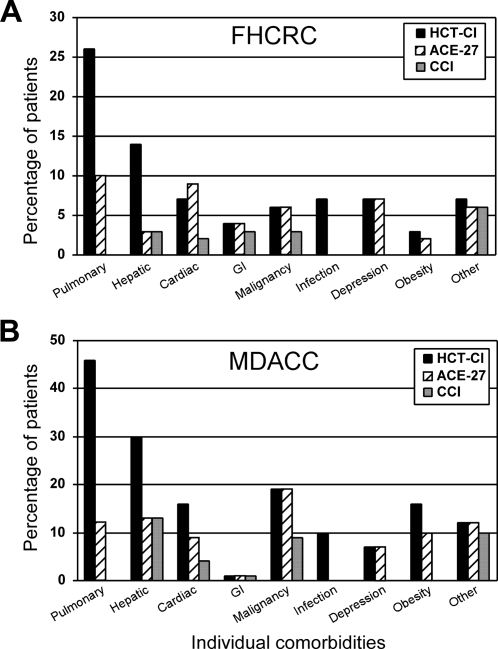
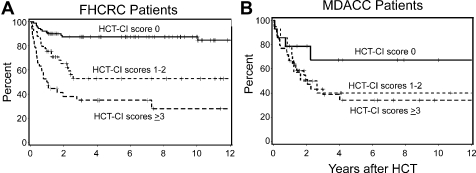
A new hematopoietic cell transplantation-specific comorbidity index (HCT-CI) was effective in predicting outcomes among patients with hematologic malignancies who underwent HCT at Fred Hutchinson Cancer Research Center (FHCRC). Here, we compared the performance of the HCT-CI to 2 other indices and then tested its capacity to predict outcomes among 2 cohorts of patients diagnosed with a single disease entity, acute myeloid leukemia in first complete remission, who underwent transplantation at either FHCRC or M. D. Anderson Cancer Center (MDACC). FHCRC patients less frequently had unfavorable cytogenetics (15% versus 36%) and HCT-CI scores of 3 or more (21% versus 58%) compared with MDACC patients. We found that the HCT-CI had higher sensitivity and outcome predictability compared with the other indices among both cohorts. HCT-CI scores of 0, 1 to 2, and 3 or more predicted comparable nonrelapse mortality (NRM) among FHCRC and MDACC patients. In multivariate models, HCT-CI scores were associated with the highest hazard ratios (HRS) for NRM and survival among each cohort. The 2-year survival rates among FHCRC and MDACC patients were 71% versus 56%, respectively. After adjustment for risk factors, including HCT-CI scores, no difference in survival was detected (HR: 0.98, P = .94). The HCT-CI is a sensitive and informative tool for comparing trial results at different institutions. Inclusion of comorbidity data in HCT trials provides valuable, independent information.
Figures


References
-
- Suciu S, Mandelli F, de Witte T, et al. Allogeneic compared with autologous stem cell transplantation in the treatment of patients younger than 46 years with acute myeloid leukemia (AML) in first complete remission (CR1): an intention-to-treat analysis of the EORTC/GIMEMAAML-10 trial. Blood. 2003;102:1232–1240. - PubMed
-
- Grimwade D, Walker H, Oliver F, et al. The importance of diagnostic cytogenetics on outcome in AML: analysis of 1,612 patients entered into the MRC AML 10 trial: The Medical Research Council Adult and Children's Leukaemia Working Parties. Blood. 1998;92:2322–2333. - PubMed
-
- Slovak ML, Kopecky KJ, Cassileth PA, et al. Karyotypic analysis predicts outcome of pre-remission and postremission therapy in adult acute myeloid leukemia: a Southwest Oncology Group/Eastern Cooperative Oncology Group study. Blood. 2000;96:4075–4083. - PubMed
-
- Ogawa H, Ikegame K, Kawakami M, et al. Impact of cytogenetics on outcome of stem cell transplantation for acute myeloid leukemia in first remission: a large-scale retrospective analysis of data from the Japan Society for Hematopoietic Cell Transplantation. Int J Hematol. 2004;79:495–500. - PubMed
Publication types
MeSH terms
Grants and funding
LinkOut - more resources
Full Text Sources
Medical
