


Biosynthesis of the earthy odorant geosmin by a bifunctional Streptomyces coelicolor enzyme
- PMID: 17873868
- PMCID: PMC3013058
- DOI: 10.1038/nchembio.2007.29
Biosynthesis of the earthy odorant geosmin by a bifunctional Streptomyces coelicolor enzyme
Abstract
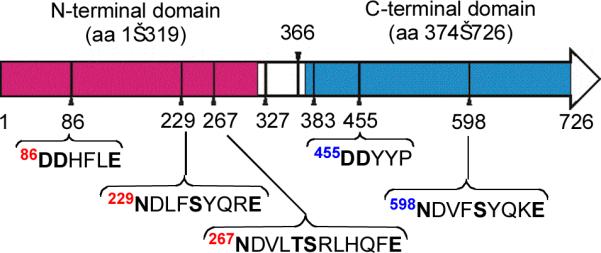
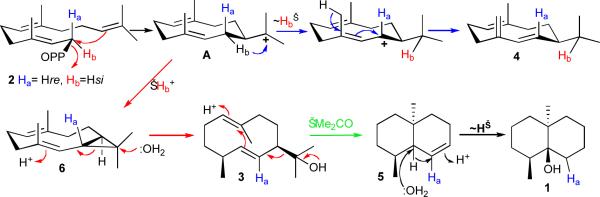
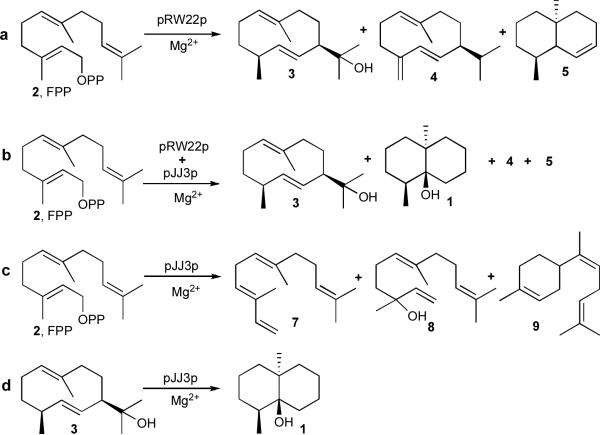
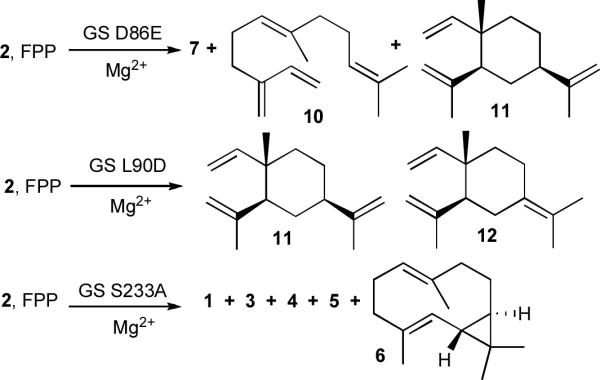
Geosmin is responsible for the characteristic odor of moist soil, as well as off-flavors in drinking water and foodstuffs. Geosmin is generated from farnesyl diphosphate (FPP, 2) by an enzyme that is encoded by the SCO6073 gene in the soil organism Streptomyces coelicolor A32 (ref. 3). We have now shown that the recombinant N-terminal half of this protein catalyzes the Mg2+-dependent cyclization of FPP to germacradienol and germacrene D, while the highly homologous C-terminal domain, previously thought to be catalytically silent, catalyzes the Mg2+-dependent conversion of germacradienol to geosmin. Site-directed mutagenesis confirmed that the N- and C-terminal domains each harbor a distinct, independently functioning active site. A mutation in the N-terminal domain of germacradienol-geosmin synthase of a catalytically essential serine to alanine results in the conversion of FPP to a mixture of sesquiterpenes that includes an aberrant product identified as isolepidozene, which was previously suggested to be an enzyme-bound intermediate in the cyclization of FPP to germacradienol.
Figures
Comment in
-
Digging for answers, smelling a hint of success and tasting triumph.Nat Chem Biol. 2007 Nov;3(11):690-1. doi: 10.1038/nchembio1107-690. Nat Chem Biol. 2007. PMID: 17948014 Free PMC article.
References
-
- Gerber NN. Volatile substances from actinomycetes: their role in the odor pollution of water. CRC Crit. Rev. Microbiol. 1979;7:191–214. - PubMed
-
- Buttery RG, Garibaldi JA. Geosmin and methylisoborneol in garden soil. J. Agric. Food Chem. 1976;24:1246–1247.
-
- Jiang J, He X, Cane DE. Geosmin biosynthesis. Streptomyces coelicolor germacradienol/germacrene D synthase converts farnesyl diphosphate to geosmin. J. Am. Chem. Soc. 2006;128:8128–8129. - PubMed
-
- Gerber NN. Geosmin, from microorganisms, is trans-1,10-Dimethyl-trans-9-decalol. Tetrahedron Lett. 1968:2971–2974.
Publication types
MeSH terms
Substances
Associated data
- PubChem-Substance/26527433
- PubChem-Substance/26527434
- PubChem-Substance/26527435
- PubChem-Substance/26527436
- PubChem-Substance/26527437
- PubChem-Substance/26527438
- PubChem-Substance/26527439
- PubChem-Substance/26527440
- PubChem-Substance/26527441
- PubChem-Substance/26527442
- PubChem-Substance/26527443
- PubChem-Substance/26527444
- PubChem-Substance/26527445
- PubChem-Substance/26527446
- PubChem-Substance/26527447
- PubChem-Substance/26527448
Grants and funding
LinkOut - more resources
Full Text Sources
Other Literature Sources
