Larval Gnathostoma hispidum detected in the red banded odd-tooth snake, Dinodon rufozonatum rufozonatum, from China
- PMID: 17876164
- PMCID: PMC2526328
- DOI: 10.3347/kjp.2007.45.3.191
Larval Gnathostoma hispidum detected in the red banded odd-tooth snake, Dinodon rufozonatum rufozonatum, from China
Abstract
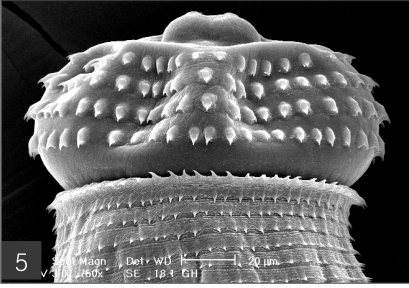
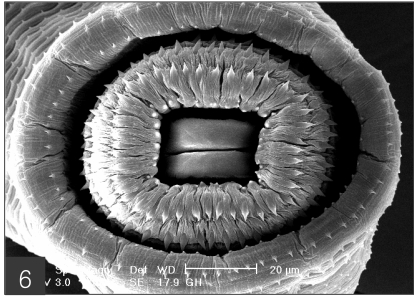
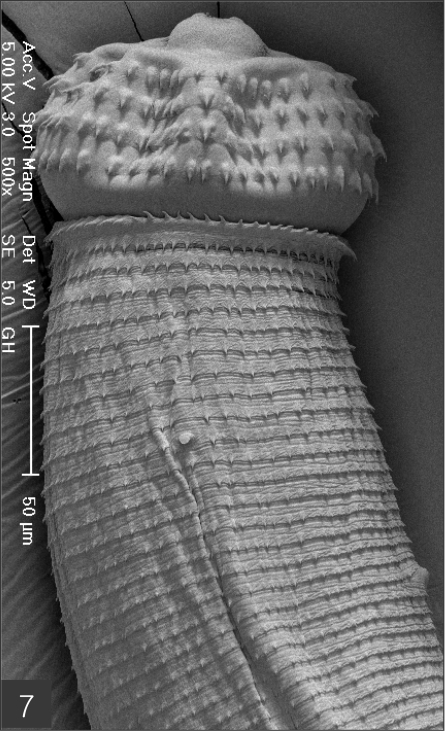
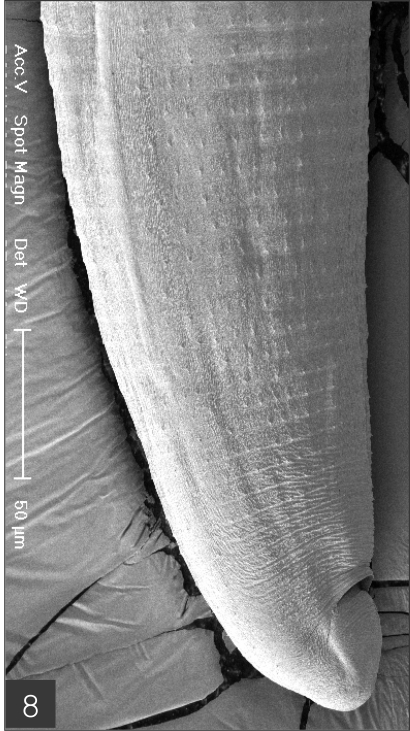
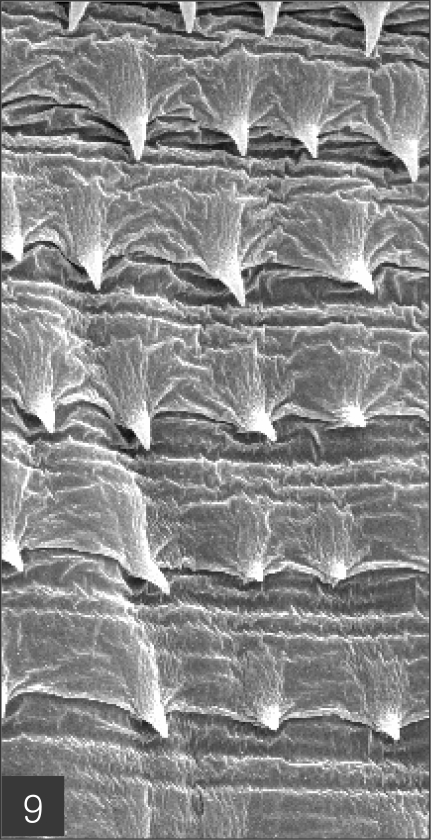
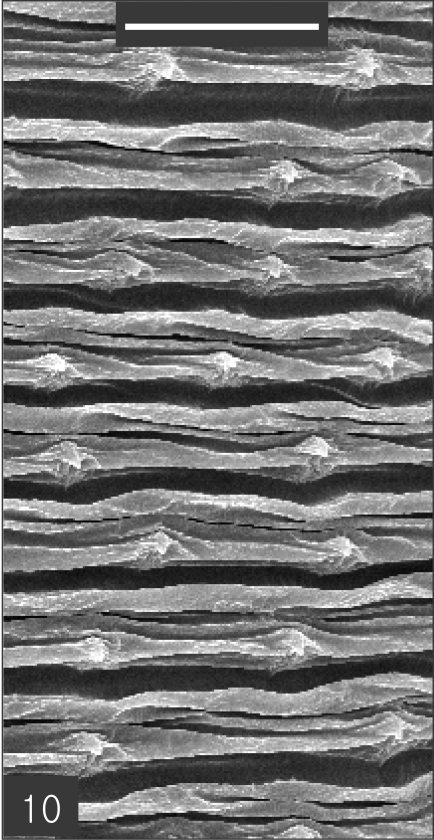
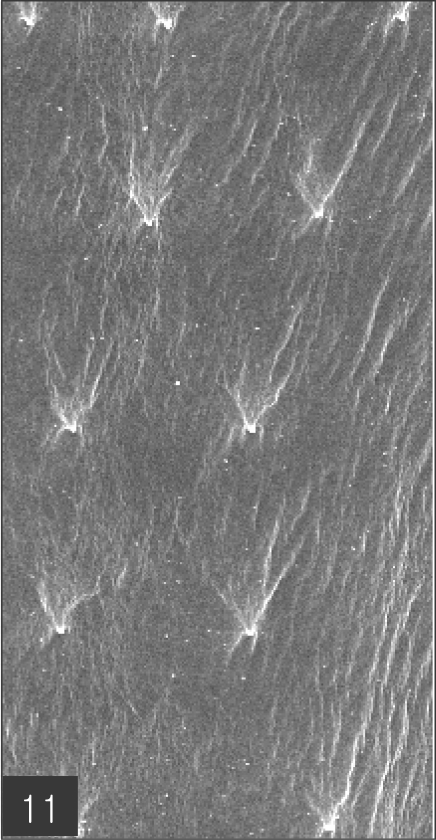
A total of 205 larval gnathostomes were collected from 18 (22.5%) of 80 red banded odd-tooth snakes, Dinodon rufozonatum rufozonatum, which had been smuggled from China and confiscated at Customs in Busan, Republic of Korea. In order to identify the species, some of the larvae were observed by a light microscope and a scanning electron microscope (SEM). The larvae were 2.18 x 0.29 mm in average size, and had a pair of lips at the anterior end, a muscular esophagus, 2 pairs of cervical sacs, and brownish intestines. The head bulb was characteristically equipped with 4 rows of hooklets; the average number of hooklets in each respective row was 38.6, 40.5, 41.5, and 43.7. In SEM views, the mouth evidenced a pair of lateral lips of equal size in a half-moon shape. Each lip featured a couple of labial papillae and a small amphid located between the 2 papillae. The hooklets on the head bulb had single-pointed, posteriorly-curved tips. The cuticular spines were larger and more densely distributed on the anterior part of the body, and decreased gradually in size and number toward the posterior body. On the basis of these morphological characteristics, the larvae were identified as the third stage larvae of Gnathostoma hispidum.
Figures
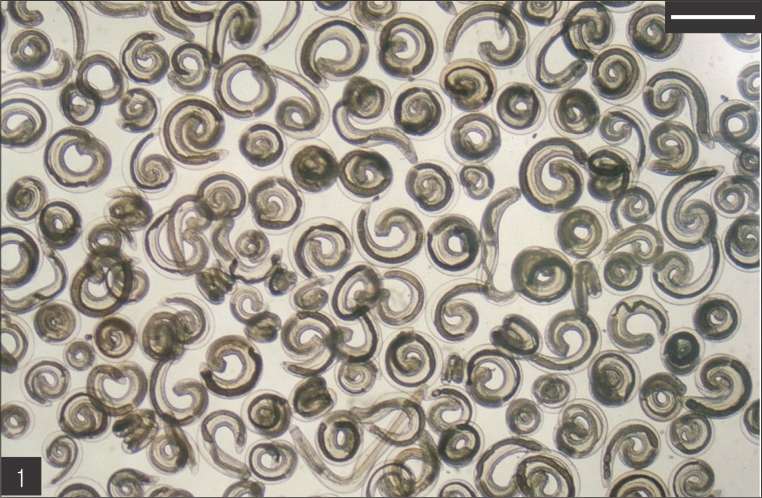
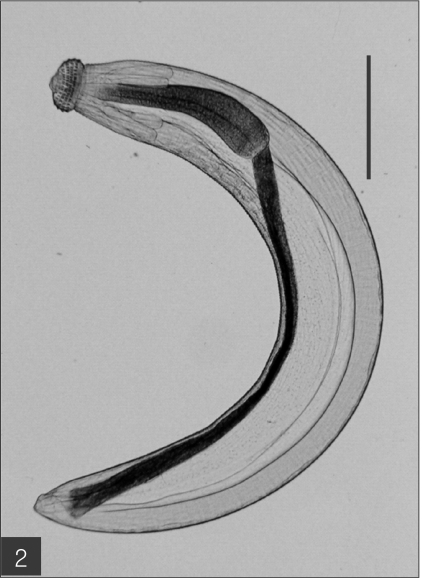
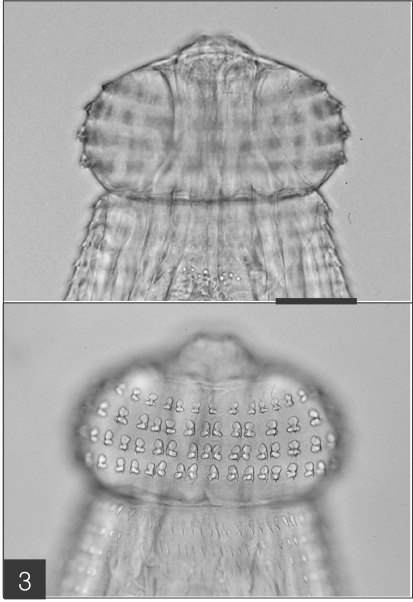
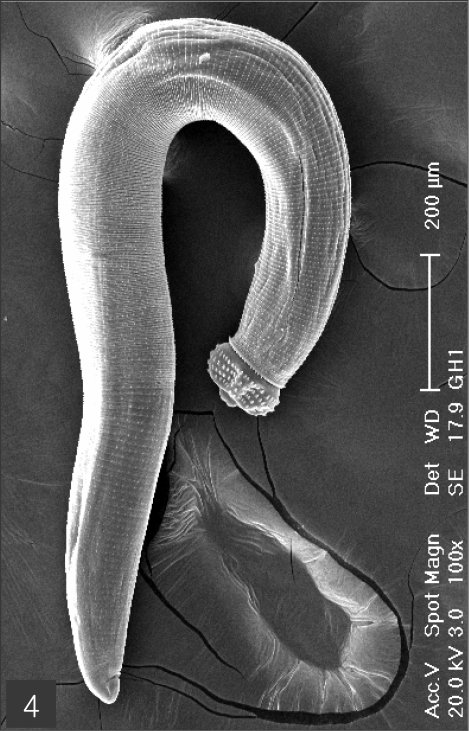
References
-
- Akahane H, Mako T. Infection patterns of Gnathostoma hispidum in loaches imported from mainland China. Jpn J Parasitol. 1984;33:509–513. (in Japanese)
-
- Ando K, Tanaka H, Taniguchi Y, Shimizu M, Kondo K. Two human cases of gnathostomiasis and discovery of a second intermediate host of Gnathostoma nipponicum in Japan. J Parasitol. 1988;74:623–627. - PubMed
-
- Araki T. Gnathomiasis-parasitic diseases caused by eating raw loaches. Kansen Ensyou Meneki (Infection, Inflammation and Immunology) 1986;16:110–111. (in Japanese)
-
- Chandler AC. A contribution to the life history of gnathostomes. Parasitology. 1925;17:237–244.
-
- Chen HT. Parasites in slaughter houses in Canton. Part 1. Helminths of Kwangtung hogs. Lingnan Sci J. 1936;15:31–44.
Publication types
MeSH terms
LinkOut - more resources
Full Text Sources