


RNA interference and antiviral therapy
- PMID: 17876887
- PMCID: PMC4171298
- DOI: 10.3748/wjg.v13.i39.5169
RNA interference and antiviral therapy
Abstract
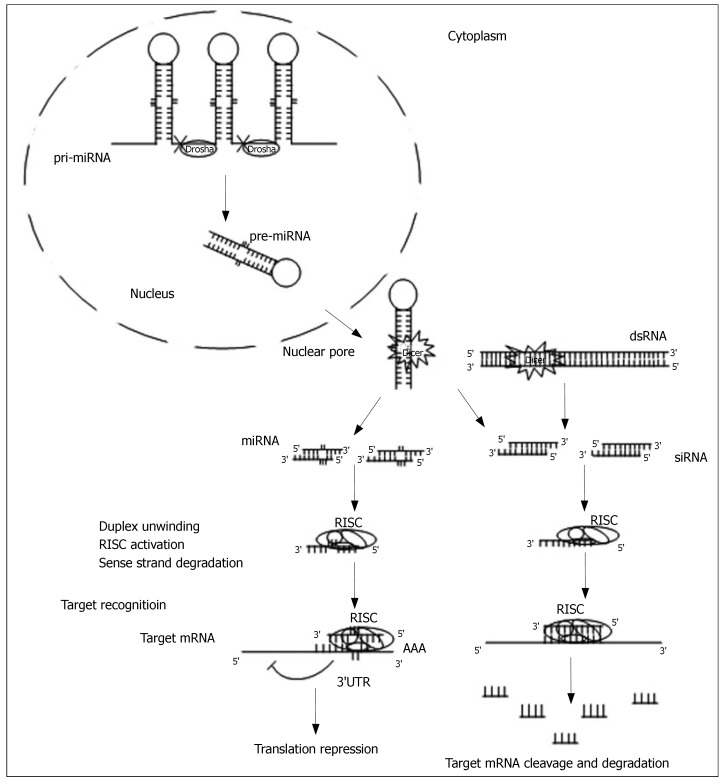
RNA interference (RNAi) is an evolutionally conserved gene silencing mechanism present in a variety of eukaryotic species. RNAi uses short double-stranded RNA (dsRNA) to trigger degradation or translation repression of homologous RNA targets in a sequence-specific manner. This system can be induced effectively in vitro and in vivo by direct application of small interfering RNAs (siRNAs), or by expression of short hairpin RNA (shRNA) with non-viral and viral vectors. To date, RNAi has been extensively used as a novel and effective tool for functional genomic studies, and has displayed great potential in treating human diseases, including human genetic and acquired disorders such as cancer and viral infections. In the present review, we focus on the recent development in the use of RNAi in the prevention and treatment of viral infections. The mechanisms, strategies, hurdles and prospects of employing RNAi in the pharmaceutical industry are also discussed.
References
-
- Hammond SM, Caudy AA, Hannon GJ. Post-transcriptional gene silencing by double-stranded RNA. Nat Rev Genet. 2001;2:110–119. - PubMed
-
- Olsen PH, Ambros V. The lin-4 regulatory RNA controls developmental timing in Caenorhabditis elegans by blocking LIN-14 protein synthesis after the initiation of translation. Dev Biol. 1999;216:671–680. - PubMed
Publication types
MeSH terms
Substances
LinkOut - more resources
Full Text Sources
Other Literature Sources
Medical
