


Review
doi: 10.1002/em.20342.
Epigenetic aspects of genotoxic and non-genotoxic hepatocarcinogenesis: studies in rodents
Affiliations
- PMID: 17879298
- PMCID: PMC2705440
- DOI: 10.1002/em.20342
Item in Clipboard
Review
Epigenetic aspects of genotoxic and non-genotoxic hepatocarcinogenesis: studies in rodents
Environ Mol Mutagen.
2008 Jan.
Abstract
Hepatocellular carcinoma, which is one of the most prevalent life-threatening human cancers, is showing an increased incidence worldwide. Recent evidence indicates that the development of hepatocellular carcinoma is associated with not only genetic alterations, but also with profound epigenetic changes. This review summarizes the current knowledge about epigenetic alterations during rodent hepatocarcinogenesis, considers the similarities and differences in epigenetic effects of genotoxic and non-genotoxic rodent liver carcinogens, and discusses the possible role of these effects in the causality of liver tumor development.
Figures
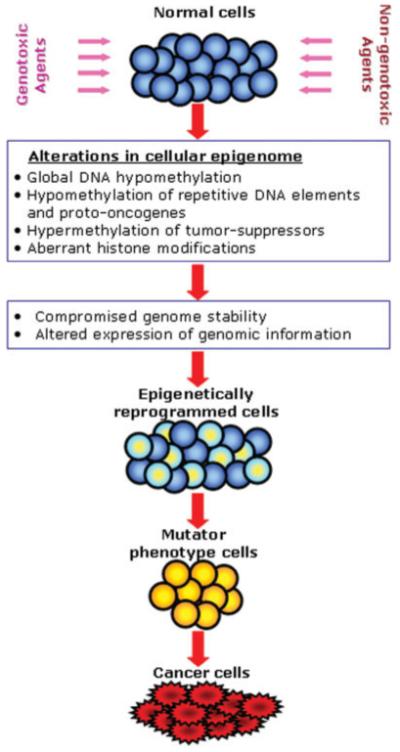
An integrated view of the role of epigenetic dysregulation in hepatocarcinogenesis. Genotoxic or non-genotoxic insults injure many liver cells triggering changes in the cellular epigenome. Alterations in epigenetic mechanisms lead to early disruption of homeostasis in liver cells characterized by a loss in the balance between cell proliferation and apoptosis, activation of DNA repetitive sequences in the genome, loss of genomic and chromosomal stability, and aberrant expression of genomic information. This results in the emergence of the population of epigenetically reprogrammed proliferating cells with a growth advantage and high potential for activation of a mutator phenotype and, consequently, leads to malignant cell transformation.
References
-
- Bachman AN, Kamendulis LM, Goodman JI. Diethanolamine and Phenobarbital produce an altered pattern of methylation in GC-rich regions of DNA in B6C3F1 mouse hepatocytes similar to that resulting from choline deficiency. Toxicol Sci. 2006;90:317–325. - PubMed
-
- Bombail V, Moggs JG, Orphanides G. Perturbation of epigenetic status by toxicants. Toxicol Lett. 2004;149:51–58. - PubMed
-
- Calvisi DF, Ladu S, Conner EA, Factor VM, Thorgeirsson SS. Disregulation of E-cadherin in transgenic mouse models of liver cancer. Lab Invest. 2004;84:1137–1147. - PubMed
Publication types
MeSH terms
Grants and funding
LinkOut - more resources
Full Text Sources
Medical
