


Trends in hyperlipidemia and hypertension management in type 2 diabetes patients from 1998-2004: a longitudinal observational study
- PMID: 17883840
- PMCID: PMC2034374
- DOI: 10.1186/1475-2840-6-25
Trends in hyperlipidemia and hypertension management in type 2 diabetes patients from 1998-2004: a longitudinal observational study
Abstract
Background: Lack of treatment initiation or intensification might explain why some patients with type 2 diabetes do not reach target goals. The objective is to assess trends in risk factor treatment, and identify determinants for medication adjustments in patients with uncontrolled hypertension and/or hyperlipidemia.
Methods: We conducted a cohort study using data from the Zwolle Outpatient Diabetes project Integrated Available Care (ZODIAC)-study in The Netherlands. Management of hypertension and hyperlipidemia was assessed yearly from 1998-2004 by measuring the percentage of patients receiving a treatment initiation or intensification among all patients with elevated risk factor levels. Generalized estimating equation analyses were performed.
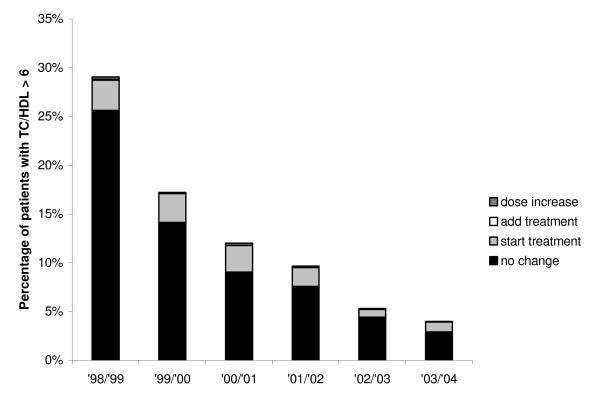
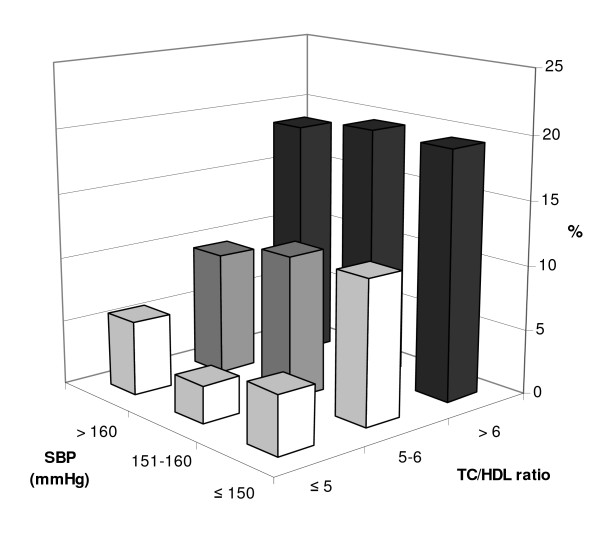
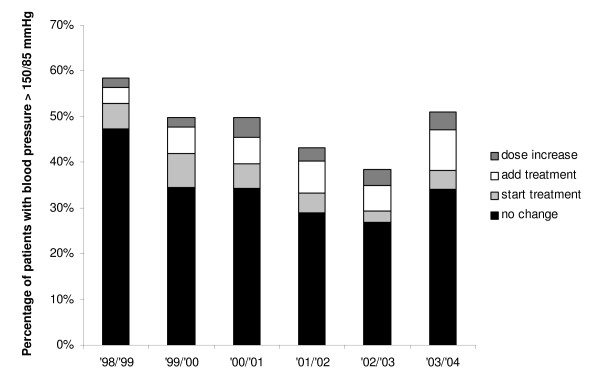
Results: During the study period, the percentage of patients with an elevated total cholesterol/high-density lipoproteins ratio (>6) decreased considerably (from 29% to 4%) whereas the percentage of hypertensive patients decreased only slightly (>or= 150/85 mmHg; from 58% to 51%). Initiation of lipid-lowering therapy and intensification of antihypertensive therapy was higher in more recent years. However, still two-third of patients with insufficiently controlled blood pressure in 2003 did not receive an initiation or intensification of antihypertensive treatment in the following year. Treatment changes were mainly determined by elevated levels of the corresponding risk factor. We did not observe increased initiation rates for lipid-lowering therapy in patients with both hypertension and hyperlipidemia.
Conclusion: Hypertension and hyperlipidemia management in type 2 diabetes patients has improved in the past decade but further improvement is possible. Greater effort is needed to stimulate medication adjustments in patients with insufficiently controlled hypertension and combined risk factors.
Figures
References
-
- Meigs JB, Singer DE, Sullivan LM, Dukes KA, D'Agostino RB, Nathan DM, Wagner EH, Kaplan SH, Greenfield S. Metabolic control and prevalent cardiovascular disease in non-insulin-dependent diabetes mellitus (NIDDM): The NIDDM Patient Outcome Research Team. Am J Med. 1997;102:38–47. doi: 10.1016/S0002-9343(96)00383-X. - DOI - PubMed
MeSH terms
Substances
LinkOut - more resources
Full Text Sources
Medical
Miscellaneous
