


Asymmetrical ground impact of the hands after a trip-induced fall: experimental kinematics and kinetics
- PMID: 17888549
- PMCID: PMC2099579
- DOI: 10.1016/j.clinbiomech.2007.07.014
Asymmetrical ground impact of the hands after a trip-induced fall: experimental kinematics and kinetics
Abstract
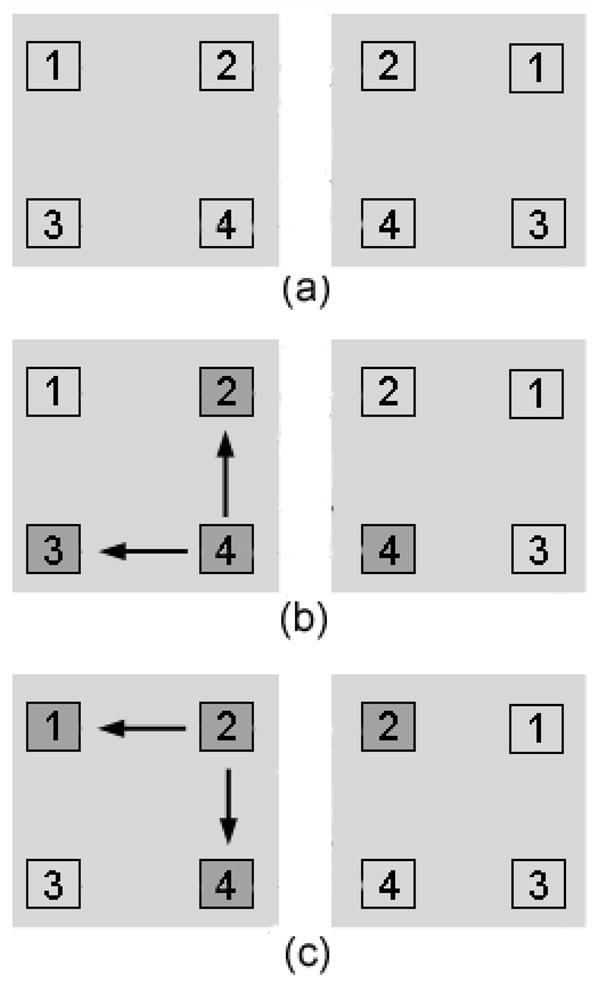
Background: Distal radius fractures are among the most common fall-related fractures. The manner in which the upper extremities are used for protection during a fall may exert a considerable influence on the incidence of injury. Here, we sought to determine the degree to which the assumption of sagittal plane symmetry was valid in unexpected falls after a trip, and to quantify the effects of asymmetrical upper extremity motion on impact kinematics and kinetics.
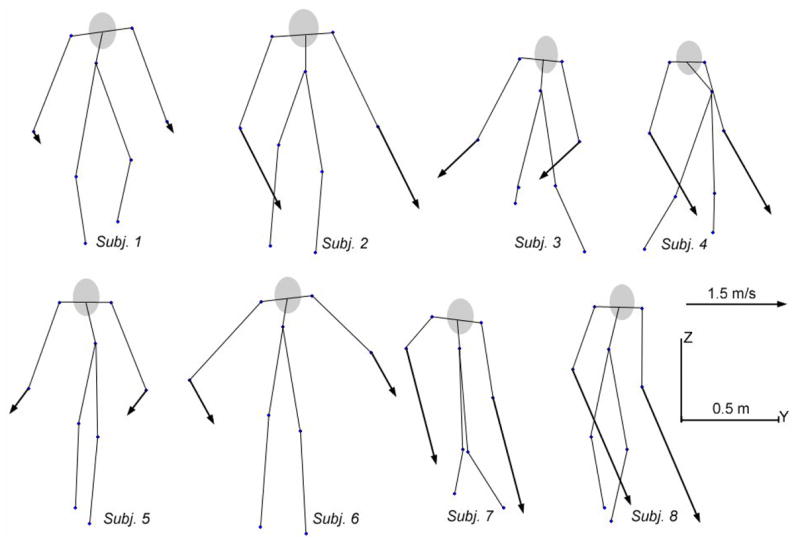
Methods: The motion of eight healthy older women who fell after being unexpectedly tripped was quantified. Impact kinematics and kinetics of 36 adults who intentionally fell onto force plates with their hands positioned either symmetrically or asymmetrically were quantified.
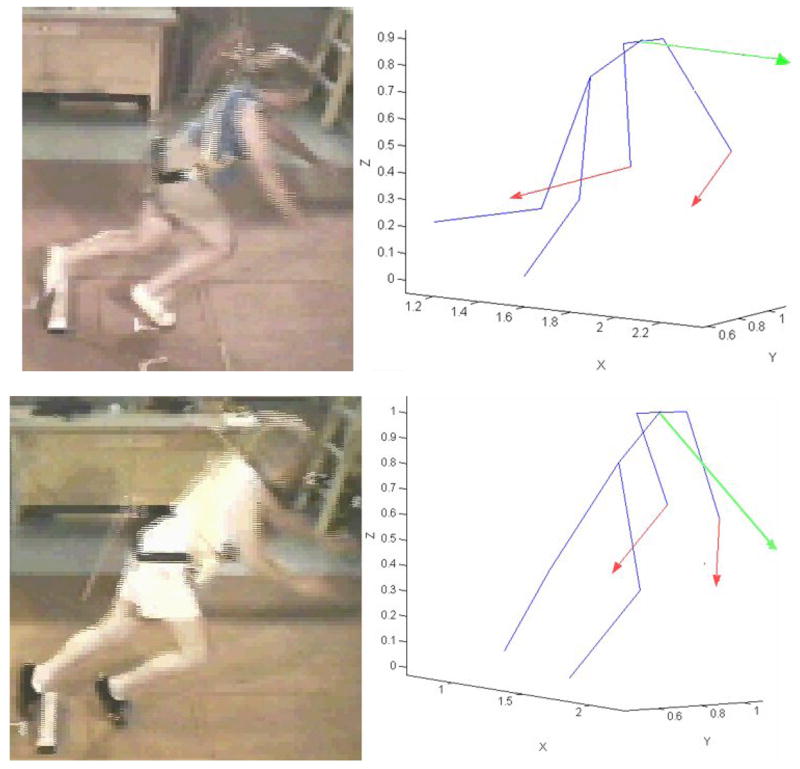
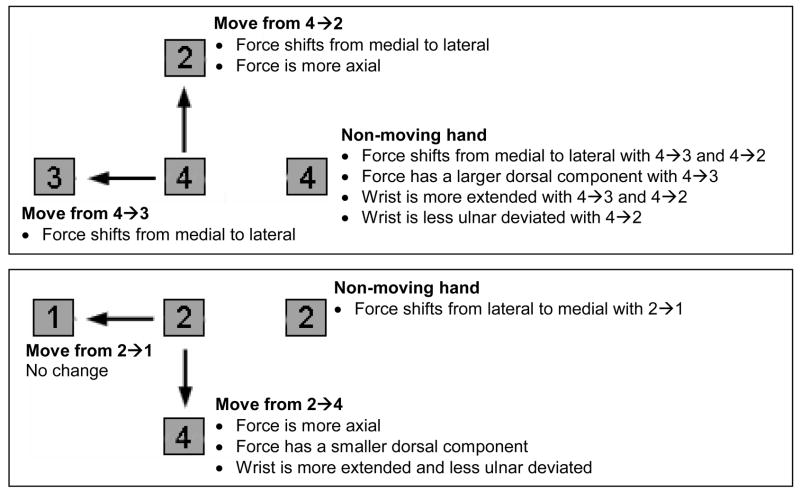
Findings: Just prior to safety harness engagement the wrists of the older women were not positioned or moving symmetrically relative to the midpoint between the shoulders. Asymmetry did not affect the peak reaction force magnitude, but increased the degree to which force was directed along the axis of the radius (axial component of the unit vector k = 0.949 versus k = 0.932, P = 0.026). Asymmetry resulted in greater wrist dorsiflexion (47 degrees versus 43 degrees , P = 0.019) compared to symmetrical trials and increased temporal offset (33 ms versus 11 ms, P<0.001) between right and left ground impacts.
Interpretation: Kinetics and kinematics arising from asymmetric impact may meaningfully affect the fracture strength of the distal radius. Because trip-induced falls in older women may result in asymmetric upper extremity impact, these differences in landing kinematics and kinetics due to asymmetry merit consideration when developing clinical interventions to prevent fall-related fractures.
Figures
References
-
- Augat P, Iida H, Jiang Y, Diao E, Genant HK. Distal radius fractures: mechanisms of injury and strength prediction by bone mineral assessment. J Orthop Res. 1998;16:629–35. - PubMed
-
- Bherer L, Belleville S, Hudon C. Executive function deficits in normal aging, Alzheimer’s disease, and frontotemporal dementia. Psychol Neuropsychiatr Vieil. 2004;2:181–9. - PubMed
-
- Centers for Disease Control and Prevention (CDC) Hyattsville, MD: U.S. Department of Health and Human Services, Centers for Disease Control and Prevention; 1994. National Center for Health Statistics (NCHS). National Health and Nutrition Examination Survey Data. http://www.cdc.gov/nchs/about/major/nhanes/Anthropometric%20Measures.htm.
-
- Chiu J, Robinovitch SN. Prediction of upper extremity impact forces during falls on the outstretched hand. J Biomech. 1998;31:1169–76. - PubMed
-
- Chou PH, Chou YL, Lin CJ, Su FC, Lou SZ, Lin CF, Huang GF. Effect of elbow flexion on upper extremity impact forces during a fall. Clin Biomech (Bristol, Avon) 2001;16:888–94. - PubMed
Publication types
MeSH terms
Grants and funding
LinkOut - more resources
Full Text Sources
Medical
