


Nutrient-sensitive mitochondrial NAD+ levels dictate cell survival
- PMID: 17889652
- PMCID: PMC3366687
- DOI: 10.1016/j.cell.2007.07.035
Nutrient-sensitive mitochondrial NAD+ levels dictate cell survival
Abstract
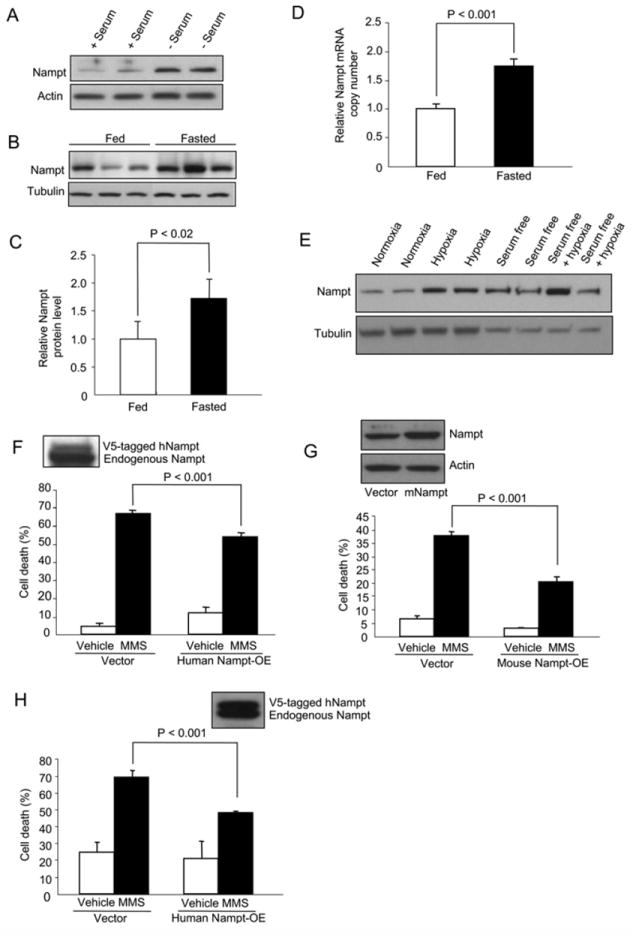
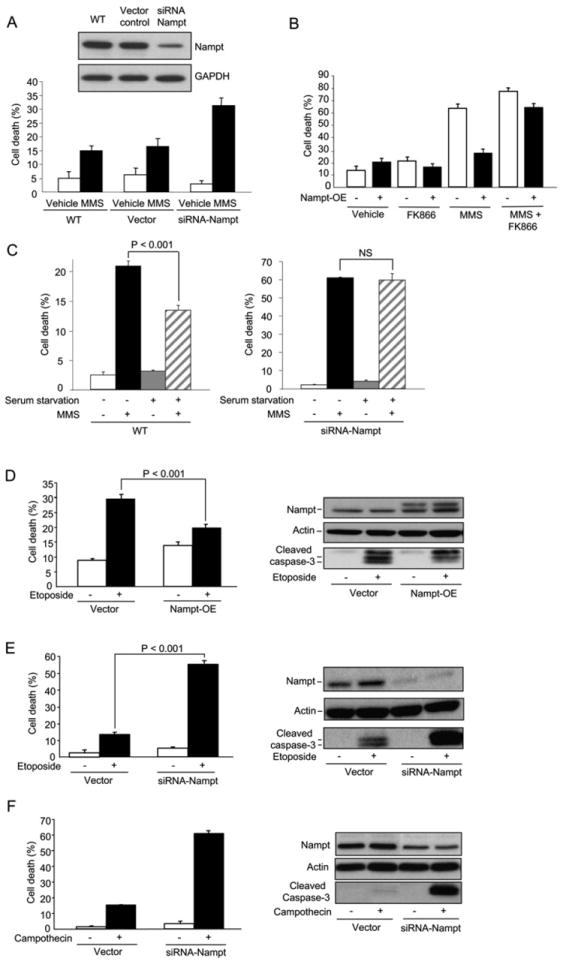
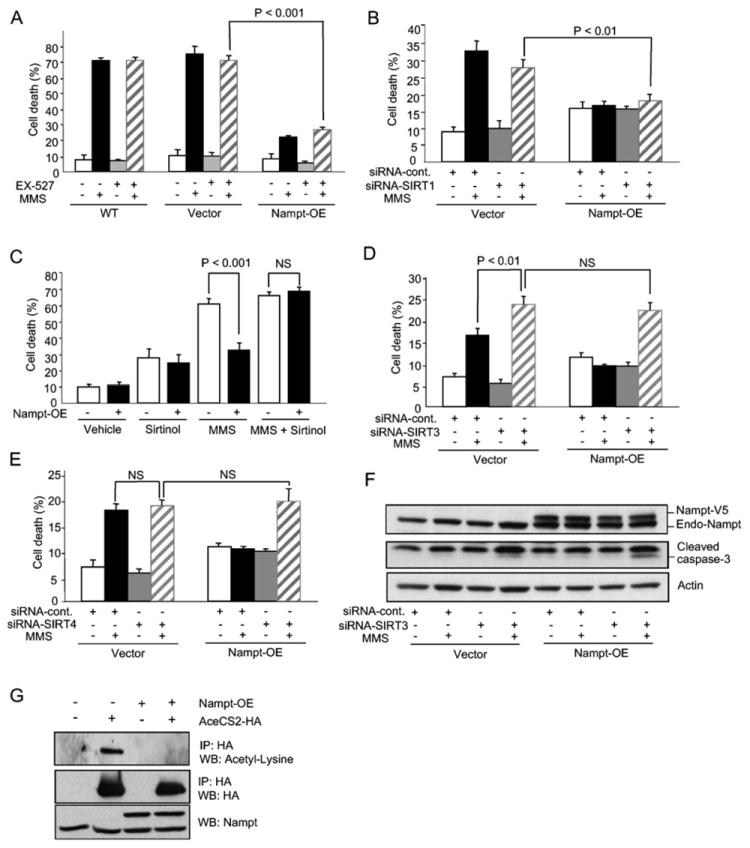
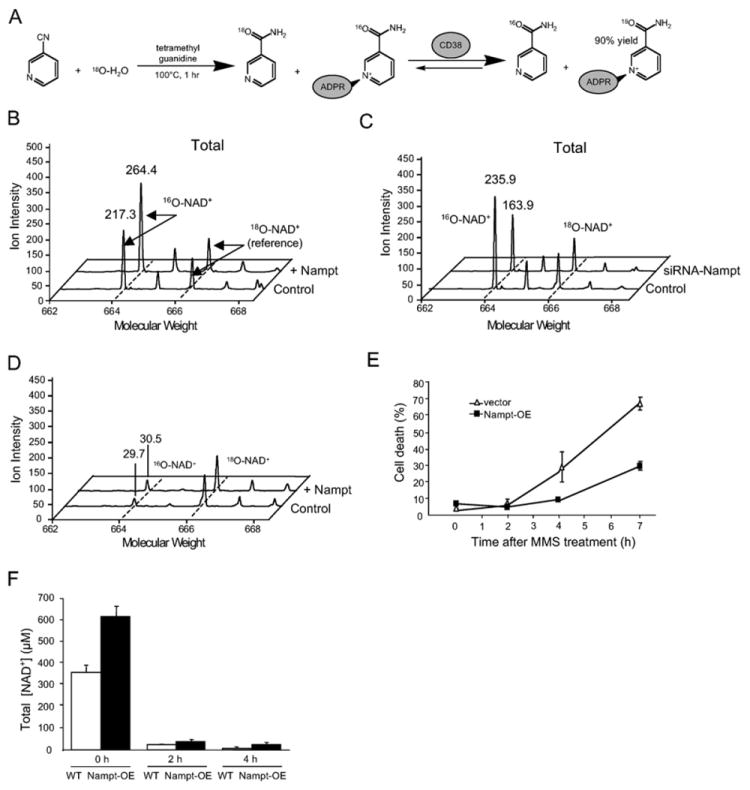
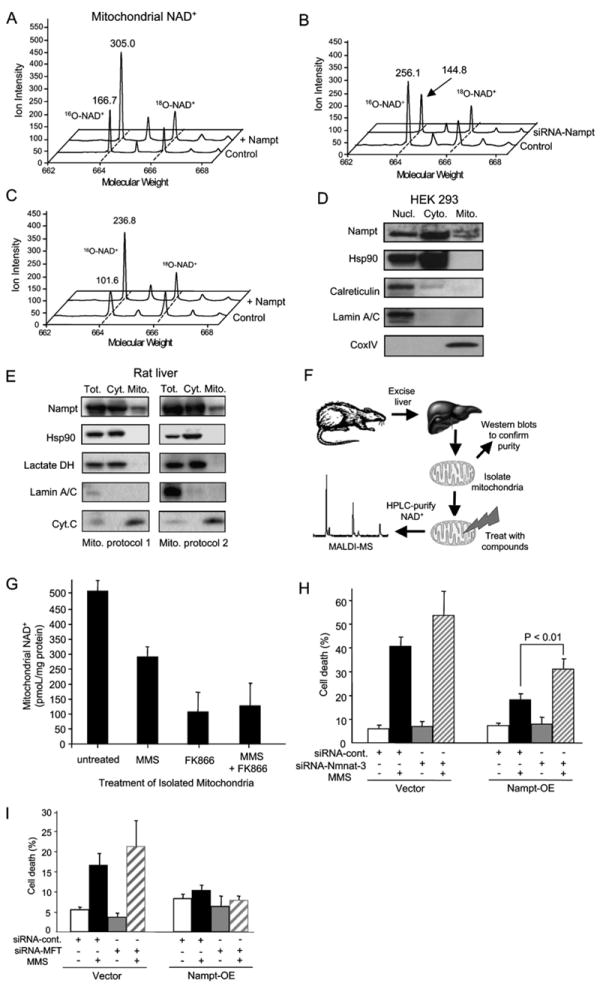
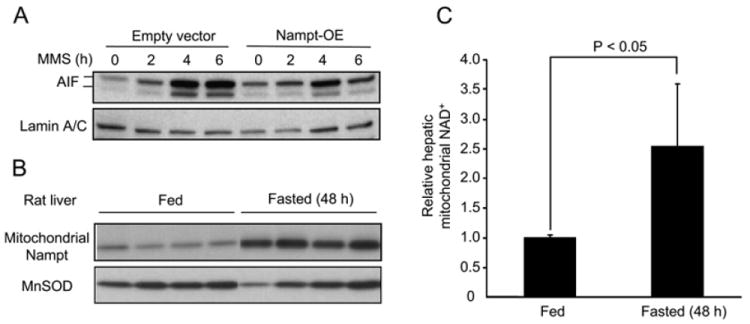
A major cause of cell death caused by genotoxic stress is thought to be due to the depletion of NAD(+) from the nucleus and the cytoplasm. Here we show that NAD(+) levels in mitochondria remain at physiological levels following genotoxic stress and can maintain cell viability even when nuclear and cytoplasmic pools of NAD(+) are depleted. Rodents fasted for 48 hr show increased levels of the NAD(+) biosynthetic enzyme Nampt and a concomitant increase in mitochondrial NAD(+). Increased Nampt provides protection against cell death and requires an intact mitochondrial NAD(+) salvage pathway as well as the mitochondrial NAD(+)-dependent deacetylases SIRT3 and SIRT4. We discuss the relevance of these findings to understanding how nutrition modulates physiology and to the evolution of apoptosis.
Figures
References
-
- Anderson RM, Bitterman KJ, Wood JG, Medvedik O, Cohen H, Lin SS, Manchester JK, Gordon JI, Sinclair DA. Manipulation of a nuclear NAD+ salvage pathway delays aging without altering steady-state NAD+ levels. J Biol Chem. 2002;277:18881–18890. - PubMed
-
- Ando K, Higami Y, Tsuchiya T, Kanematsu T, Shimokawa I. Impact of aging and life-long calorie restriction on expression of apoptosis-related genes in male F344 rat liver. Microsc Res Tech. 2002;59:293–300. - PubMed
-
- Araki T, Sasaki Y, Milbrandt J. Increased nuclear NAD biosynthesis and SIRT1 activation prevent axonal degeneration. Science. 2004;305:1010–1013. - PubMed
Publication types
MeSH terms
Substances
Grants and funding
LinkOut - more resources
Full Text Sources
Other Literature Sources
Miscellaneous
