


Sir2 deacetylates histone H3 lysine 56 to regulate telomeric heterochromatin structure in yeast
- PMID: 17889663
- PMCID: PMC2048486
- DOI: 10.1016/j.molcel.2007.07.021
Sir2 deacetylates histone H3 lysine 56 to regulate telomeric heterochromatin structure in yeast
Abstract
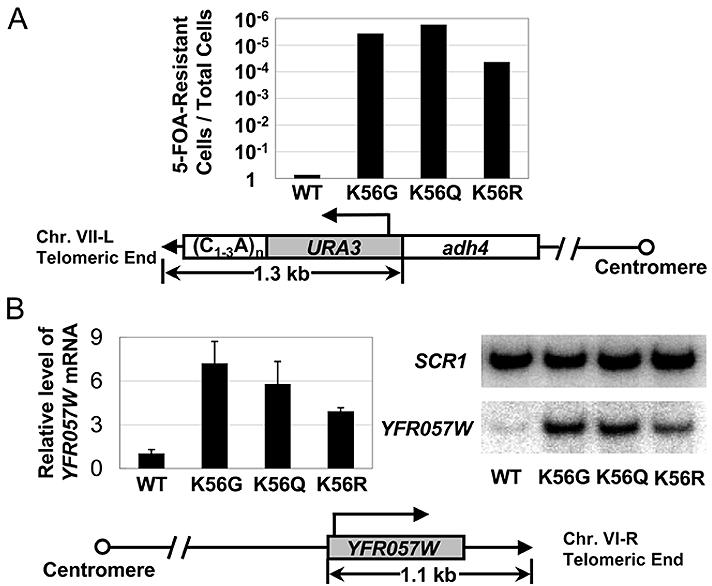
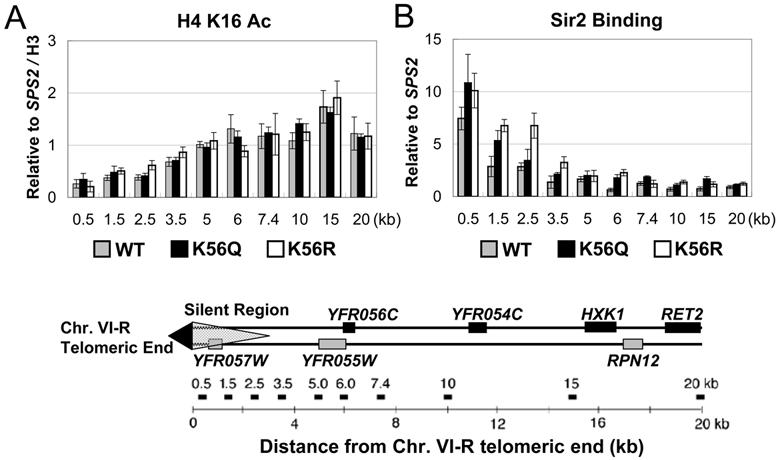
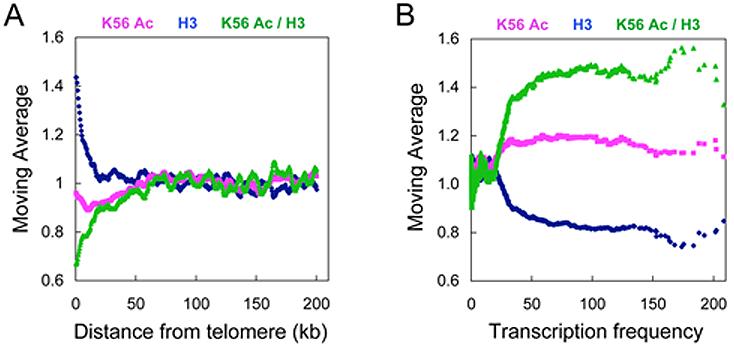
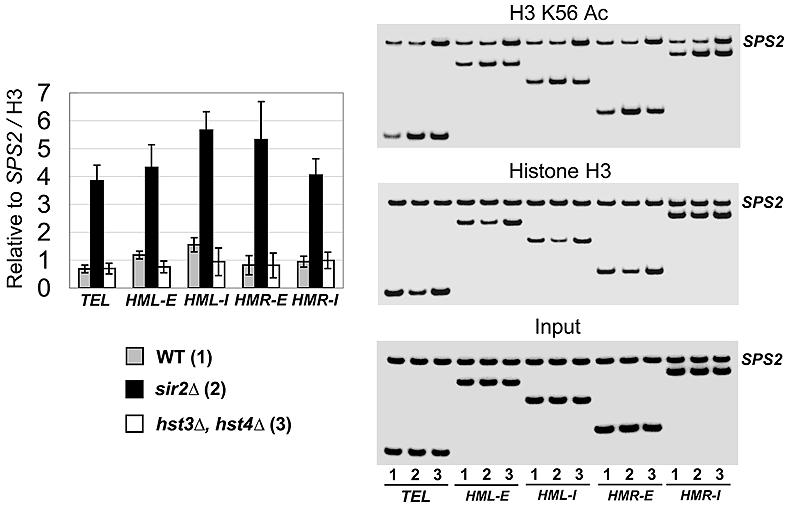
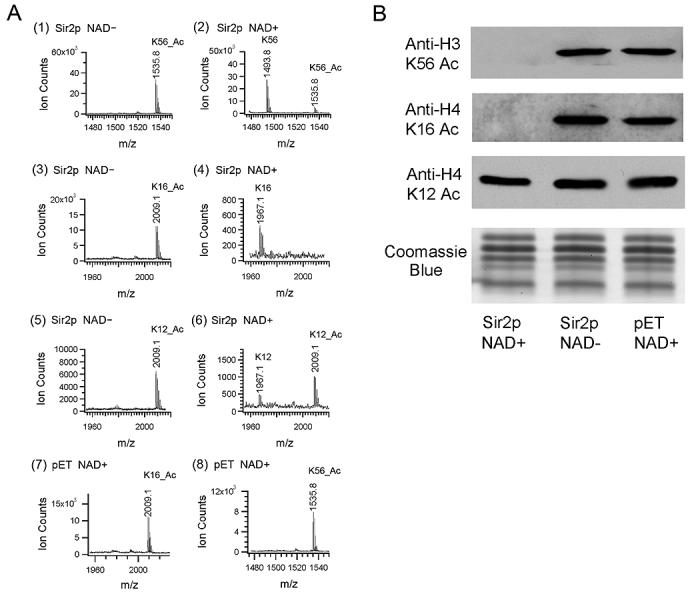
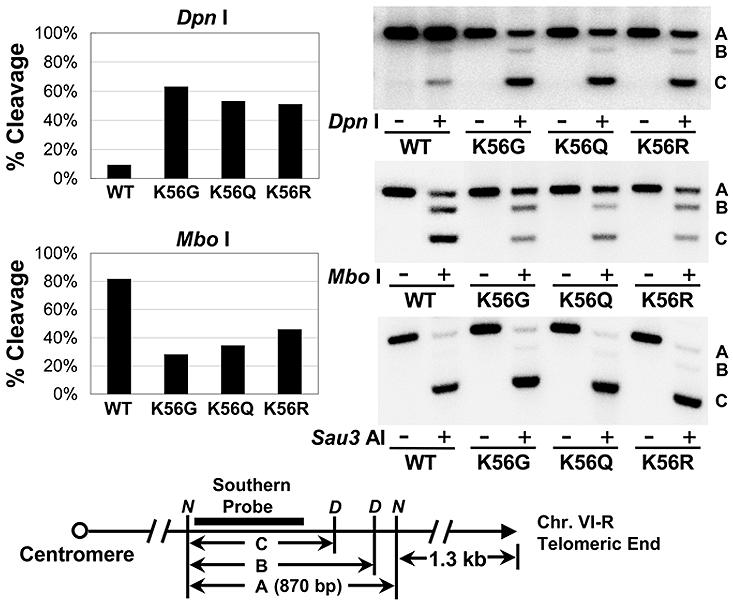
At telomeric heterochromatin in yeast, the Sir protein complex spreads from Rap1 sites to silence adjacent genes. This cascade is believed to occur when Sir2, an NAD(+)-dependent enzyme, deacetylates histone H3 and H4 N termini, in particular histone H4 K16, enabling more Sir protein binding. Lysine 56 of histone H3 is located at the entry-exit points of the DNA superhelix surrounding the nucleosome, where it may control DNA compaction. We have found that K56 substitutions disrupt silencing severely without decreasing Sir protein binding at the telomere. Our in vitro and in vivo data indicate that Sir2 deacetylates K56 directly in telomeric heterochromatin to compact chromatin and prevent access to RNA polymerase and ectopic bacterial dam methylase. Since the spread of Sir proteins is necessary but not sufficient for silencing, we propose that silencing occurs when Sir2 deacetylates H3 K56 to close the nucleosomal entry-exit gates, enabling compaction of heterochromatin.
Figures
References
-
- Allshire RC, Javerzat JP, Redhead NJ, Cranston G. Position effect variegation at fission yeast centromeres. Cell. 1994;76:157–169. - PubMed
-
- Aparicio OM, Billington BL, Gottschling DE. Modifiers of position effect are shared between telomeric and silent mating-type loci in S. cerevisiae. Cell. 1991;66:1279–1287. - PubMed
-
- Boeger H, Griesenbeck J, Strattan JS, Kornberg RD. Nucleosomes unfold completely at a transcriptionally active promoter. Mol Cell. 2003;11:1587–1598. - PubMed
-
- Braunstein M, Rose AB, Holmes SG, Allis CD, Broach JR. Transcriptional silencing in yeast is associated with reduced nucleosome acetylation. Genes Dev. 1993;7:592–604. - PubMed
Publication types
MeSH terms
Substances
Grants and funding
LinkOut - more resources
Full Text Sources
Other Literature Sources
Molecular Biology Databases
Research Materials
