


Positive feedback regulates switching of phosphate transporters in S. cerevisiae
- PMID: 17889672
- PMCID: PMC2034509
- DOI: 10.1016/j.molcel.2007.07.022
Positive feedback regulates switching of phosphate transporters in S. cerevisiae
Abstract
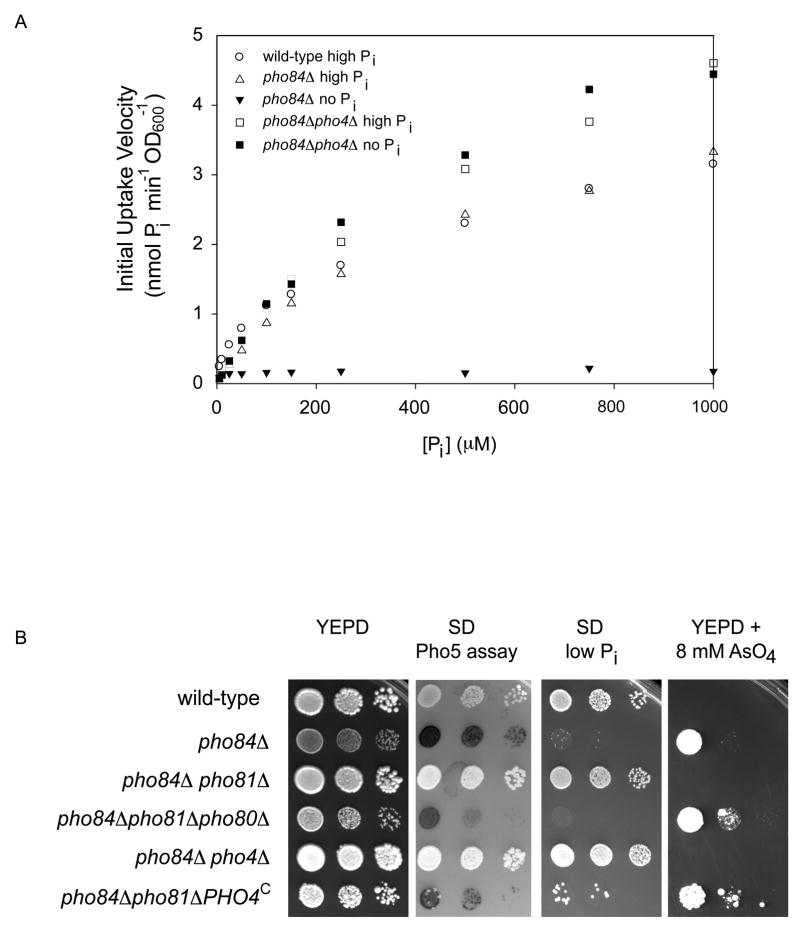
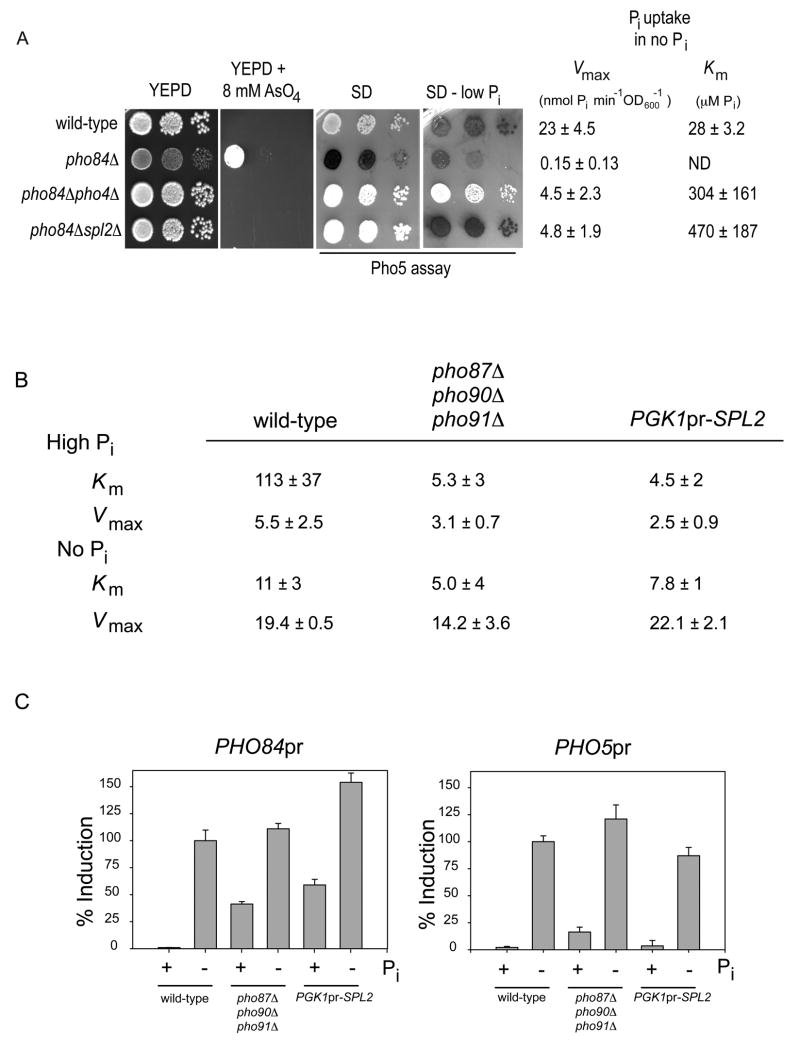
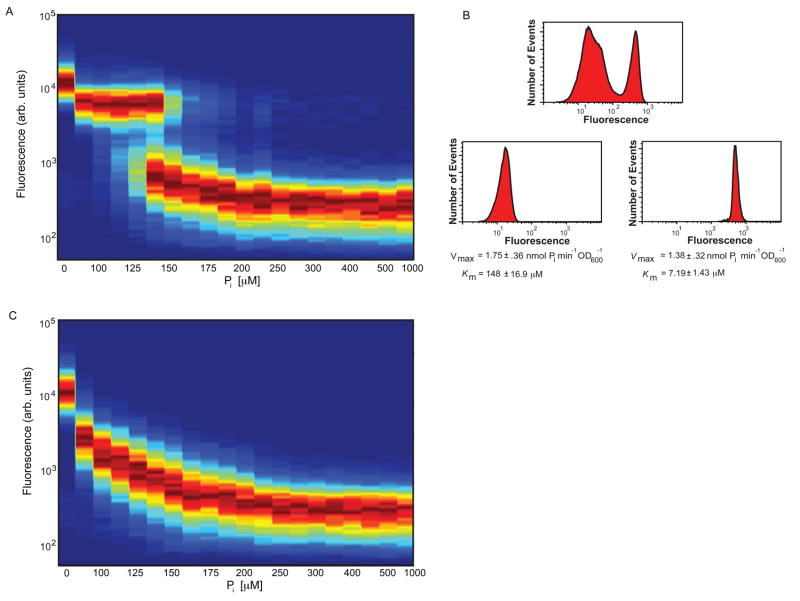
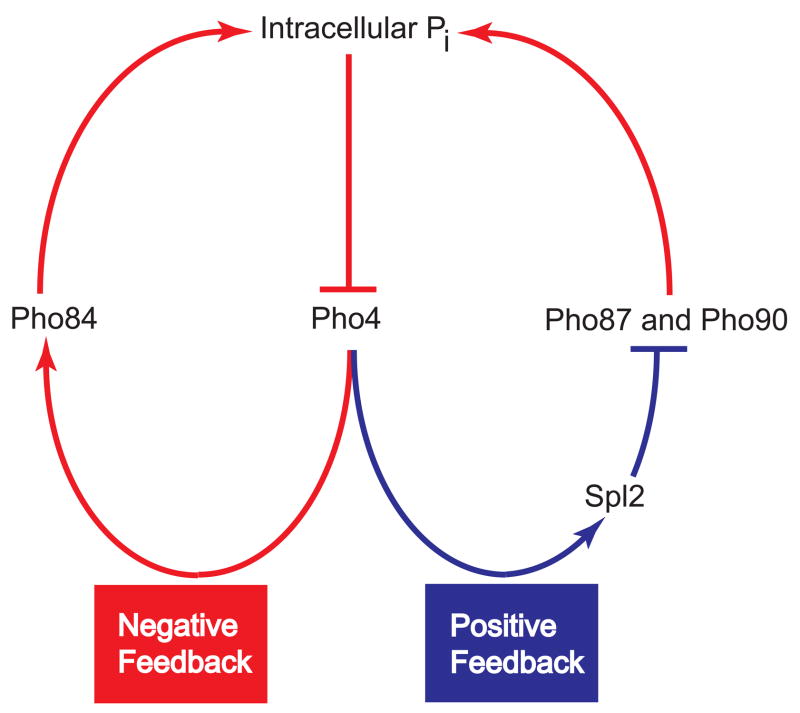
The regulation of transporters by nutrient-responsive signaling pathways allows cells to tailor nutrient uptake to environmental conditions. We investigated the role of feedback generated by transporter regulation in the budding yeast phosphate-responsive signal transduction (PHO) pathway. Cells starved for phosphate activate feedback loops that regulate high- and low-affinity phosphate transport. We determined that positive feedback is generated by PHO pathway-dependent upregulation of Spl2, a negative regulator of low-affinity phosphate uptake. The interplay of positive and negative feedback loops leads to bistability in phosphate transporter usage--individual cells express predominantly either low- or high-affinity transporters, both of which can yield similar phosphate uptake capacity. Cells lacking the high-affinity transporter, and associated negative feedback, exhibit phenotypes that arise from hysteresis due to unopposed positive feedback. In wild-type cells, population heterogeneity generated by feedback loops may provide a strategy for anticipating changes in environmental phosphate levels.
Figures
References
-
- Abelson PH. A potential phosphate crisis. Science. 1999;283:2015. - PubMed
-
- Acar M, Becskei A, van Oudenaarden A. Enhancement of cellular memory by reducing stochastic transitions. Nature. 2005;435:228–232. - PubMed
-
- Auesukaree C, Homma T, Kaneko Y, Harashima S. Transcriptional regulation of phosphate-responsive genes in low-affinity phosphate-transporter-defective mutants in Saccharomyces cerevisiae. Biochem Biophys Res Commun. 2003;306:843–850. - PubMed
-
- Barnes BR, Zierath JR. Role of AMP--activated protein kinase in the control of glucose homeostasis. Curr Mol Med. 2005;5:341–348. - PubMed
Publication types
MeSH terms
Substances
Grants and funding
LinkOut - more resources
Full Text Sources
Molecular Biology Databases
