


Stressor-specific alterations in corticosterone and immune responses in mice
- PMID: 17890050
- PMCID: PMC2175078
- DOI: 10.1016/j.bbi.2007.07.012
Stressor-specific alterations in corticosterone and immune responses in mice
Abstract
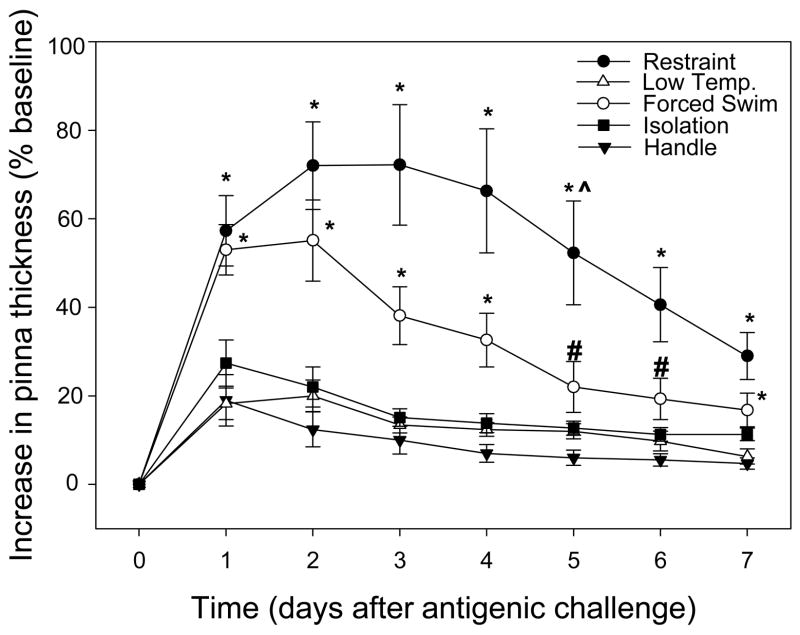
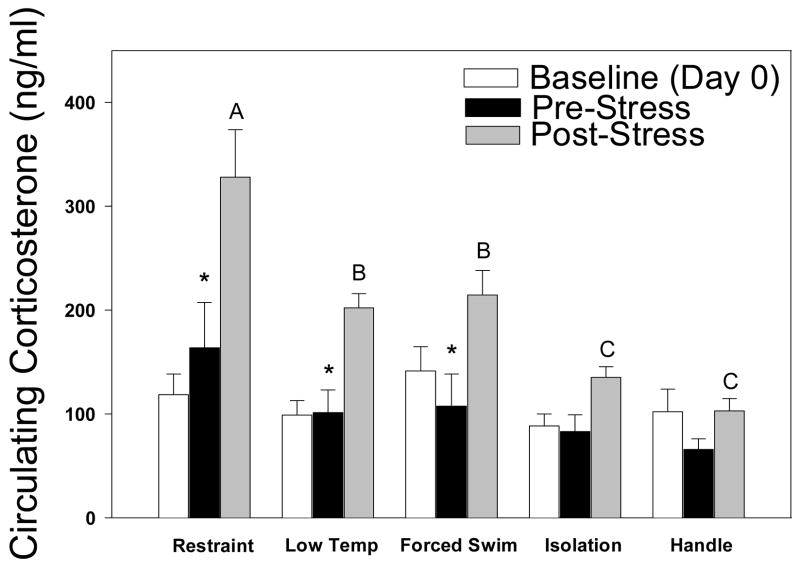
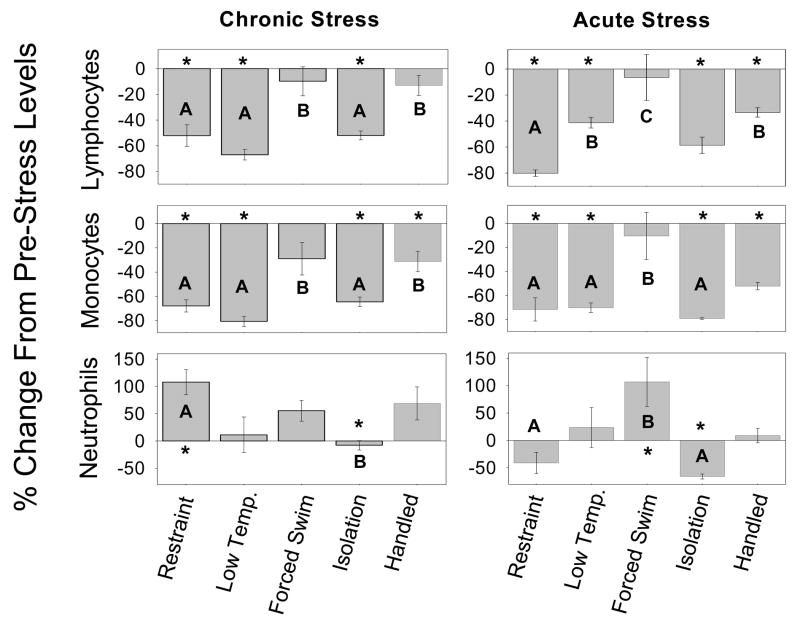
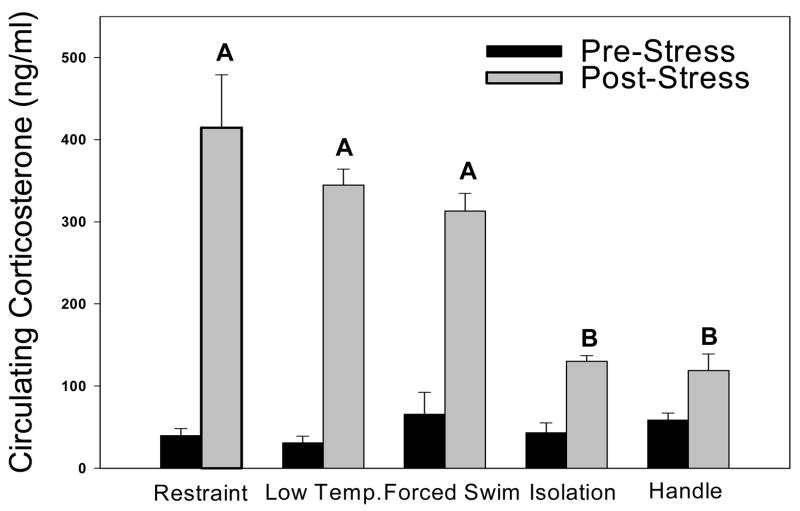
Different stressors likely elicit different physiological and behavioral responses. Previously reported differences in the effects of stressors on immune function may reflect qualitatively different physiological responses to stressors; alternatively, both large and subtle differences in testing protocols and methods among laboratories may make direct comparisons among studies difficult. Here we examine the effects of chronic stressors on plasma corticosterone concentrations, leukocyte redistribution, and skin delayed-type hypersensitivity (DTH), and the effects of acute stressors on plasma corticosterone and leukocyte redistribution. The effects of several commonly used laboratory stressors including restraint, forced swim, isolation, and low ambient temperatures (4 degrees C) were examined. Exposure to each stressor elevated corticosterone concentrations, with restraint (a putative psychological stressor) evoking a significantly higher glucocorticoid response than other stressors. Chronic restraint and forced swim enhanced the DTH response compared to the handled, low temperature, or isolation conditions. Restraint, low temperature, and isolation significantly increased trafficking of lymphocytes and monocytes compared to forced swim or handling. Generally, acute restraint, low temperature, isolation, and handling increased trafficking of lymphocytes and monocytes. Considered together, our results suggest that the different stressors commonly used in psychoneuroimmunology research may not activate the physiological stress response to the same extent. The variation observed in the measured immune responses may reflect differential glucocorticoid activation, differential metabolic adjustments, or both processes in response to specific stressors.
Figures
References
-
- Baffi JS, Palkovits M. Fine topography of brain areas activated by cold stress. A fos immunohistochemical study in rats. Neuroendocrinology. 2000;72:102–113. - PubMed
-
- Balcombe JP, Barnard ND, Sandusky C. Laboratory routines cause animal stress. Contemp Top Lab Anim Sci. 2004;43:42–51. - PubMed
-
- Bartolomucci A, Palanza P, Sacerdote P, Ceresini G, Chirieleison A, Panerai AE, Parmigiani S. Individual housing induces altered immuno-endocrine responses to psychological stress in male mice. Psychoneuroendocrinology. 2003;28:540–558. - PubMed
-
- Basso AM, Depiante-Depaoli M, Cancela L, Molina V. Seven-day variable-stress regime alters cortical beta-adrenoceptor binding and immunologic responses: reversal by imipramine. Pharmacol Biochem Behav. 1993;45:665–672. - PubMed
-
- Blecha F, Barry RA, Kelley KW. Stress-induced alterations in delayed-type hypersensitivity to SRBC and contact sensitivity to DNFB in mice. Proc Soc Exp Biol Med. 1982;169:239–246. - PubMed
Publication types
MeSH terms
Substances
Grants and funding
LinkOut - more resources
Full Text Sources
