


Reactive oxygen species and cellular oxygen sensing
- PMID: 17893032
- PMCID: PMC2696222
- DOI: 10.1016/j.freeradbiomed.2007.07.001
Reactive oxygen species and cellular oxygen sensing
Abstract
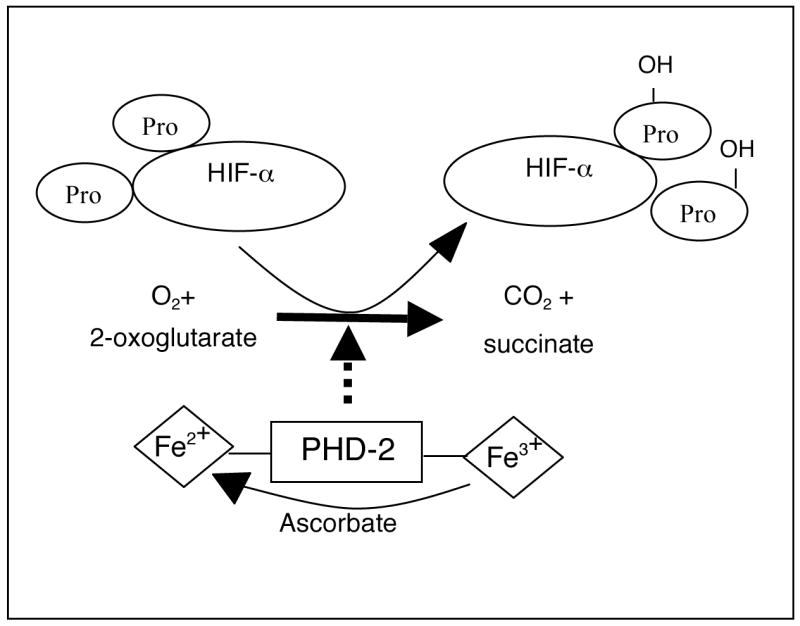
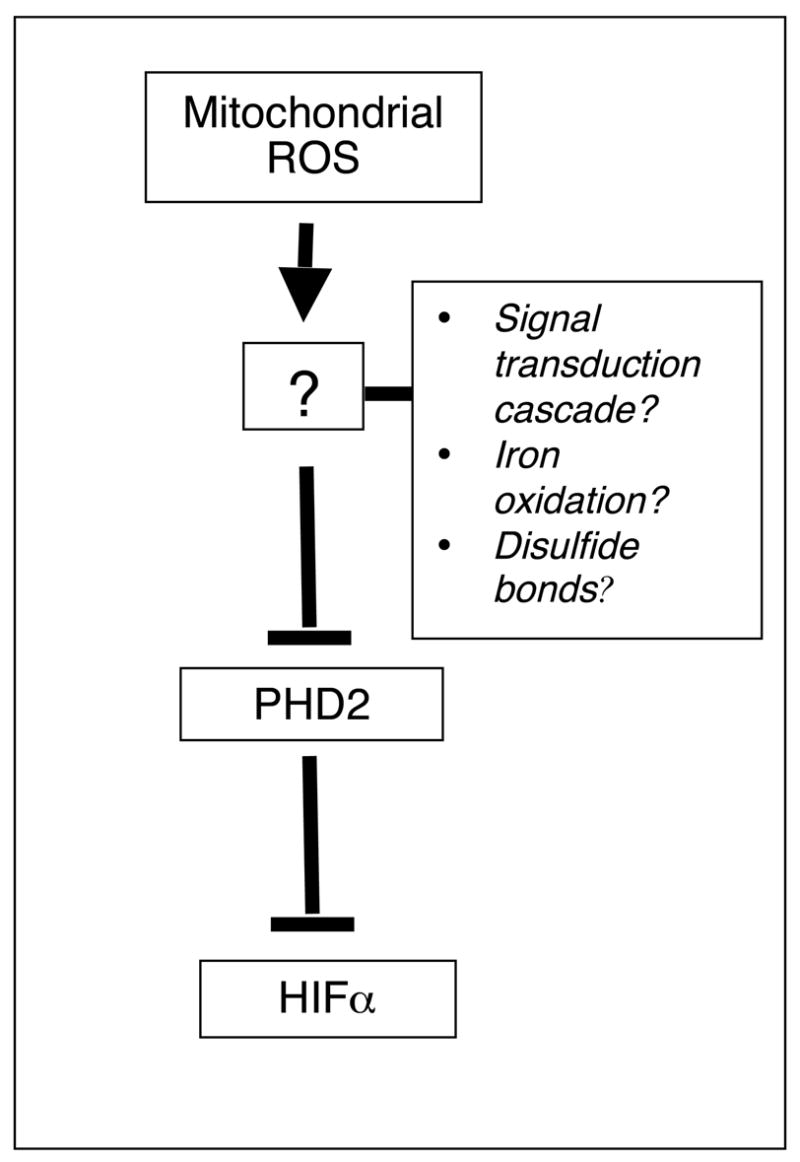
Many organisms activate adaptive transcriptional programs to help them cope with decreased oxygen (O(2)) levels, or hypoxia, in their environment. These responses are triggered by various O(2) sensing systems in bacteria, yeast and metazoans. In metazoans, the hypoxia inducible factors (HIFs) mediate the adaptive transcriptional response to hypoxia by upregulating genes involved in maintaining bioenergetic homeostasis. The HIFs in turn are regulated by HIF-specific prolyl hydroxlase activity, which is sensitive to cellular O(2) levels and other factors such as tricarboxylic acid cycle metabolites and reactive oxygen species (ROS). Establishing a role for ROS in cellular oxygen sensing has been challenging since ROS are intrinsically unstable and difficult to measure. However, recent advances in fluorescence energy transfer resonance (FRET)-based methods for measuring ROS are alleviating some of the previous difficulties associated with dyes and luminescent chemicals. In addition, new genetic models have demonstrated that functional mitochondrial electron transport and associated ROS production during hypoxia are required for HIF stabilization in mammalian cells. Current efforts are directed at determining how ROS mediate prolyl hydroxylase activity and hypoxic HIF stabilization. Progress in understanding this process has been enhanced by the development of the FRET-based ROS probe, an vivo prolyl hydroxylase reporter and various genetic models harboring mutations in components of the mitochondrial electron transport chain.
Figures
References
-
- Kiley PJ, Beinert H. The role of Fe-S proteins in sensing and regulation in bacteria. Curr Opin Microbiol. 2003;6:181–185. - PubMed
-
- Unden G, Schirawski J. The oxygen-responsive transcriptional regulator FNR of Escherichia coli: the search for signals and reactions. Mol Microbiol. 1997;25:205–210. - PubMed
-
- Gong W, Hao B, Chan MK. New mechanistic insights from structural studies of the oxygen-sensing domain of Bradyrhizobium japonicum FixL. Biochemistry. 2000;39:3955–3962. - PubMed
Publication types
MeSH terms
Substances
Grants and funding
LinkOut - more resources
Full Text Sources
Other Literature Sources
