


Src-dependent phosphorylation of ASAP1 regulates podosomes
- PMID: 17893324
- PMCID: PMC2169185
- DOI: 10.1128/MCB.01781-06
Src-dependent phosphorylation of ASAP1 regulates podosomes
Abstract
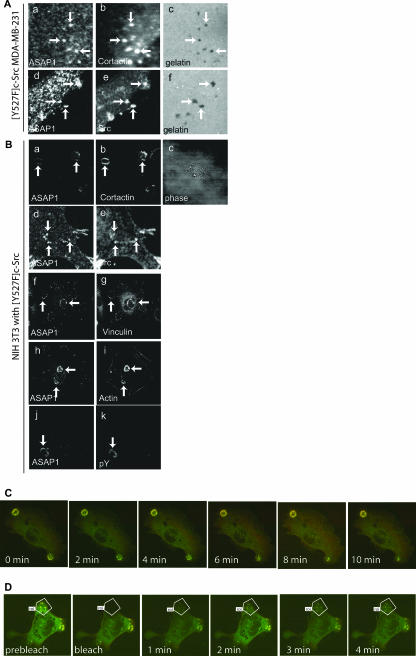
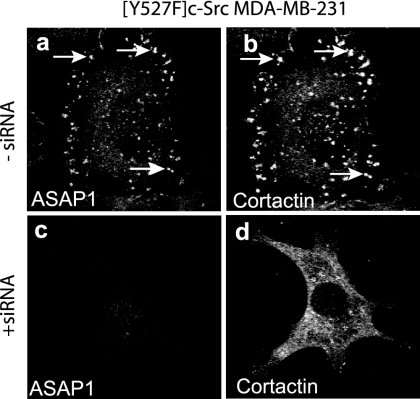
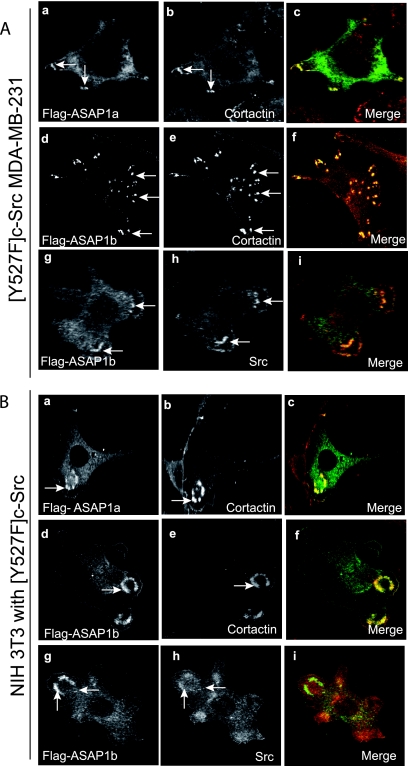
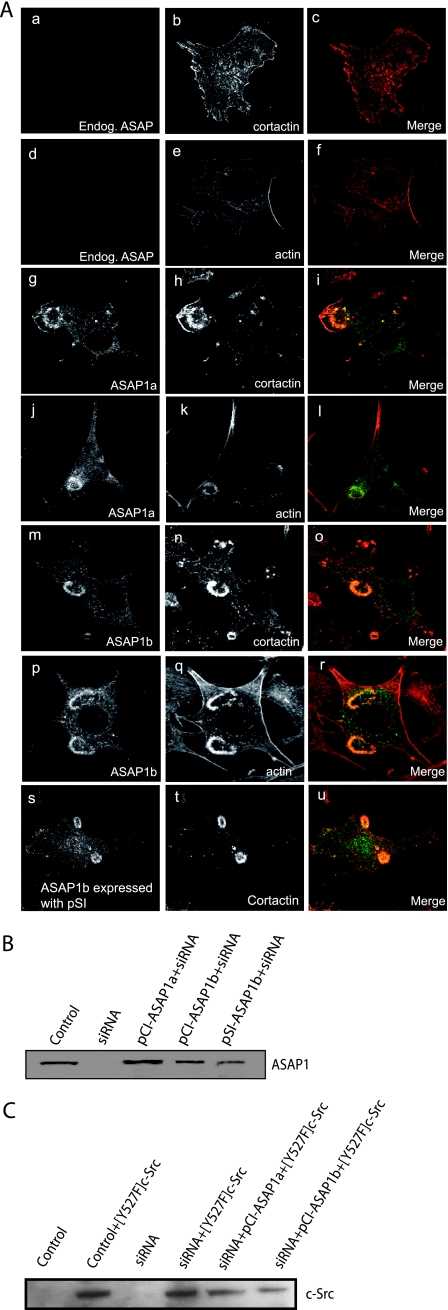
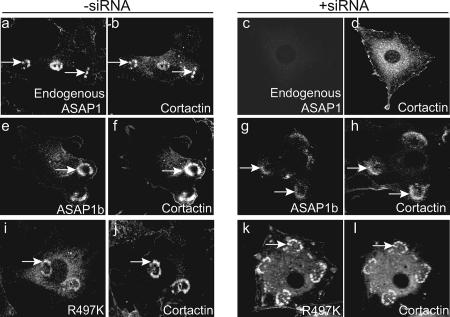
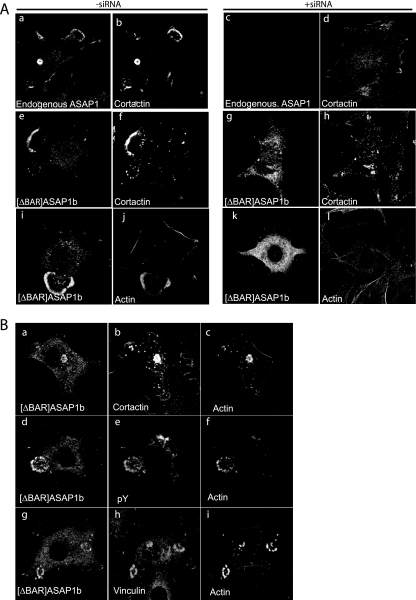
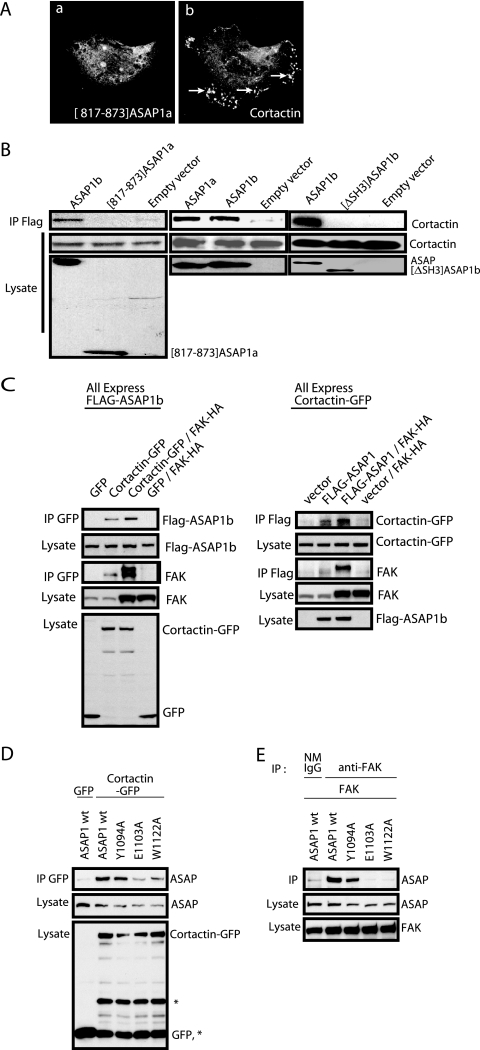
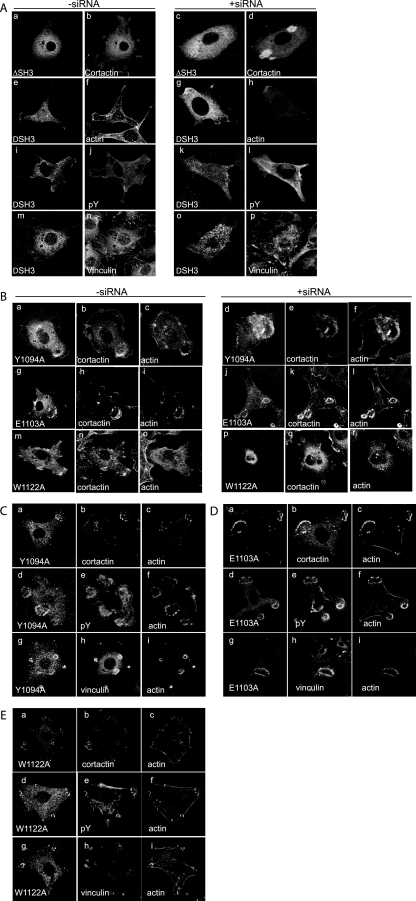
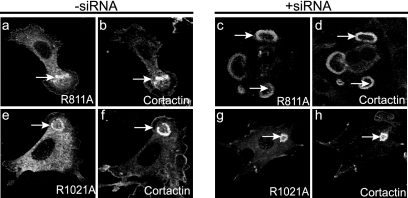
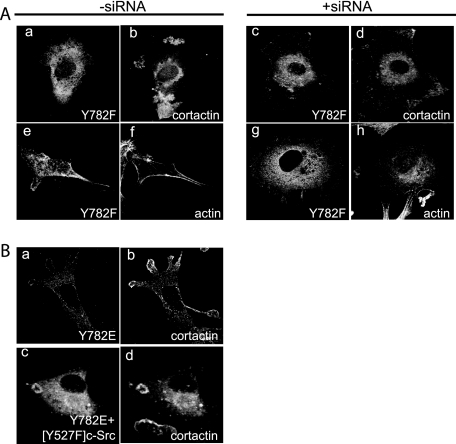
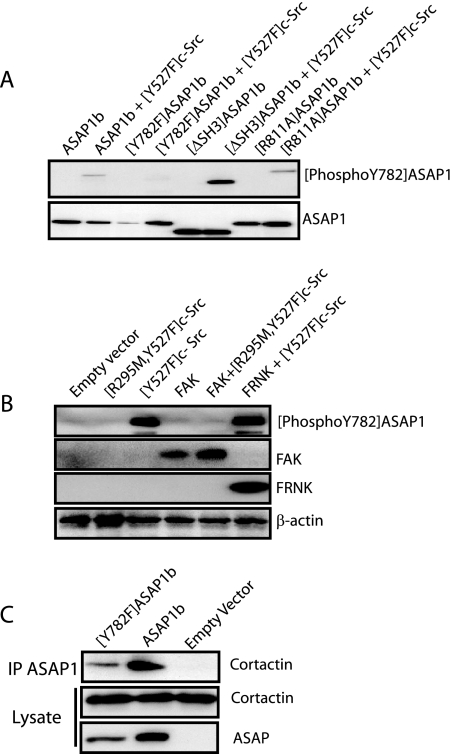
Invadopodia are Src-induced cellular structures that are thought to mediate tumor invasion. ASAP1, an Arf GTPase-activating protein (GAP) containing Src homology 3 (SH3) and Bin, amphiphysin, and RVS161/167 (BAR) domains, is a substrate of Src that controls invadopodia. We have examined the structural requirements for ASAP1-dependent formation of invadopodia and related structures in NIH 3T3 fibroblasts called podosomes. We found that both predominant splice variants of ASAP1 (ASAP1a and ASAP1b) associated with invadopodia and podosomes. Podosomes were highly dynamic, with rapid turnover of both ASAP1 and actin. Reduction of ASAP1 levels by small interfering RNA blocked formation of invadopodia and podosomes. Podosomes were formed in NIH 3T3 fibroblasts in which endogenous ASAP1 was replaced with either recombinant ASAP1a or ASAP1b. ASAP1 mutants that lacked the Src binding site or GAP activity functioned as well as wild-type ASAP1 in the formation of podosomes. Recombinant ASAP1 lacking the BAR domain, the SH3 domain, or the Src phosphorylation site did not support podosome formation. Based on these results, we conclude that ASAP1 is a critical target of tyrosine kinase signaling involved in the regulation of podosomes and invadopodia and speculate that ASAP1 may function as a coincidence detector of simultaneous protein association through the ASAP1 SH3 domain and phosphorylation by Src.
Figures
References
-
- Arold, S., P. Franken, M. P. Strub, F. Hoh, S. Benichou, R. Benarous, and C. Dumas. 1997. The crystal structure of HIV-1 Nef protein bound to the Fyn kinase SH3 domain suggests a role for this complex in altered T cell receptor signaling. Structure 5:1361-1372. - PubMed
-
- Bowden, E. T., M. Barth, D. Thomas, R. I. Glazer, and S. C. Mueller. 1999. An invasion-related complex of cortactin, paxillin and PKCμ associates with invadopodia at sites of extracellular matrix degradation. Oncogene 18:4440-4449. - PubMed
-
- Brunton, V. G., I. R. J. MacPherson, and M. C. Frame. 2004. Cell adhesion receptors, tyrosine kinases and actin modulators: a complex three-way circuitry. Biochim. Biophys. Acta 1692:121-144. - PubMed
-
- Buccione, R., J. D. Orth, and M. A. McNiven. 2004. Foot and mouth: podosomes, invadopodia and circular dorsal ruffles. Nat. Rev. Mol. Cell Biol. 5:647-657. - PubMed
Publication types
MeSH terms
Substances
Grants and funding
LinkOut - more resources
Full Text Sources
Molecular Biology Databases
Research Materials
Miscellaneous
