


Population-based study of islet cell carcinoma
- PMID: 17896148
- PMCID: PMC2077912
- DOI: 10.1245/s10434-007-9566-6
Population-based study of islet cell carcinoma
Abstract
Background: We examine the epidemiology, natural history, and prognostic factors that affect the duration of survival for islet cell carcinoma by using population-based registries.
Methods: The Surveillance, Epidemiology, and End Results (SEER) Program database (1973-2003 release, April 2006) was used to identify cases of islet cell carcinoma by histology codes and tumor site.
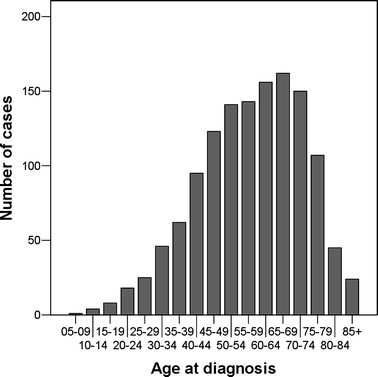
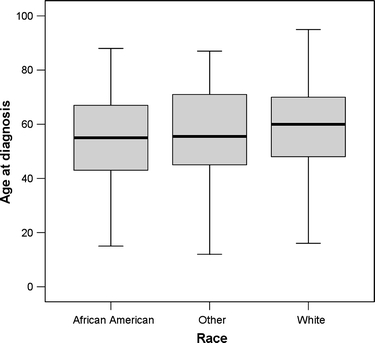
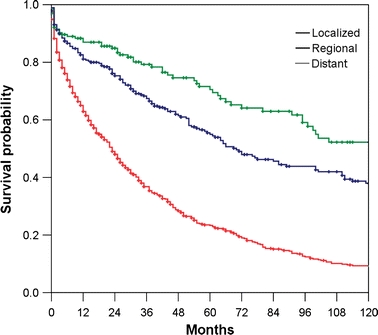
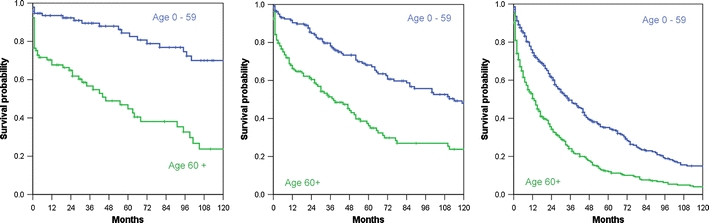
Results: A total of 1310 (619 women and 691 men) cases with a median age of 59 years were identified. The annual age-adjusted incidence in the periods covered by SEER 9 (1973-1991), SEER 13 (1992-1999), and SEER 17 (2000-2003) were .16, .14, and .12 per 100,000, respectively. The estimated 28-year limited duration prevalence on January 1, 2003, in the United States was 2705 cases. Classified by SEER stage, localized, regional, and distant stages corresponded to 14%, 23%, and 54% of cases. The median survival was 38 months. By stage, median survival for patients with localized, regional, and distant disease were 124 (95% CI, 80-168) months, 70 (95% CI, 54-86) months, and 23 (95% CI, 20-26) months, respectively. By multivariate Cox proportional modeling, stage (P < .001), primary tumor location (P = .04), and age at diagnosis (P < .001) were found to be significant predictors of survival.
Conclusions: Islet cell carcinomas account for approximately 1.3% of cancers arising in the pancreas. Most patients have advanced disease at the time of diagnosis. Despite the disease's reputation of being indolent, survival of patients with advanced disease remains only 2 years. Development of novel therapeutic approaches is needed.
Figures
References
-
- Lamberts S, Uitterlinden P, Verschoor L, van Dongen K, del Pozo E. Long term treatment of acromegaly with the somatosatin analogue SMS201-995. N Engl J Med 1985;313:1576–80 - PubMed
-
- Plank TL, Logginidou H, Klein-Szanto A, Henske EP. The expression of hamartin, the product of the TSC1 gene, in normal human tissues and in TSC1- and TSC2-linked angiomyolipomas. Mod Pathol 1999;12:539–45 - PubMed
Publication types
MeSH terms
LinkOut - more resources
Full Text Sources
Medical
Miscellaneous
