


Play behavior and attachment in toddlers with autism
- PMID: 17896172
- PMCID: PMC2335292
- DOI: 10.1007/s10803-007-0454-5
Play behavior and attachment in toddlers with autism
Abstract
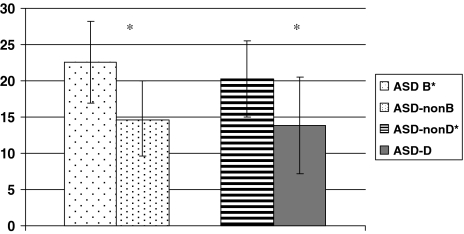
Play helps to develop social skills. Children with autism show deviances in their play behavior that may be associated with delays in their social development. In this study, we investigated manipulative, functional and symbolic play behavior of toddlers with and without autism (mean age: 26.45, SD 5.63). The results showed that the quality of interaction between the child and the caregiver was related to the development of play behavior. In particular, security of attachment was related to better play behavior. When the developmental level of the child is taken into account, the attachment relationship of the child with the caregiver at this young age is a better predictor of the level of play behavior than the child's disorder.
Figures
References
-
- Ainsworth, M. D. S. (1978). Bowlby-Ainsworth attachment theory cross-cultural studies of attachment organization—recent studies, changing methodologies, and the concept of conditional strategies. Behavioral and Brain Sciences, 1(3), 436–438.
-
- Ainsworth, M. D. S., Blehar, M. C., Waters, M. C., Wall, S. (1978). Patterns of attachment. Hillsdale, N.J.: Lawrence Erlbaum.
-
- Baron-Cohen, S. (1987). Autism and symbolic play. British Journal of Developmental Psychology, 5, 139–148.
Publication types
MeSH terms
LinkOut - more resources
Full Text Sources
