


Lowering obstacles to HIV prevention services: effects of a brief, telephone-based intervention using motivational enhancement therapy
- PMID: 17927556
- PMCID: PMC3352672
- DOI: 10.1007/BF02872672
Lowering obstacles to HIV prevention services: effects of a brief, telephone-based intervention using motivational enhancement therapy
Abstract
Background: Brief and low-burden HIV risk reduction counseling interventions are needed for populations at greatest risk for HIV infection.
Purpose: This randomized controlled trial tested a brief theory-based counseling intervention delivered entirely over the telephone for men who engage in unprotected intercourse with men.
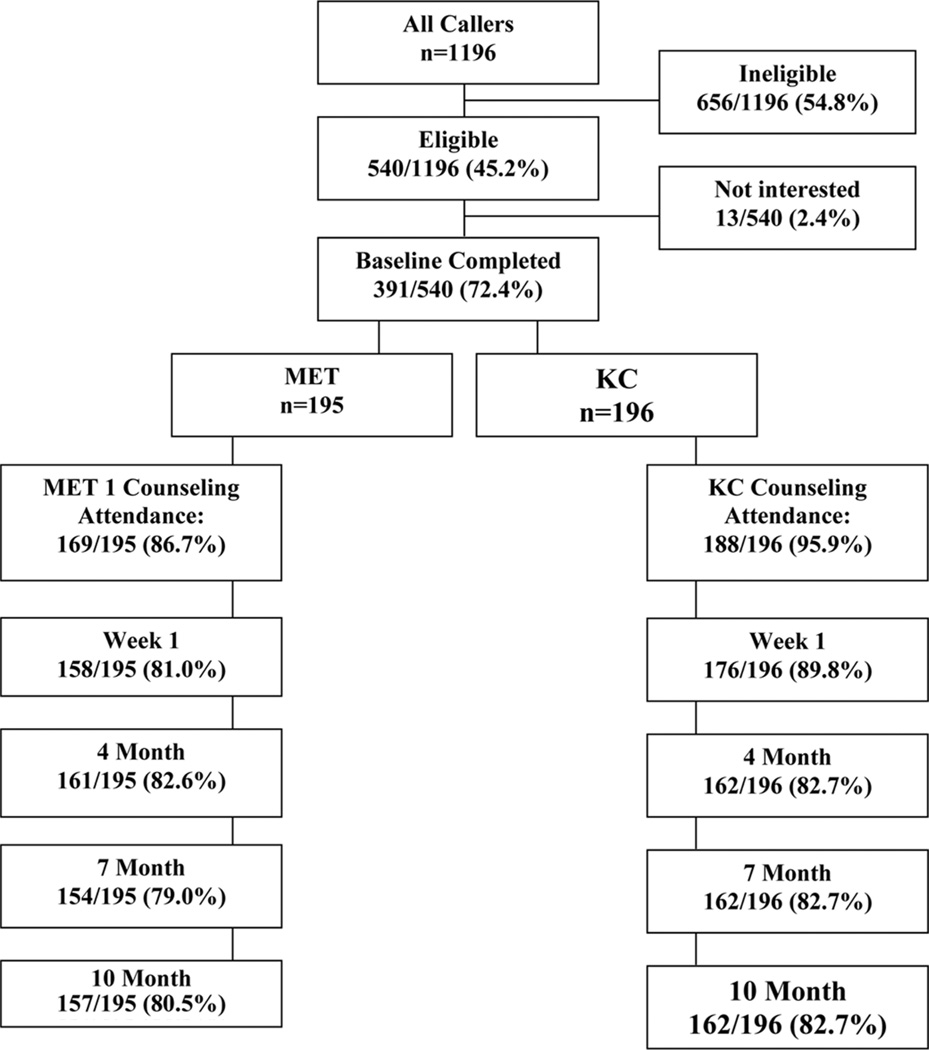
Methods: Participants received either risk reduction counseling that included information, motivational enhancement and behavior skills building, or brief HIV education counseling. A total of 319 participants completed follow-up assessments over a 10-month period. Descriptive and random effects mixed models are used to evaluate findings.
Results: Results demonstrate that a brief telephone intervention can reach and engage high-risk men in risk reduction counseling. Nearly one third of participants identified as men of color; the median age was 33 years. Participants in both counseling conditions increased their motivation and behavioral skills to practice safer sex and reduced their number of sex partners and frequencies of engaging in unprotected anal sex over the study observation period. However, there were few differences between intervention conditions.
Conclusions: The effects of repeated measurement reactivity and brief interpersonal consciousness raising may account for the lack of differences between counseling conditions and the decrease in risk for all participants over time.
Figures
References
-
- Halkitis PN, Green KA, Remien RH, et al. Seroconcordant sexual partnerings of HIV-seropositive men who have sex with men. AIDS. 2005;19(Suppl. 1):S77–S86. - PubMed
-
- Parsons JT, Schrimshaw EW, Bimbi DS, et al. Consistent, inconsistent, and non-disclosure to casual sexual partners among HIV-seropositive gay and bisexual men. AIDS. 2005;19(Suppl. 1):S87–S97. - PubMed
-
- Crawford JM, Rodden P, Kippax S, Van de Ven P. Negotiated safety and other agreements between men in relationships: Risk practice defined. International Journal of STD & AIDS. 2001;12:164–170. - PubMed
-
- Davidovich U, de Wit JB, Stroebe W. Assessing sexual risk behaviour of young gay men in primary relationships: The incorporation of negotiated safety and negotiated safety compliance. AIDS. 2000;14:701–706. - PubMed
-
- Crepaz N, Marks G. Towards an understanding of sexual risk behavior in people living with HIV: A review of social, psychological, and medical findings. AIDS. 2002;16:135–149. - PubMed
Publication types
MeSH terms
Grants and funding
LinkOut - more resources
Full Text Sources
Medical
