


Different genotypes of anatoxin-producing cyanobacteria coexist in the Tarn River, France
- PMID: 17933923
- PMCID: PMC2168053
- DOI: 10.1128/AEM.01225-07
Different genotypes of anatoxin-producing cyanobacteria coexist in the Tarn River, France
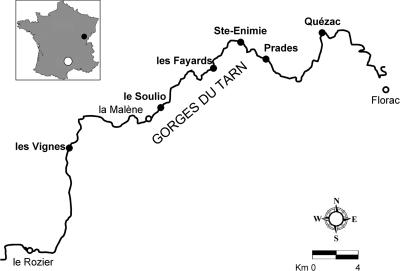
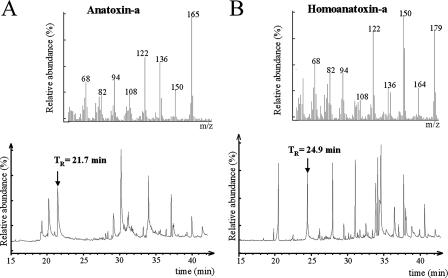
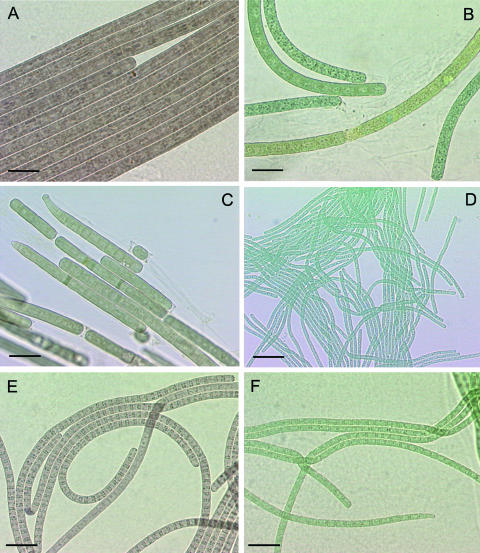
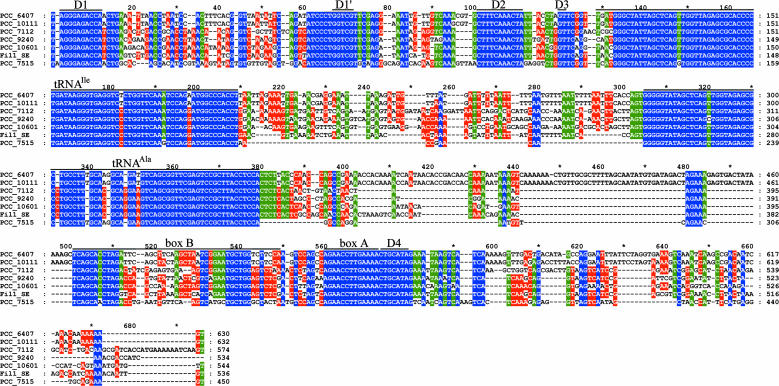
Abstract
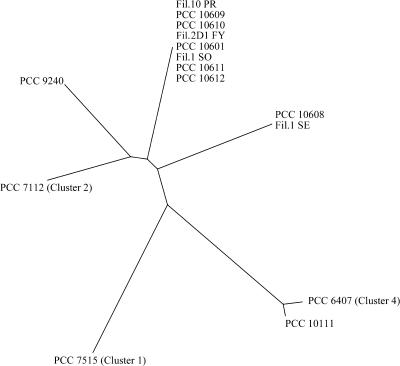
Repeated dog deaths occurred in 2002, 2003, and 2005 after the animals drank water from the shoreline of the Tarn River in southern France. Signs of intoxication indicated acute poisoning due to a neurotoxin. Floating scum and biofilms covering pebbles were collected in the summers of 2005 and 2006 from six different sites along 30 km from the border of this river. The cyanobacterial neurotoxic alkaloid anatoxin-a and/or its methyl homolog, homoanatoxin-a, was detected in the extracts of most samples examined by gas chromatography-mass spectrometry. Fifteen filamentous cyanobacteria of the order Oscillatoriales were isolated and displayed four distinct phenotypes based on morphological characteristics and pigmentation. Three of the phenotypes can be assigned to the genus Oscillatoria or Phormidium, depending on the taxonomic treatises (bacteriological/botanical) employed for identification. The fourth phenotype is typical of the genus Geitlerinema Anagnostidis 1989. Eight strains rendered axenic were analyzed for production of anatoxin-a and homoanatoxin-a, and all strains of Oscillatoria/Phormidium proved to be neurotoxic. The genetic relatedness of the new isolates was evaluated by comparison of the intergenic transcribed spacer sequences with those of six oscillatorian strains from the Pasteur Culture Collection of Cyanobacteria. These analyses showed that the neurotoxic representatives are composed of five different genotypes, three of which correspond to phenotypes isolated in this study. Our findings prove that neurotoxic oscillatorian cyanobacteria exist in the Tarn River and thus were most likely implicated in the reported dog poisonings. Furthermore, they reemphasize the importance of monitoring benthic cyanobacteria in aquatic environments to fully assess the health risks associated with these organisms.
Figures
References
-
- Anagnostidis, K. 1989. Geitlerinema, a new genus of oscillatorialean cyanophytes. Plant Syst. Evol. 164:33-46.
-
- Aráoz, R., H. O. Nghiêm, R. Rippka, N. Palibroda, N. Tandeau de Marsac, and M. Herdman. 2005. Neurotoxins in axenic oscillatorian cyanobacteria: coexistence of anatoxin-a and homoanatoxin-a determined by ligand-binding assay and GC/MS. Microbiology 151:1263-1273. - PubMed
-
- Baker, P. D., D. A. Steffensen, A. R. Humpage, B. C. Nicholson, I. R. Falconer, B. Lanthois, K. M. Fergusson, and C. P. Saint. 2001. Preliminary evidence of toxicity associated with the benthic cyanobacterium Phormidium in South Australia. Environ. Toxicol. 16:506-511. - PubMed
-
- Baurain, D., L. Renquin, S. Grubisic, P. Scheldeman, A. Belay, and A. Wilmotte. 2002. Remarkable conservation of internally transcribed spacer sequences of Arthrospira (“Spirulina”) (Cyanophyceae, Cyanobacteria) strains from four continents and of recent and 30-year-old dried samples from Africa. J. Phycol. 38:384-393.
-
- Boyer, S. L., J. R. Johansen, V. R. Flechtner, and G. L. Howard. 2002. Phylogeny and genetic variance in terrestrial Microcoleus (Cyanophyceae) species based on sequence analysis of the 16S rRNA gene and associated 16S-23S ITS region. J. Phycol. 38:1222-1235.
Publication types
MeSH terms
Substances
Associated data
- Actions
- Actions
- Actions
- Actions
- Actions
- Actions
- Actions
- Actions
- Actions
- Actions
- Actions
- Actions
- Actions
- Actions
- Actions
- Actions
- Actions
LinkOut - more resources
Full Text Sources
Other Literature Sources
