


Fluticasone versus beclomethasone or budesonide for chronic asthma in adults and children
- PMID: 17943772
- PMCID: PMC8447218
- DOI: 10.1002/14651858.CD002310.pub4
Fluticasone versus beclomethasone or budesonide for chronic asthma in adults and children
Abstract
Background: Beclomethasone dipropionate (BDP) and budesonide (BUD) are commonly prescribed inhaled corticosteroids for the treatment of asthma. Fluticasone propionate (FP) is newer agent with greater potency in in-vitro assays.
Objectives: To compare the efficacy and safety of Fluticasone to Beclomethasone or Budesonide in the treatment of chronic asthma.
Search strategy: We searched the Cochrane Airways Group trial register (January 2007) and reference lists of articles. We contacted trialists and pharmaceutical companies for additional studies and searched abstracts of major respiratory society meetings (1997 to 2006).
Selection criteria: Randomised trials in children and adults comparing Fluticasone to either Beclomethasone or Budesonide in the treatment of chronic asthma.
Data collection and analysis: Two reviewers independently assessed articles for inclusion and methodological quality. One reviewer extracted data. Quantitative analyses were undertaken using RevMan analyses 1.0.1.
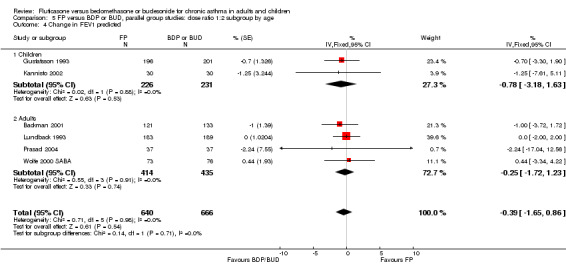
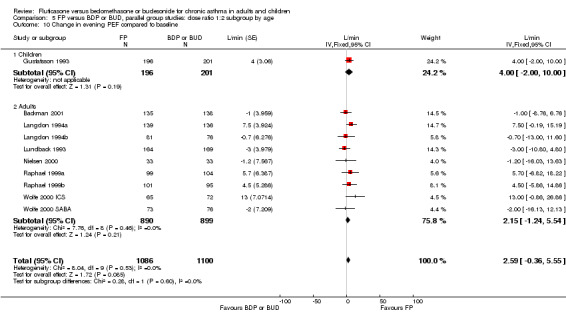
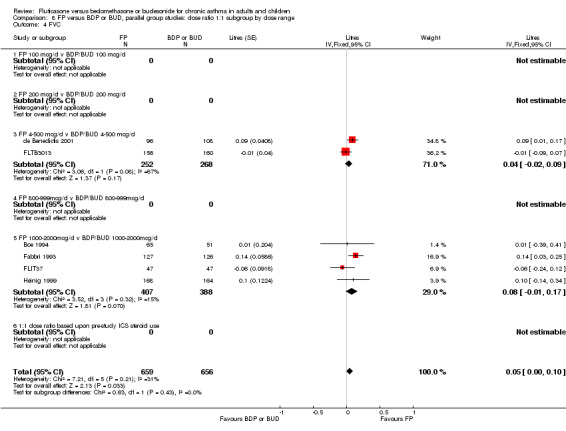
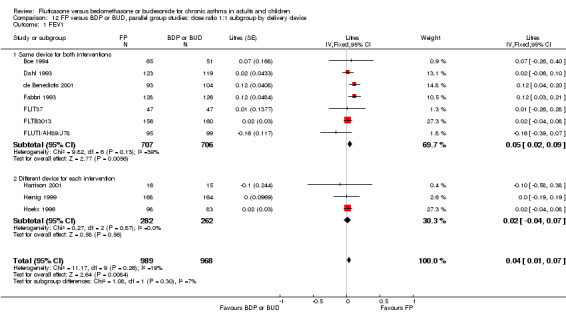
Main results: Seventy-one studies (14,602 participants) representing 74 randomised comparisons met the inclusion criteria. Methodological quality was fair. Dose ratio 1:2: FP produced a significantly greater end of treatment FEV1 (0.04 litres (95% CI 0 to 0.07 litres), end of treatment and change in morning PEF, but not change in FEV1 or evening PEF. This applied to all drug doses, age groups, and delivery devices. No difference between FP and BDP/BUD were seen for trial withdrawals. FP led to fewer symptoms and less rescue medication use. When given at half the dose of BDP/BUD, FP led to a greater likelihood of pharyngitis. There was no difference in the likelihood of oral candidiasis. Plasma cortisol and 24 hour urinary cortisol was measured frequently but data presentation was limited. Dose ratio 1:1: FP produced a statistically significant difference in morning PEF, evening PEF, and FEV1 over BDP or BUD. The effects on exacerbations were mixed. There were no significant differences incidence of hoarseness, pharyngitis, candidiasis, or cough.
Authors' conclusions: Fluticasone given at half the daily dose of beclomethasone or budesonide leads to small improvements in measures of airway calibre, but it appears to have a higher risk of causing sore throat and when given at the same daily dose leads to increased hoarseness. There are concerns about adrenal suppression with Fluticasone given to children at doses greater than 400 mcg/day, but the randomised trials included in this review did not provide sufficient data to address this issue.
Conflict of interest statement
None known.
Figures










Update of
-
Inhaled fluticasone versus inhaled beclomethasone or inhaled budesonide for chronic asthma in adults and children.Cochrane Database Syst Rev. 2005 Apr 18;(2):CD002310. doi: 10.1002/14651858.CD002310.pub3. Cochrane Database Syst Rev. 2005. Update in: Cochrane Database Syst Rev. 2007 Oct 17;(4):CD002310. doi: 10.1002/14651858.CD002310.pub4. PMID: 15846637 Updated.
References
References to studies included in this review
Acun 2005 {published data only}
-
- Acun C, Tomac N, Ermis B, Onk G. Effects of inhaled corticosteroids on growth in asthmatic children: a comparison of fluticasone propionate with budesonide. Allergy & Asthma Proceedings 2005;26(3):204‐6. - PubMed
Agertoft 1997 {published data only}
-
- Agertoft L, Pedersen S. Bone, growth and collagen markers in children treated with fluticasone propionate and budesonide. European Respiratory Journal 1996;9(Suppl 23):295s. - PubMed
-
- Agertoft L, Pedersen S. Short‐term knemometry and urine cortisol excretion in children treated with fluticasone propionate and budesonide: a dose response study. European Respiratory Journal 1997;10:1507‐12. - PubMed
-
- FLIS02. A single‐centre, placebo‐controlled, randomised, double‐blind, double‐dummy, cross‐over study to investigate longitudinal growth using knemometry in children with mild asthma during treatment with budesonide (200µg/ day and 400µg/ day) and fluticasone propionate (200µg/ day and 400µg/ day) as dry powders. http://ctr.gsk.co.uk 2005.
Agertoft 1997a {published data only}
-
- Agertoft L, Pedersen S. A randomized, double‐blind dose reduction study to compare the minimal effective dose of budesonide Turbuhaler and fluticasone propionate Diskhaler. Journal of Allergy & Clinical Immunology 1997;99:773‐80. - PubMed
Ayres 1995 {published data only}
-
- Ayres JG, Bateman ED, Lundback B, Harris TAJ. High dose fluticasone propionate, 1 mg daily, versus fluticasone propionate, 2 mg daily, or budesonide, 1.6 mg daily, in patients with chronic severe asthma. European Respiratory Journal 1995;8:579‐86. - PubMed
Backman 2001 {published and unpublished data}
-
- Backman R, Baumgarten C, Sharma RK. Fluticasone propionate via Diskus inhaler at half the microgram dose of budesonide via Turbuhaler inhaler. Clinical Drug Investigation 2001;11:735‐43.
-
- Backman R, Pickering CAC, Baumgarten C, Huskisson SC. A comparison of fluticasone propionate via Diskus (Accuhaler) inhaler and budesonide via Turbuhaler inhaler in adult asthmatics. Journal of Allergy & Clinical Immunology. 1997; Vol. 249:249.
-
- Pickering CAC, Backman R, Baumgarten C, Huskisson SC. Fluticasone propionate 250 mcg bd compared to budesonide 600 mcg bd in adult asthmatics. European Respiratory Journal 1996;23(Supp 9):79.
Barnes 1993 {published and unpublished data}
-
- Barnes NC, Marone G, Maria GU, Visser S, Utama I, Payne SL. A comparison of fluticasone propionate, 1 mg daily, with beclomethasone dipropionate, 2 mg daily, in the treatment of severe asthma. International Study Group. European Respiratory Journal 1993;6:877‐85. - PubMed
-
- FLIT35. http://ctr.gsk.co.uk 2005.
Basran 1997 {published data only}
-
- Basran G, Campbell M, Knox A, Scott R, Smith R, Vernon J, Wade A. An open study comparing equal doses of budesonide via Turbohaler with fluticasone propionate via Diskhaler in the treatment of adult asthmatic patients. European Journal of Clinical Research 1997;9:185‐97.
Berend 2001 {published and unpublished data}
-
- Berend N. A six month comparison of the efficacy of high dose fluticasone propionate (FP) with beclomethasone dipropionate (BDP) and budesonide (BUD) in adults with severe asthma. European Respiratory Journal 1997;10 Suppl (25):105.
-
- Berend N, Kellett B, Kent N, Sly PD. Improved safety with equivalent asthma control in adults with chronic severe asthma on high‐dose fluticasone propionate. Respirology 2001;6(3):237‐46. - PubMed
-
- Gibson P, Rutherford C, Price M, Lindsay P. Comparison of the quality of life differences in severe asthma after treatment with beclomethasone dipropionate or budesonide and fluticasone propionate at approximately half the microgram dose. European Respiratory Journal. 1998; Vol. 12, issue Suppl 28:35.
-
- Jenkins C. High dose inhaled steroids and skin bruising. European Respiratory Journal 1998;12(Suppl 28):435.
-
- Rutherford C, Mills R, Gibson PG, Price MJ, Keech M. Improvement in health‐related quality of life with fluticasone propionate compared with budesonide or beclomethasone dipropionate in adults with severe asthma. Respirology 2003;8(3):371‐5. - PubMed
Bisca 1997 {published data only}
-
- Bisca N. Comparison of fluticasone propionate with beclomethasone dipropionate in moderate to severe childhood asthma. European Respiratory Journal. 1997; Vol. 10:219.
Boe 1994 {published data only}
-
- Boe J, Bakke P, Rodolen T, Skovlund E, Gulsvik A. High‐dose inhaled steroids in asthmatics: moderate efficacy gain and suppression of the hypothalamic‐pituitary‐adrenal (HPA) axis. European Respiratory Journal 1994;7(12):2179‐84. - PubMed
Bootsma 1995 {published data only}
-
- Bootsma GP, Dekhuijzen PN, Festen J, Mulder PG, Swinkels LM, Herwaarden CL. Fluticasone propionate does not influence bone metabolism in contrast to beclomethasone dipropionate. American Journal of Respiratory & Critical Care Medicine 1996;153:924‐30. - PubMed
-
- Bootsma GP, Koenderman L, Dekhuijzen PN, Festen J, Lammers JW, Herwaarden CL. Effects of fluticasone propionate and beclomethasone dipropionate on parameters of inflammation in peripheral blood of patients with asthma. Allergy 1998;53:653‐61. - PubMed
Connolly 1995 {published data only}
-
- Connolly A. A comparison of fluticasone propionate 100 mcg twice daily with budesonide 200 mcg twice daily via their respective powder devices in the treatment of mild asthma. European Journal of Clinical Research 1995;7:15‐29.
Currie 2002 {published data only}
-
- Currie GP, Fowler S, Wilson A, Sims EJ, Orr L, Lipworth BJ. Airway systemic ratio of hydrofluoroalkane fluticasone and beclomethasone in asthmatics. Journal of Allergy, Asthma and Immunolgy 2002;109(Suppl 1):Abstract No: 769.
Dahl 1993 {published and unpublished data}
-
- Dahl R, Lundback B, Malo JL, Mazza JA, Nieminen MM, Saarelainen P, Barnacle H. A dose‐ranging study of fluticasone propionate in adult patients with moderate asthma. International Study Group. Chest 1993;104:1352‐8. - PubMed
-
- FLIT05. www.clinicalstudyresults.org.
Dal Negro 1997 {published data only}
-
- Dal Negro R, Micheletto C, Turco P, Pomari C. Fluticasone propionate 500 mcg, budesonide 800 mcg, and beclomethasone dip. 1000 mcg: different protection degrees against the methacholine‐induced bronchoconstriction. American Journal of Respiratory & Critical Care Medicine. 1997; Vol. 155:A153.
-
- Micheletto C, Pomari C, dal Negro R. Efficacy of fluticasone prop. (FTP) and beclomethasone dipr. (BDP) on PD20 FEV1and PD20 PtcO2 to methacholine (MCH) in mild asthmatics [abstract]. European Respiratory Journal 1996;9(Suppl 23):79s.
de Benedictis 2001 {published data only}
-
- FLTB3015. www.clinicalstudyresults.org 2005.
-
- Benedictis FM, Medley HV, Williams L. Long‐term study to compare safety and efficacy of fluticasone propionate (FP) with beclomethasone dipropionate (BDP) in asthmatic children. European Respiratory Journal. 1998; Vol. 12 Suppl (28):142.
-
- Benedictis FM, Teper A, Green RJ, Boner AL, Williams L, Medley H, et al. Effects of 2 inhaled corticosteroids on growth. Archives of Pediatrics & Adolescent Medicine 2001;155(11):1248‐54. - PubMed
Derom 1999 {published data only}
-
- Derom E, Schoor J, Verhaeghe W, Vincken W, Pauwels R. Systemic effects of inhaled fluticasone propionate and budesonide in adult patients with asthma. American Journal of Respiratory & Critical Care Medicine 1999;160(1):157‐61. - PubMed
Egan 1999 {published and unpublished data}
-
- Adams JE, Egan J, et al. Effects on bone mineral density of inhaled corticosteroids (fluticasone propionate and beclomethasone dipropionate: a two year double‐blind randomised study [abstract]. Osteoporos‐Int 1996;6(Suppl 1):287.
-
- Egan J, Kalra S, Adams JE, Eastell R, Maden C, Woodcock A. A two‐year double‐blind randomised study comparing the effects of fluticasone propionate 1000 mcg/day and beclomethasone dipropionate 2000 mcg/day on bone mineral density and bone metabolism in asthma patients. European Respiratory Journal 1996;9(Suppl 23):52S. - PubMed
-
- Egan JJ, Maden C, Kalra S, Adams JE, Eastell R, Woodcock AA. A randomized, double‐blind study comparing the effects of beclomethasone and fluticasone on bone density over two years. European Respiratory Journal 1999;13(6):1267‐75. - PubMed
-
- FLTB3036/FLIP56. www.clinicalstudyresults.org 2006.
Fabbri 1993 {published and unpublished data}
-
- FLIT26. A multicentre, double‐blind, parallel‐group study to compare the long‐term efficacy and safety of fluticasone propionate 750µg bd (1500µg daily) with beclomethasone dipropionate 750µg bd (1500µg daily) in patients with severe asthma. http://ctr.gsk.co.uk 2005.
-
- Payne SL, Thwaites RMA, Collins N. Estimation from clinical trial data of direct costs associated with asthma exacerbations treated in hospital. European Respiratory Journal 1997;10 Suppl (28):106.
Ferguson 1999 {published data only}
-
- FLIQ46. http://ctr.gsk.co.uk 2005.
-
- Ferguson AC, Spier S, Manjra A, Versteegh FG, Mark S, Zhang P. Efficacy and safety of high‐dose inhaled steroids in children with asthma: a comparison of fluticasone propionate with budesonide. Journal of Pediatrics 1999;134(4):422‐7. - PubMed
-
- Manjra AI, Versteegh FGA, Mehra S, Zhang P, Mark S. Clinical equivalence of fluticasone propionate (FP) 400 mcg daily via the Diskus inhaler and budesonide (B) 800 mcg daily via the Turbuhaler in asthmatic children. European Respiratory Journal. 1998; Vol. 12:87.
Ferguson 2006 {published and unpublished data}
-
- FMS40001. http:ctr.gsk.co.uk 2005.
-
- Ferguson AC, Bever HP, Teper AM, Lasytsya O, Goldfrad CH, Whitehead PJ. A comparison of the relative growth velocities with budesonide and fluticasone propionate in children with asthma. Respiratory Medicine 2006;Epub ahead of print. - PubMed
-
- Ferguson AC, Bever HP, Teper AM, Lasytsya O, Whitehead PJ. Randomised, double‐blind, double‐dummy, parallel‐group comparison of the effect of fluticasone propionate (FP) 100µg bd and budesonide (BUD) 200µg bd on childhood growth: protocol and baseline characteristic. European Respiratory Journal 2001;18(Supp 33):289s.
-
- Ferguson AC, Bever HP, Teper AM, Lasytsya OI, Whitehead PJ. Fluticasone propionate 100µg bd (FP100) has significantly less effect than budesonide 200µg bd (BUD200) on childhood growth over 1 year of treatment in asthmatics. European Respiratory Journal 2002;20(Suppl 38):219s.
-
- Ferguson AC, Bever HP, Teper AM, Lasytsya OI, Whitehead PJ. Significantly reduced growth velocity over 1 year with budesonide 200µg bd (BUD200) compared to fluticasone propionate 100µg bd (FP100) in children with asthma. American Thoracic Society 99th International Conference. 2003:A117 [Poster D63].
Fitzgerald 1998 {published data only}
-
- Asperen P, Fitzgerald D, Mellis C, Honner M, Smith L, Ambler G. Adrenal function in asthmatic children treated with fluticasone propionate (FP) 750MCG/day and beclomethasone dipropionate (BDP) 1500MCG/day [abstract]. European Respiratory Journal 1996;9(Suppl 23):115s.
-
- Asperen P, Fitzgerald D, Mellis C, Honner M, Smith L, Ambler G. Fluticasone propionate (FP) 750 mcg/day is as effective as beclomethasone dipropionate (BDP) 1500 mcg/day in paediatric asthma [abstract]. European Respiratory Journal 1996;9(Suppl 23):114s.
FLIP01 {published data only}
-
- FLIP01. Inhaled fluticasone propionate for the treatment of moderately severe asthma in patients not already taking inhaled steroids. A dose‐ranging study and comparison with inhaled beclomethasone dipropionate. http://ctr.gsk.co.uk 2005.
FLIP01a {published data only}
-
- FLIP01. Inhaled fluticasone propionate for the treatment of moderately severe asthma in patients not already taking inhaled steroids. A dose‐ranging study and comparison with inhaled beclomethasone dipropionate. http://ctr.gsk.co.uk 2005.
FLIT37 {unpublished data only}
-
- FLIT37. A multicentre, randomised, double‐blind, parallel‐group study to compare the safety and efficacy of fluticasone propionate 750µg bd (1500µg/d) with that of beclomethasone dipropionate 750µg bd (1500µg/d) in geriatric patients with chronic asthma. http://ctr.gsk.co.uk 2005.
FLPB0145 {unpublished data only}
-
- FLPB1045. Comparison of fluticasone powder 1mg/day to budesonide powder 1mg/day in deterioration of severe asthma in children: a double‐blind, randomised, multicentre study with parallel groups. http:ctr.gsk.co.uk 2005.
FLTB3013 {published data only}
-
- FLTB3013. A multi‐centre, randomised, double‐blind, parallel‐group clinical trial to compare the safety and efficacy of the dry powder formulation of fluticasone propionate 400µg/day administered for 12 weeks to paediatric patients with chronic asthma. http://ctr.gsk.co.uk 2005.
FLUTI/AH89/J78 {unpublished data only}
-
- FLUTI/AH89/J789. A phase III, multi‐centre, open‐label, parallel group study to compare the efficacy and tolerability of fluticasone propionate 500 micrograms bd with budesonide 600 micrograms bd administered via a metered dose inhaler in adult patients with moderate to severe symptomatic asthma. http://ctr.gsk.co.uk 2005.
Geppe 2004 {published data only}
-
- Geppe NA, Karpushkina AV, Kolossova NG, Yarovaya EB. The effects of fluticasone propionate /salmeterol 50/100ug bid in children with asthma versus beclometasone propionate 200ug BD fluticasone propionate 100ug bid dry powder inhalers [Abstract]. European Respiratory Journal 2004;24(Suppl 48):378s.
Gustafsson 1993 {published data only}
-
- FLIT40. http://ctr.gsk.co.uk.
-
- Gustafsson P, Tsanakas J, Gold M, Primhak R, Radford M, Gillies E. Comparison of the efficacy and safety of inhaled fluticasone propionate 200 micrograms/day with inhaled beclomethasone dipropionate 400 micrograms/day in mild and moderate asthma. Archives of Disease in Childhood 1993;69:206‐11. - PMC - PubMed
Harrison 2001 {published data only}
Heinig 1999 {published and unpublished data}
-
- Heinig JH, Boulet LP, Croonenborghs L, Mollers MJ. The effect of high‐dose fluticasone propionate and budesonide on lung function and asthma exacerbations in patients with severe asthma. Respiratory Medicine 1999;93(9):613‐20. - PubMed
Hoekx 1996 {published data only}
-
- FLIP58. A multi‐centre, randomised, double‐blind, double‐dummy, parallel‐group study to compare the efficacy and safety of fluticasone propionate 400mg daily with budesonide 400mg daily in children with asthma. http://ctr.gsk.co.uk 2005.
-
- Hoekx JC, Hedlin G, Pedersen W, Sorva R, Hollingworth K, Efthimiou J. Fluticasone propionate compared with budesonide: a double‐blind trial in asthmatic children using powder devices at a dosage of 400 microg x day(‐1). European Respiratory Journal 1996;9:2263‐72. - PubMed
Hughes 1999a {published data only}
-
- Hughes GL, Edelman J, Turpin J, Liss C, Weeks K, Schweiger D, et al. Randomized, open‐label pilot study comparing the effects of montelukast sodium tablets, fluticasone aerosol inhaler and budesonide dry powder inhaler on asthma control in mild asthmatics. American Journal of Respiratory & Critical Care Medicine 1999;159(3 part 2):A641.
Hughes 1999b {published data only}
Ige 2002 {published data only}
-
- Ige OM, Sogaolou OM. The clinical efficacy of fluticasone propionate compared with beclamethasone dipropionate in patients with mild to moderate bronchial asthma at the University College Hospital, Ibadan, Nigeria. West African Journal of Medicine 2002;21(4):297‐301. - PubMed
Johansson 1998 {published data only}
-
- Johansson LO. A comparison of once‐daily of fluticasone propionate (FP) 200 mcg and budesonide (BUD) 400 mcg twice‐daily of fluticasone (FP) 100 mcg. American Journal of Respiratory & Critical Care Medicine 1998;157(3):A404.
-
- Johansson LO. A comparison of once‐daily regimen of fluticasone propionate (FP) 200 mcg and budesonide (BUD) 400 mcg and twice‐daily regimen of fluticasone propionate (FP) 100 mcg. European Respiratory Journal. 1998; Vol. 12 Suppl (28):38.
Joubert 1998 {published data only}
-
- Joubert J, Boszormenyi G, Sanchis J, Siafakas N. A comparison of the efficacy and systemic activity of budesonide and fluticasone propionate in asthmatic patients. European Respiratory Journal. 1998; Vol. 12:37.
Kannisto 2002 {published data only}
-
- Kannisto S, Voutilainen R, Remes K, Korppi M. Efficacy and safety of inhaled steroid and cromone treatment in school‐age children: A randomized pragmatic pilot study. Pediatric Allergy & Immunology 2002;13(1):24‐30. - PubMed
Kemmerich 1999 {published data only}
-
- Kemmerich B, Bruckner OJ, Petro W. Superiority of fluticasone powder from the Diskus over budesonide from the Turbuhaler in mild and moderate asthma. American Journal of Respiratory and Critical Care Medicine 1999;159(3 part 2):A627.
Kuna 2003 {published and unpublished data}
-
- Kuna P. A randomized, double‐blind, double‐dummy, parallel‐group, multicenter, dose‐reduction trial of the minimal effective doses of budesonide and fluticasone dry‐powder inhalers in adults with mild to moderate asthma. Clinical Therapeutics 2003;25(8):2182‐97. - PubMed
-
- Kuna P. Same minimal effective dose of budesonide Turbuhaler and fluticasone Diskus/Accuhaler in adult asthmatics. European Respiratory Journal 2001;18(Suppl 3):158s.
Langdon 1994a {published data only}
-
- Booth PC, Capsey LJ, Langdon CG, Wells NEJ. A comparison of the cost‐effectiveness of alternative prophylactic therapies in the treatment of adult asthma. British Journal of Medical Economics 1995;8:65‐72.
-
- Langdon CG, Capsey LJ. Fluticasone propionate and budesonide in adult asthmatics: a comparison using dry‐powder inhaler devices. British Journal of Clinical Research 1994;5:85‐99.
Langdon 1994b {published and unpublished data}
-
- FLUTI/AH89/F079. A phase III, multicentre, open‐label, parallel‐group study to compare the efficacy and tolerability of fluticasone propionate 100 micrograms bd with budesonide 200 micrograms bd administered via a metered‐dose inhaler in adult patients with mild to moderate asthma. http://ctr.gsk.co.uk 2005.
-
- Langdon CG, Thompson J. A multicentre study to compare the efficacy and safety of inhaled fluticasone propionate and budesonide via metered‐dose inhalers in adults with mild‐to‐moderate asthma. British Journal of Clinical Research 1994;5:73‐84.
Leblanc 1994 {published and unpublished data}
-
- FLIT14. A multicentre, double‐blind, randomised, four‐week, parallel‐group comparison of fluticasone propionate 100µg bd (200µg/day) with beclomethasone dipropionate 200µg bd (400µg/day) in adult patients with mild to moderate asthma. http://ctr.gsk.co.uk 2005.
-
- FLIT14 pt 2. A multicentre, open 12‐month study to assess the tolerance of fluticasone propionate administered via the pressurised inhaler at doses between 100µg bd (200µg/day) and 500µg bd (1000µg/day) in adult patients with mild to moderate asthma. http://ctr.gsk.co.uk 2005.
-
- Leblanc P, Mink S, Keistinen T, Saarelainen PA, Ringdal N, Payne SL. A comparison of fluticasone propionate 200 micrograms/day with beclomethasone dipropionate 400 micrograms/day in adult asthma. Allergy 1994;49:380‐5. - PubMed
Lorentzen 1996 {published and unpublished data}
-
- FMS40230. http://www.clinicalstudyresults.org 2005.
-
- Lorentzen KA, Helmond JL, Bauer K, Langaker KE, Bonifazi F, Harris TA. Fluticasone propionate 1 mg daily and beclomethasone dipropionate 2 mg daily: a comparison over 1 yr. Respiratory Medicine 1996;90:609‐17. - PubMed
Lundback 1993 {published data only}
-
- FLIT 72 (Long‐Term Follow‐Up). A multicentre, randomised, double‐blind, parallel group, six‐week study to compare the efficacy and safety of fluticasone propionate 500mcg daily via the metered dose inhaler and via the Diskhaler inhaler with beclomethasone dipropionate 1000mcg daily via the metered dose inhaler followed by a 46‐week assessment of the tolerance to fluticasone propionate 500mcg daily via the metered dose inhaler and beclomethasone dipropionate 1000mcg daily via the metered dose inhaler in patients with chronic asthma (results of the 46 week safety study). http://ctr.gsk.co.uk 2005.
-
- FLIT72. A multicentre, randomised, double‐blind, parallel group, six‐week study to compare the efficacy and safety of fluticasone propionate 500µg daily via the pressurised inhaler and via the diskhaler™ Inhaler with beclomethasone dipropionate 1000µg daily via the pressurised inhaler in patients with moderately severe chronic asthma. http://ctr.gsk.co.uk.
-
- Kesten S. Inhaled steroids in the long‐term treatment of asthma: a double‐blind, randomised, parallel group comparison of fluticasone propionate 500 µg daily and beclomethasone dipropionate 1000 µg daily over 12 months [abstract]. European Respiratory Journal 1993;6(Suppl 17):257s.
-
- Lundback B. A double‐blind randomised study to compare the efficacy and safety of fluticasone propionate (FP) 500 ug daily via a metered dose inhaler (MDI) with FP 500 ug daily via a diskhaler and beclomethasone dipropionate (BDP) 1000 ug daily via MDI in adult patients with chronic asthma. European Respiratory Journal 1992;5(Suppl 15):367s.
-
- Lundback B, Alexander M, Day J, Hebert J, Holzer R, Uffelen R, et al. Evaluation of fluticasone propionate (500 micrograms day‐1) administered either as dry powder via a Diskhaler inhaler or pressurized inhaler and compared with beclomethasone dipropionate (1000 micrograms day‐1) administered by pressurized inhaler. Respiratory Medicine 1993;87:609‐20. - PubMed
Lundback 1997 {unpublished data only}
-
- Lundback B, Bosh T, Brazell C. Quality of life improvements are greater in patients with severe asthma receiving inhaled fluticasone propionate 750mcg/d via dishkaler compared with budesonide 800mcg/d via turbuhaler. Amercian Thoracic Society conference abstract CD 1997.
-
- Lundback B, Sandstrom T, Ekstrom T, Hermansson BA, Alton M, Tunsater A. Comparison of the oral corticosteroid sparing effect of inhaled fluticasone propionate (FP) 750 mcg bd via the Diskhaler with budesonide (BUD) 800 mcg bd via the Turbuhaler in patients with chronic severe asthma. American Journal of Respiratory & Critical Care Medicine 1998;157(3):A456.
-
- Lundback B, Sandstrom T, Garrett R, Zhang P, Bosh T. Comparison of the oral corticosteroid sparing effect of inhaled fluticasone propionate (FP) 750 µg via the Diskhaler with budesonide (BUD) 800 µg bd via the Turbuhaler in patients with chronic severe asthma [abstract]. European Respiratory Journal 1997;10(Suppl 25):172s.
Majer‐Teboul 2001 {unpublished data only}
-
- Majer‐Teboul C, Chemali‐Hudry J, Texereau J, Granier C, Dinh‐Xuan AT. Similar anti‐inflammatory effects of flixotide™ 500mug/day vs becotide™ 1000mug/day on exhaled NO after 7‐days treatment in asthma.. Annual Thoracic Society 97th International Conference; San Francisco CA ,May 18‐23; www.abstracts2view.com 2001.
Malo 1999 {published data only}
-
- Malo JL, Cartier A, Ghezzo H, Mark S, Brown J, Laviolette M, Boulet LP. Skin bruising, adrenal function and markers of bone metabolism in asthmatics using inhaled beclomethasone and fluticasone. European Respiratory Journal 1999;13(5):993‐8. - PubMed
-
- Malo JL, Cartier A, Laviolette M, Boulet LP. Skin bruising adrenal function and bone metabolism in asthmatic subjects on inhaled beclomethasone and fluticasone [abstract]. American Journal of Respiratory and Critical Care Medicine 1998;157(Suppl 3):A406.
Melaranci 1999 {published data only}
-
- Melaranci C. Fluticasone propionate versus beclomethasone dipropionate in pediatric patients with moderate asthma. American Journal of Respiratory & Critical Care Medicine 1999;159(3 part 2):A631.
Molimard 2005 {published data only}
-
- Giraud V, Martinat Y, Molimard M. Improvement of asthma control: comparative study with beclomethasone extra fine aerosol, fluticasone or budesonide [Abstract]. American Thoracic Society 100th International Conference, May 21‐26. 2004:A37; Poster J121.
-
- Molimard M, Martinat Y, Rogeaux Y, Moyse D, Pello JY, Giraud V. Improvement of asthma control with beclomethasone extrafine aerosol compared to fluticasone and budesonide. Respiratory Medicine 2005;99(6):770‐8. - PubMed
Murray 1998 {published data only}
-
- Murray JJ, Friedman B, Chervinsky P, Fogarty C, Baker JW, Rogenes PR, et al. Fluticasone propionate (FP) is more effective than higher doses of beclomethasone dipropionate (BDP) in patients with moderate asthma. American Journal of Respiratory & Critical Care Medicine. 1998; Vol. 157:A407.
Nielsen 2000 {published data only}
-
- FLIQ50. http://ctr.gsk.co.uk 2006.
-
- Nielsen LP, Dahl R. Comparison of the relative potencies of fluticasone propionate and budesonide upon bronchial hyperresponsiveness and HPA axis function in asthmatic patients. Thorax 1999;54(Suppl 3):A31.
-
- Nielsen LP, Dahl R. Therapeutic ratio of inhaled corticosteroids in adult asthma: A dose‐range comparison between fluticasone propionate and budesonide, measuring their effect on bronchial hyperresponsiveness and adrenal cortex function. American Journal of Respiratory & Critical Care Medicine 2000;162(6):2053‐7. - PubMed
Nong 2001 {published data only}
-
- Nong BR, Huang YF, Hsieh KS, Huang YY, Huang CF, Chuang SL, et al. A comparison of clinical use of fluticasone propionate and beclomethasone dipropionate in pediatric asthma. Kao‐Hsiung i Hsueh Ko Hsueh Tsa Chih [Kaohsiung Journal of Medical Sciences] 2001;17(6):302‐11. - PubMed
Parakh 2004 {published data only}
-
- Parakh U, Gupta K, Sharma S, Gaur SN. A comparative evaluation of the efficacy of inhaled beclomethasone dipropionate, budesonide and fluticasone propionate in the management of bronchial asthma. Indian Journal of Allergy Asthma and Immunology 2004;18(1):33‐8.
Pauwels 1998 {published data only}
-
- Pauwels RA, Yernault JC, Demedts MG, Geusens P. Safety and efficacy of fluticasone and beclomethasone in moderate to severe asthma. Belgian Multicenter Study Group. American Journal of Respiratory & Critical Care Medicine 1998;157:827‐32. - PubMed
Phillips 2004 {published data only}
Prasad 2004 {published data only}
-
- Prasad R, Bandhu M, Kant S, Pandey US, Ahuja RC, Agarwal CG. A comparative study on efficacy of inhaled fluticasone propionate and beclomethasone dipropionate in patients of bronchial asthma. Indian Journal of Allergy, Asthma & Immunology 2004;18(2):73‐7.
Rao 1999 {published data only}
-
- Gregson RK, Rao R, Murrills AJ, Taylor PA, Warner JO. Effect of inhaled corticosteroids on bone mineral density in childhood asthma: comparison of fluticasone propionate with beclomethasone dipropionate. Osteoporosis International 1998;8(5):418‐22. - PubMed
-
- Rao R, Gregson RK, Jones AC, Miles EA, Campbell MJ, Warner JO. Systemic effects of inhaled corticosteroids on growth and bone turnover in childhood asthma: a comparison of fluticasone with beclomethasone. European Respiratory Journal 1999;13:87‐94. - PubMed
-
- Rao R, Gregson RK, Jones AC, Taylor PA, Murrills AJ, Warner JO. Effects of inhaled corticosteroids on growth and bone turnover in childhood asthma: comparison of fluticasone propionate and beclomethasone dipropionate. European Respiratory Journal 1997;10(Suppl 25):24s.
Raphael 1999a {published data only}
-
- Raphael GD, Lanier RQ, Baker J, Edwards L, Rickard K, Lincourt WR. A comparison of multiple doses of fluticasone propionate and beclomethasone dipropionate in subjects with persistent asthma. Journal of Allergy & Clinical Immunology 1999;103(5 Pt 1):796‐803. - PubMed
Raphael 1999b {published data only}
-
- Raphael GD, Lanier RQ, Baker J, Edwards L, Rickard K, Lincourt WR. A comparison of multiple doses of fluticasone propionate and beclomethasone dipropionate in subjects with persistent asthma. Journal of Allergy & Clinical Immunology 1999;103(5 Pt 1):796‐803. - PubMed
Ringdal 1996 {published data only}
Ringdal 2000 {published data only}
-
- Ringdal B, Lundback M, Alton M, Rak S, Eivindson A, Bratten G, et al. Comparison of the effect on HPA‐axis of inhaled fluticasone propionate (FP) 1500 mcg/day via Diskus and budesonide (BUD) 1600 mcg/day via Turbuhaler in adult asthmatic patients. American Journal of Respiratory & Critical Care Medicine 1998;157(3):A406.
-
- Ringdal N, Lundback B, Alton M, Rak S, Evindson A, Bratten G, et al. Comparison of the effect on HPA‐Axis of inhaled fluticasone propionate (FP) 1500 mcg/day via Diskus and budesonide (BUD) 1600 mcg/day via Turbuhaler in adult asthmatic patients. European Respiratory Journal 1998;12(Suppl 28):37.
-
- Ringdal N, Lundbäck B, Alton M, Rak S, Eivindson A, Bratten G, et al. Comparable effects of inhaled fluticasone propionate and budesonide in the HPA‐axis in adult asthmatic patients. Respiratory Medicine 2000;94:482‐9. - PubMed
SD‐004‐0377 {unpublished data only}
-
- SD 004 0377. Once daily administration of 200 µg budesonide Turbuhaler® and 200 µg fluticasone propionate via Diskus® inhaler in stable asthmatics(SD‐004‐0377). http://www.astrazenecaclinicaltrials.com/Article/515450.aspx 2006.
Steinmetz 1997 {published data only}
-
- Steinmetz KO. Comparative efficacy and safety of fluticasone propionate MDI versus budesonide powder inhalation in the treatment of moderate asthma [Vergleich der Wirksamkeit und Verträglichkeit von fluticasonpropionat‐dosieraerosol und budesonid‐pulverinhalat bei mittelschwerem asthma]. Atemwegs Und Lungenkrankheiten 1997;23(12):730‐5.
-
- Steinmetz KO, Trautmann M. Efficacy of fluticasone propionate (0.5mg daily) via MDI and budesonide (1.2 mg daily) via Turbuhaler in the treatment of steroid‐naïve asthmatics. American Journal of Respiratory & Critical Care Medicine 1996;153(4 part 2):A338.
-
- Steinmetz KO, Volmer T, Trautmann M, Kielhorn A. Cost effectiveness of fluticasone and budesonide in patients with moderate asthma. Clinical Drug Investigation 1998;16(2):117‐23. - PubMed
Ställberg 2007 {published and unpublished data}
-
- FAS40017. A double blind, randomised, parallel group study with Flixotide Diskus (250microg) bd and Pulmicort Turbohaler (400microg) bd to compare lowest effective maintenance doses followed by an open health economic evaluation. http://ctr.gsk.co.uk 2005.
-
- Stallberg B, Pilman E, Skoogh BE, Hermansson BA, Vardcentral T. The potency ratio fluticasone propionate/budesonide [Abstract]. European Respiratory Journal 2003;22(Suppl 45):P445.
-
- Ställberg B, Pilman E, Skoogh BE, Hermansson BA. Potency ratio fluticasone propionate (Flixotide Diskus)/budesonide (Pulmicort Turbuhaler). Respiratory Medicine 2007;101(3):610‐5. - PubMed
Subburao 2005 {published data only}
-
- Subbarao P, Dorman SC, Rerecich T, Watson RM, Gauvreau GM, O'Byrne PM. Protection by budesonide and fluticasone on allergen‐induced airway responses after discontinuation of therapy. Journal of Allergy and Clinical Immunology 2005;115(4):745‐50. - PubMed
-
- Subbarao P, Watson RM, Rerecich T, O'Byrne PM. Protective effects of budesonide and fluticasone on allergen‐induced airway hyperresponsiveness and inflammation 12 hours after discontinuation of therapy [abstract]. American Thoracic Society 99th International Conference. 2003; Vol. D094 Poster 614.
Szefler 2002 {published data only}
-
- Szefler SJ, Martin RJ, King TS, Boushey HA, Cherniack RM, Chinchilli VM, et al. Significant variability in response to inhaled corticosteroids for persistent asthma. Journal of Allergy & Clinical Immunology 2002;109(3):410‐8. - PubMed
Vedanthan 2004 {published data only}
-
- Vedanthan PK, Palaksha S, Partasarathi G, Thomas S, Jayaraj BS, Mahesh PA. Comparison of quality of life (QOL) assessment in patients with asthma on equipotent doses of fluticasone and beclomethasone inhalers [Abstract]. American Thoracic Society 100th International Conference, May 21‐26, 2004, Orlando. 2004:C94 Poster 622.
Williams 1997 {published data only}
-
- Williams J, Richards KA. Ease of handling and clinical efficacy of fluticasone propionate Accuhaler/Diskus inhaler compared with the Turbohaler inhaler in paediatric patients. British Journal of Clinical Practice 1997;51:147‐53. - PubMed
Wolfe 2000 ICS {unpublished data only}
-
- FLTA2004. http://ctr.gsk.co.uk.
-
- Stanford R, Wightman D, Lincourt W, Edwards L, Crim C. Patient satisfaction with fluticasone propionate 250µg once daily. American Journal of Respiratory and Critical Care Medicine 2002;165(Suppl 8):A769.
-
- Wolfe J, Rooklin A, Grady J, Munk ZM, Stevens A, Prillaman B, et al. Comparison of once‐ and twice‐daily dosing of fluticasone propionate 200 micrograms per day administered by diskus device in patients with asthma treated with or without inhaled corticosteroids. Journal of Allergy and Clinical Immunology 2000;105(6 Pt 1):1153‐61. - PubMed
Wolfe 2000 SABA {unpublished data only}
-
- FLTA2003. http://ctr.gsk.co.uk.
-
- Stanford R, Wightman D, Lincourt W, Edwards L, Crim C. Patient satisfaction with fluticasone propionate 250µg once daily. American Journal of Respiratory and Critical Care Medicine 2002;165(Suppl 8):A769.
-
- Wolfe J, Rooklin A, Grady J, Munk ZM, Stevens A, Prillaman B, et al. Comparison of once‐ and twice‐daily dosing of fluticasone propionate 200 micrograms per day administered by diskus device in patients with asthma treated with or without inhaled corticosteroids. Journal of Allergy and Clinical Immunology 2000;105(6 Pt 1):1153‐61. - PubMed
Wolthers 1997 {published data only}
-
- FLIP51. http://ctr.gsk.co.uk 2005.
-
- Wolthers OD, Hansen M, Juul A, Nielsen HK, Pedersen S. Knemometry, urine cortisol excretion, and measures of insulin‐like growth factor axis and collagen turnover in children treated with inhaled glucocorticosteroids. Pediatric Research 1997;41:44‐50. - PubMed
Yiallouros 1997 {published data only}
-
- FLIT81. http://ctr.gsk.co.uk 2005.
References to studies excluded from this review
Aubier 2001 {published data only}
-
- Aubier M, Wettenger R, Gans SJ. Efficacy of HFA‐beclomethasone dipropionate extra‐fine aerosol (800 microg day(‐1)) versus HFA‐fluticasone propionate (1000 microg day(‐1)) in patients with asthma. Respiratory Medicine 2001;95(3):212‐20. - PubMed
-
- O'Reilly JF, Stephenson PS, Evans KE. Cost‐effectiveness of fluticasone compared with beclomethasone extrafine aerosol. European Respiratory Journal 2001;18(Supp 33):49s.
Barnes 1999a {published data only}
-
- Barnes NC, Price MJ, Thwaites RMA. Impact of disease severity on the cost‐effectiveness of fluticasone propionate and budesonide in asthma. European Respiratory Journal 1999;14 Suppl (30):371.
Barnes 1999b {published data only}
-
- Barnes NC, Thwaites RM, Price MJ. The cost‐effectiveness of inhaled fluticasone propionate and budesonide in the treatment of asthma in adults and children. Respiratory Medicine 1999;93(6):402‐7. - PubMed
Clark 1996a {published data only}
Clark 1996b {published data only}
Clark 1997 {published data only}
Dorinsky 2004 {published data only}
-
- Dorinsky P, Emmett A, Sutton L. Reduced risk for asthma exacerbations in pediatric patients receiving salmeterol plus inhaled corticosteroids (ICS) vs ICS alone [Abstract]. European Respiratory Journal 2004;24(Suppl 48):308s.
-
- Dorinsky P, Kerwin E, Schoaf L, Ellsworth A, Housse K. Effectiveness and safety of fluticasone propionate /salmeterol 250/50mcg administered once daily to patients with persistent asthma [Abstract]. European Respiratory Journal 2004;24(Suppl 48):309s.
-
- Dorinsky P, Yancey S, Reilly D, Stauffer J, Edwards L, Sutton L. Control of airway inflammation is maintained in asthma patients following a reduction in ICS dose with fluticasone propionate /salmeterol (FSC) compared with higher dose fluticasone propionate (FP) alone [Abstract]. European Respiratory Journal 2004;24(Suppl 48):308s.
Ericsson 1999 {published data only}
-
- Ericsson A, Leuenberger P, Perruchoud D, Cheung C, Grassi C. Budesonide Turbohaler gave lower health care costs than fluticasone propionate. European Respiratory Journal 1999;14 Suppl (30):508.
Fairfax 2001 {published data only}
-
- Fairfax A, Hall I, Spelman R. A randomized, double‐blind comparison of beclomethasone dipropionate extra fine aerosol and fluticasone propionate. Annals of Allergy, Asthma, & Immunology 2001;86(5):575‐82. - PubMed
Fowler 2002 {published data only}
-
- Fowler SJ, Orr LC, Sims EJ, Wilson AM, Currie GP, McFarlane L, et al. Therapeutic ratio of hydrofluoroalkane and chlorofluorocarbon formulations of fluticasone propionate. Chest 2002;122(2):618‐23. - PubMed
Harmanci 2001 {published data only}
-
- Harmanci E, Colak O, Metintas M, Alatas O, Yurdasiper A. Fluticasone propionate and budesonide do not influence bone metabolism in the long term treatment of asthma. Allergologia et Immunopathologia 2001;29(1):22‐7. - PubMed
-
- Harmanci E, Colak O, Ozdemir N, Alatas O, Isik R. Fluticasone propionate and budesonide does not influence bone metabolism in the long term treatment of asthma. European Respiratory Journal. 1998; Vol. 12 Suppl (28):434.
Harrison 1999 {published data only}
-
- Harrison TW, Wisniewski J, Honour JW, Tattersfield AE. Systemic activity of inhaled fluticasone propionate and budesonide in subjects with and without asthma. European Respiratory Journal. 1999; Vol. 14 Suppl (30):466.
Hawkins 2003 {published data only}
-
- See S, Rubin S. Tapering inhaled steroids effective for chronic asthma. Journal of Family Practice 2003;52(10):748‐51. - PubMed
Kannisto 2000 {published data only}
-
- Kannisto S, Korppi M, Remes K, Voutilainen R. Adrenal suppression, evaluated by a low dose adrenocorticotropin test, and growth in asthmatic children treated with inhaled steroids. Journal of Clinical Endocrinology & Metabolism 2000;85(2):652‐7. - PubMed
Karakoc 2001 {published data only}
-
- Karakoc F, Karadag B, Kut A, Ersu R, Bakac S, Cebeci D, et al. A comparison of the efficacy and safety of a half dose of fluticasone propionate with beclomethasone dipropionate and budesonide in childhood asthma. Journal of Asthma 2001;38(3):229‐37. - PubMed
Lipworth 1997 {published data only}
-
- Lipworth BJ, Wilson DJ, Clark DJ. Adrenal activity with chronic dosing of fluticasone propionate (FP) and budesonide (BUD) in asthmatic children. American Journal of Respiratory & Critical Care Medicine. 1997; Vol. 155:A267.
Lofdahl 1999 {published data only}
-
- Lofdahl CG, Thorsson L. Systemic availability of inhaled fluticasone propionate and budesonide in asthmatic patients and healthy subjects. European Respiratory Journal. 1999; Vol. 14 Suppl (30):466.
Medici 2000 {published data only}
-
- Medici TC, Grebski E, Häcki M, Rüegsegger P, Maden C, Efthimiou J. Effect of one year treatment with inhaled fluticasone propionate or beclomethasone dipropionate on bone density and bone metabolism: a randomised parallel group study in adult asthmatic subjects. Thorax 2000;55:375‐82. - PMC - PubMed
-
- Medici TG, Grebski E, Hacki M, Ruegsegger P, Maden C, Efthimiou J. One‐year treatment with inhaled fluticasone propionate or beclomethasone dipropionate does not affect bone density and bone metabolism. A randomised, parallel group study in adult asthmatics. American Journal of Respiratory & Critical Care Medicine. 1998; Vol. 157:A407. - PMC - PubMed
O'Reilly 1998 {published data only}
-
- O'Reilly JF, Weir DC, Banham S, Basran GS, Boyd G, Patel KR. Is high‐dose fluticasone propionate via a metered‐dose inhaler and Volumatic as efficacious as nebulized budesonide in adult asthmatics?. Respiratory Medicine 1998;92(1):111‐7. - PubMed
Price 1998 {published data only}
-
- Price DB, Appleby JL. Fluticasone propionate: an audit of outcomes and cost‐effectiveness in primary care. Respiratory Medicine 1998;92:351‐3. - PubMed
Primhak 1999 {published data only}
-
- Primhak RA, Smith CM, Powell CVE. A comparison of the systemic effects of high dose inhaled steroids in asthmatic children. American Journal of Respiratory & Critical Care Medicine 1999;159(3 part 2):A909.
Spelman 1999 {published data only}
-
- Spelman R, Hughes J, Price M. The cost effectiveness of inhaled fluticasone propionate compared with budesonide in adults and children with asthma in Ireland. American Journal of Respiratory & Critical Care Medicine 1999;159(3 part 2):A762.
Stempel 1999 {published data only}
-
- Stempel D, Stanford R, Thwaites R, Price M. The costs and effectiveness of inhaled fluticasone propionate and budesonide in the management of asthma. American Journal of Respiratory & Critical Care Medicine 1999;159(3 part 2):A630.
Thorsson 1999 {published data only}
-
- Thorsson l, Edsbacker S. Lung uptake of budesonide via dry powder inhaler was greater than that of fluticasone propionate via dry powder inhaler or PMDI. European Respiratory Journal. 1999; Vol. 14 Suppl (30):62S.
Thwaites 1997 {published data only}
-
- Thwaites RMA, Kane K, Price MJ. The cost‐effectiveness of inhaled fluticasone propionate and budesonide in the treatment of asthma in adults and children. European Respiratory Journal. 1997; Vol. 10:105. - PubMed
Tsoi 1998 {published data only}
-
- Tsoi A, Gafurov M, Shor O. The maintenance treatment of asthmatic patients with comparable doses of different inhaled corticosteroids (IC). European Respiratory Journal. 1998; Vol. 12:63.
Wilson 1998 {published data only}
-
- Wilson AM, Clark DJ, Devlin MM, McFarlane LC, Lipworth BJ. Adrenocortical activity with repeated administration of one‐daily inhaled fluticasone propionate and budesonide in asthmatic adults. European Journal of Clinical Pharmacology 1998;53(5):317‐20. - PubMed
References to studies awaiting assessment
Chlumsky 1998 {published data only}
-
- Chlumsky J. Comparison of the clinical effect of fluticasone propionate and beclomethasone dipropionate in patients with bronchial asthma [Srovnani klinickeho ucinku flutikazon propionatu s beklometazon dipropionatem u pacientu s bronchialnim astmatem]. Prakticky Lekar 1998;78(4):186‐9.
Djordevic 2000 {unpublished data only}
-
- Djordevic DV, Zivkovic DJS, Stankovic IJ, Pejcic TA, Rancic MR, Ristic LM, et al. A comparison of fluticasone propionate 250mcg/day with beclomethasone dipropionate 500mcg/day in adult asthma. European Respiratory Journal 2000;16(Suppl 31):281s.
Dong 1999 {published data only}
-
- Dong KY, Young SK, Chul MA, Won KK, Chang J, Sung KK, et al. Fluticasone propionate and beclomethasone dipropionate in asthmatic patients. [Korean]. Tuberculosis & Respiratory Diseases 1999;47(5):629‐41.
Thomas 2005 {published data only}
-
- Thomas S, Parthasarathi G, Palaksha S, Jayaraj BS, Gowda HB, Mahesh PA. Quality of life assessment in asthmatic patients receiving fluticasone compare with equipotent doses of beclomethasone or budesonide. Lung India 2005;22(3):86‐91.
Yang 1999 {published data only}
-
- Yang DK, Kim YS, Ahn CM, Ko WK, Chang J, et al. Fluticasone propionate beclomethasone dipropionate. Tuberculosis and Respiratory Disease 1999;47(5):629‐41.
Additional references
Adams 1999
Adams 2000
Adams 2005
-
- Adams NP, Bestall JC, Jones PW, Lasserson TJ, Griffiths B, Cates CJ. Fluticasone at different doses for chronic asthma in adults and children. Cochrane Database of Systematic Reviews 2005, Issue 3. [DOI: 10.1002/14651858] - PubMed
Barnes 1998
-
- Barnes NC, Hallett C, Harris TAJ. Clinical experience with fluticasone propionate in asthma: a meta‐analysis of efficacy and systemic activity compared with budesonide and beclomethasone dipropionate at half the microgram dose or less. Respiratory Medicine 1998;92:95‐104. - PubMed
BTS 2003
-
- British Thoracic Society. British Guidelines on Asthma Management. Thorax 2003;58(Supplement 1).
Cochrane Handbook
-
- Higgins JPT, Green S (editors). Cochrane Handbook for Systematic Reviews of Interventions Version 5.0.0 [updated February 2008]. Available from www.cochrane‐handbook.org.. The Cochrane Collaboration, 2008.
GINA 1995
-
- National Asthma Education and Prevention Program. Global initiative for asthma management and prevention NHBLI/WHO workshop report. National Institute of Health, Bethseda, MD 1995, issue NIH Publication No. 95‐3659.
GINA 2002
-
- NHLBI/WHO Workshop. Global Initiative on Asthma (GINA): Management and Prevention. www.ginasthma.com. Second Edition. Washington: NIH Publication, 2002.
Jadad 1996
-
- Jadad AR, Moore RA, Carroll D, Jenkinson C, Reynolds DJ, Gavaghan DJ, et al. Assessing the quality of reports of randomized clinical trials: is blinding necessary?. Controlled Clinical Trials 1996;17(1):1‐12. - PubMed
Kelly 1998
-
- Kelly HW. Establishing a therapeutic index for the inhaled corticosteroids: part I. Pharmacokinetic/pharmacodynamic comparison of the inhaled corticosteroids. Journal of Allergy & Clinical Immunology 1998;102:36‐51. - PubMed
Lasserson 2006
Lipworth 1999
-
- Lipworth BJ. Systemic adverse effects of inhaled corticosteroid therapy . A systematic review and meta‐analysis. Archives of Internal Medicine 1999;159:941‐55. - PubMed
Lonnebo 1996
-
- Lonnebo A, Grahnen A, Jansson B, Bruden RM Ling‐Andersson A. An assessment of the systemic effects of single repeated doses of inhaled fluticasone propionate, and inhaled budesonide in healthy volunteers. European Journal of Clinical Pharmacology 1996;49:459‐63. - PubMed
NHLBI 1997
-
- National Asthma Education and Prevention Program. Guidelines for the Diagnosis and Managment of Asthma, Expert Panel Report No. 2. Bethesda MD: NIH/National Heart, Lung and Blood Institute 1997, issue NIH Publication No. 97‐4051.
Paton 2006
Phillipps 1990
-
- Phillipps GH. Structure‐activity relationships of topically active steroids: the selection of fluticasone propionate. Respiratory Medicine 1990;84 Suppl (A):19‐23. - PubMed
Stellato 1999
-
- Stellato C, Atsuta J, Bickel CA, Schleimer RP. An in vitro comparison of commonly used topical glucocorticoid preparations. Journal of Allergy & Clinical Immunology 1999;104:623‐9. - PubMed
References to other published versions of this review
Adams 2004
-
- Adams N, Bestall JM, Lasserson TJ, Jones PW. Inhaled fluticasone versus inhaled beclomethasone or inhaled budesonide for chronic asthma.. Cochrane Database of Systematic Reviews 2004, Issue 2. - PubMed
Adams 2005a
-
- Adams N, Bestall JM, Lasserson TJ, Jones PW. Inhaled fluticasone versus inhaled beclomethasone or inhaled budesonide for chronic asthma in adults and children. Cochrane Database of Systematic Reviews 2005, Issue 2. - PubMed
Publication types
MeSH terms
Substances
LinkOut - more resources
Full Text Sources
Medical
Miscellaneous
