


The prevalence of DSM-IV anxiety and depressive disorders in youth with asthma compared with controls
- PMID: 17950165
- PMCID: PMC2153460
- DOI: 10.1016/j.jadohealth.2007.05.023
The prevalence of DSM-IV anxiety and depressive disorders in youth with asthma compared with controls
Abstract
Purpose: To determine the prevalence of anxiety and depressive disorders in youth with asthma compared with a control sample of youth and to determine the sociodemographic and clinical characteristics associated with having one or more anxiety/depressive disorders among youth with asthma.
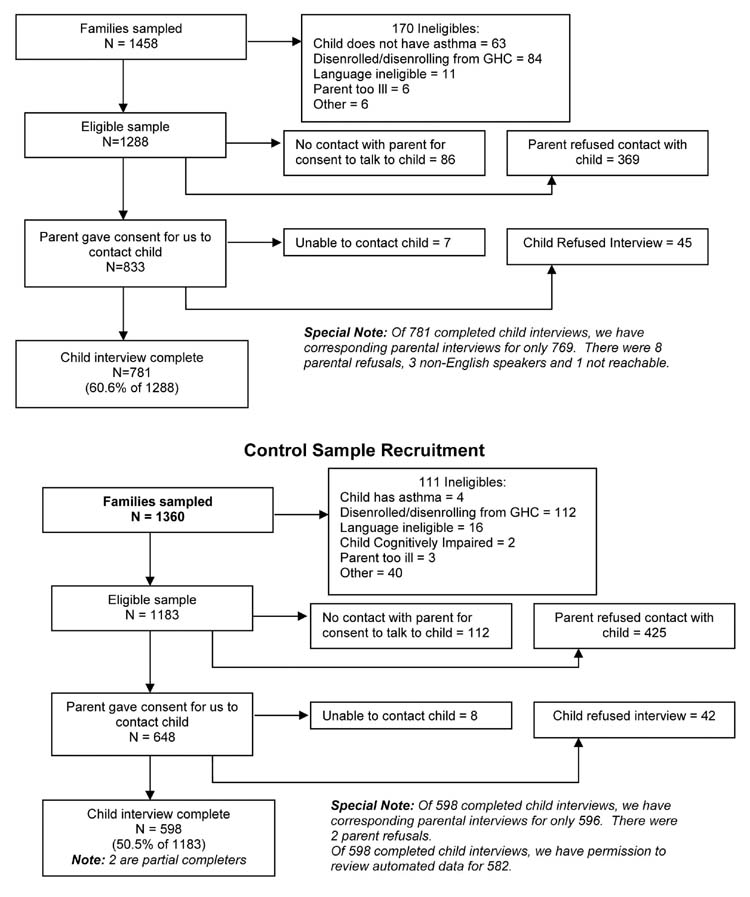
Methods: A telephone interview was offered to all youth aged 11-17 years with asthma (N = 781) and a random sample of similar aged controls (N = 598) enrolled in a Health Maintenance Organization. The C-DISC-4.0 was used to diagnose anxiety and depressive disorders and reliable and valid questionnaires were used to assess severity of anxiety and depressive symptoms. Automated diagnostic, pharmacy and health use data were used to measure asthma treatment intensity, asthma severity and nonasthmatic medical comorbidity. One parent was interviewed to assess sociodemographic variables, child/adolescent psychiatric symptoms and to confirm the asthma diagnosis.
Results: In all, 16.3% of youth with asthma compared with 8.6% of youth without asthma met DSM-IV criteria for one or more anxiety and depressive disorders (OR = 1.92, 95% CI = 1.13-3.28). Independent factors associated with a significantly higher likelihood of meeting criteria for one or more anxiety or depressive disorders included female gender [OR = 1.96 (95% CI = 1.27, 3.03)], living in a single-parent household, [OR = 1.96 (95% CI = 1.26, 3.07)], more parent-reported externalizing behaviors [OR = 1.03 (95% CI = 1.01, 1.05)], more recent diagnosis of asthma [OR = 0.94 (95% CI = 0.89, 0.98)], and more impairment on the asthma physical health scale [OR = 0.95 (95% CI = 0.94, 0.96)].
Conclusions: Youth with asthma have an almost twofold higher prevalence of comorbid DSM-IV anxiety and depressive disorders compared with control youth. Clinical factors associated with meeting criteria for one or more anxiety and depressive included more recent asthma diagnosis, more impairment on the asthma physical health scale, and increased externalizing behaviors.
Figures
References
-
- Kashani JH, Konig P, Shepperd JA, Wilfley D, Morris DA. Psychopathology and self-concept in asthmatic children. J Pediatric Psychol. 1988;13:509–20. - PubMed
-
- Vila G, Nollet-Clemencon C, de Blic J, Mouren-Simeoni MC, Scheinmann P. Prevalence of DSM IV anxiety and affective disorders in a pediatric population of asthmatic children and adolescents. Journal of Affective Disorders. 2000;58:223–31. - PubMed
-
- Vila G, Nollet-Clemencon C, Vera M, et al. Prevalence of DSM-IV disorders in children and adolescents with asthma versus diabetes. Can J Psychiatry. 1999;44:562–9. - PubMed
-
- Ortega AN, Huertas SE, Canino G, Ramirez R, Rubio-Stipec M. Childhood asthma, chronic illness, and psychiatric disorders. Journal of Nervous and Mental Disease. 2002;190:275–81. - PubMed
-
- Goodwin RD, Pine DS, Hoven CW. Asthma and panic attacks among youth in the community. Journal of Asthma. 2003;40:139–45. - PubMed
Publication types
MeSH terms
Grants and funding
LinkOut - more resources
Full Text Sources
Medical
Miscellaneous
