


Protein phosphatase 5
- PMID: 17951098
- PMCID: PMC2551559
- DOI: 10.1016/j.biocel.2007.08.010
Protein phosphatase 5
Abstract
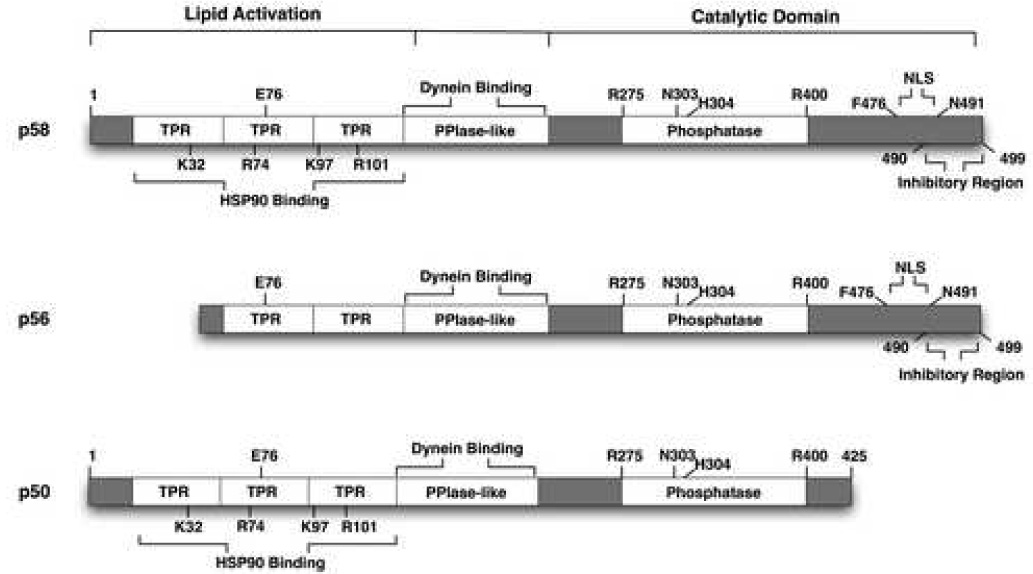
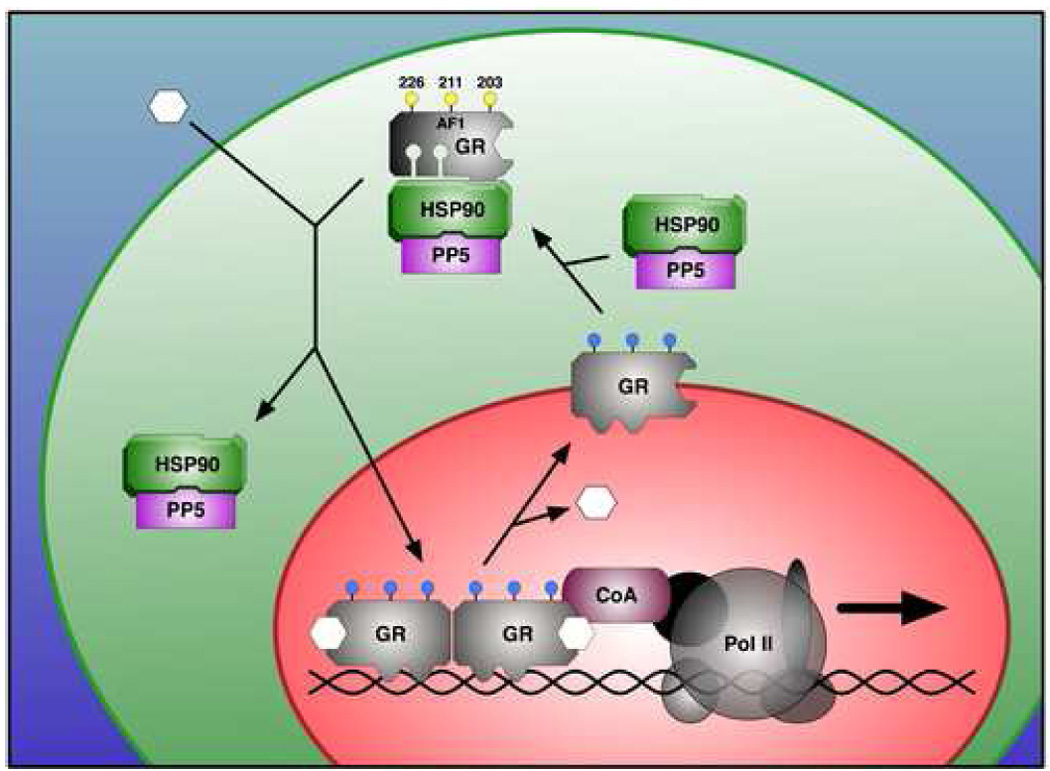
Protein phosphatase 5 (PP5) is a unique member of the PPP family of serine/threonine phosphatases based on the presence of tetratricopeptide repeat (TPR) domains within its structure. Since its discovery, PP5 has been implicated in wide ranging cellular processes, including MAPK-mediated growth and differentiation, cell cycle arrest and DNA damage repair via the p53 and ATM/ATR pathways, regulation of ion channels via the membrane receptor for atrial natriuretic peptide, the cellular heat shock response as mediated by heat shock transcription factor, and steroid receptor signaling, especially glucocorticoid receptor (GR). Given this diversity of effects, the recent development of viable PP5-deficient mice was surprising and suggests that PP5 is a modulatory, rather than essential, factor in phosphorylation pathways. Here, we review the signaling involvement of PP5 in light of new findings and relate these activities to the structural features of the protein.
Figures
References
-
- Becker W, Kentrup H, Klumpp S, Schultz JE, Joost HG. Molecular cloning of a protein serine/threonine phosphatase containing a putative regulatory tetratricopeptide repeat domain. J Biol Chem. 1994;269:22586–22592. - PubMed
-
- Chen MS, Silverstein AM, Pratt WB, Chinkers M. The tetratricopeptide repeat domain of protein phosphatase 5 mediates binding to glucocorticoid receptor heterocomplexes and acts as a dominant negative mutant. J Biol Chem. 1996;271:32315–32320. - PubMed
-
- Chen MX, Cohen PT. Activation of protein phosphatase 5 by limited proteolysis or the binding of polyunsaturated fatty acids to the TPR domain. FEBS Lett. 1997;400:136–140. - PubMed
Publication types
MeSH terms
Substances
Grants and funding
LinkOut - more resources
Full Text Sources
Research Materials
Miscellaneous
