


Identification and characterization of lineage-specific genes within the Poaceae
- PMID: 17951464
- PMCID: PMC2151710
- DOI: 10.1104/pp.107.104513
Identification and characterization of lineage-specific genes within the Poaceae
Abstract
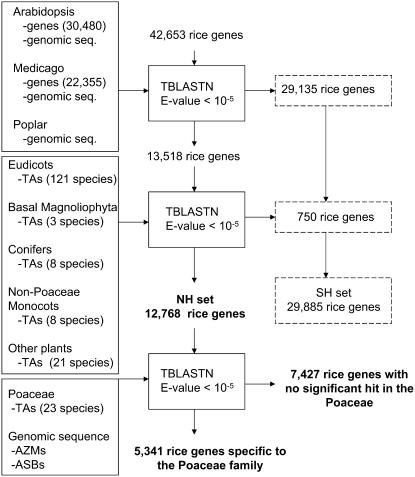
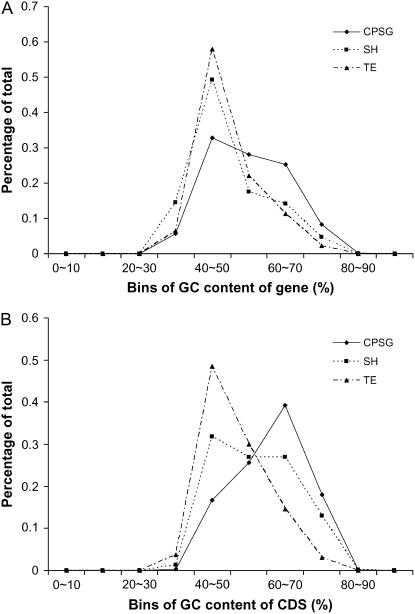
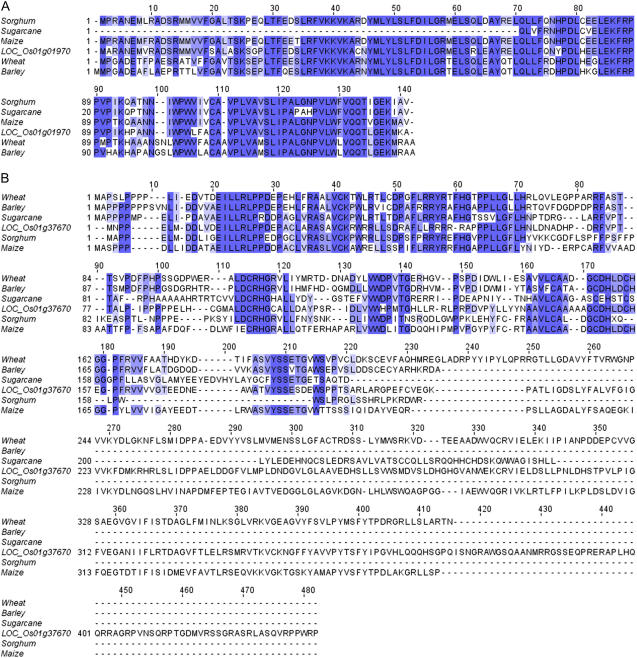
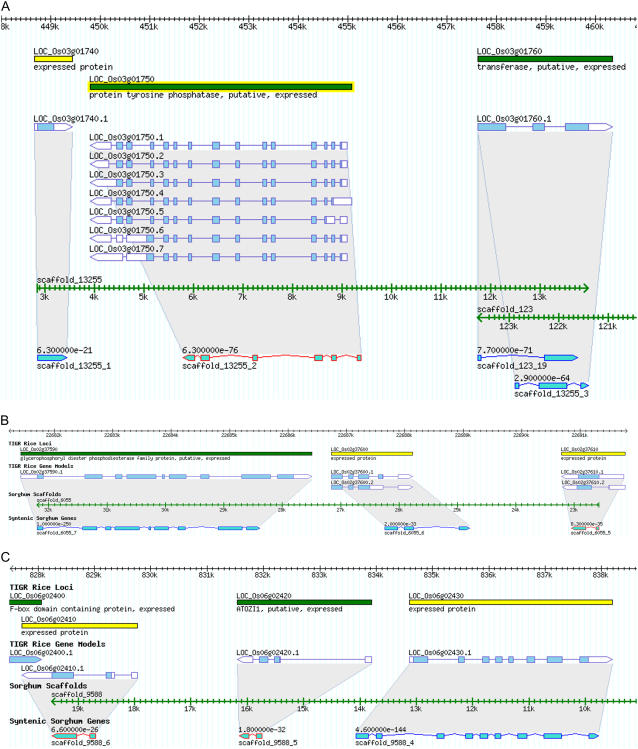
Using the rice (Oryza sativa) sp. japonica genome annotation, along with genomic sequence and clustered transcript assemblies from 184 species in the plant kingdom, we have identified a set of 861 rice genes that are evolutionarily conserved among six diverse species within the Poaceae yet lack significant sequence similarity with plant species outside the Poaceae. This set of evolutionarily conserved and lineage-specific rice genes is termed conserved Poaceae-specific genes (CPSGs) to reflect the presence of significant sequence similarity across three separate Poaceae subfamilies. The vast majority of rice CPSGs (86.6%) encode proteins with no putative function or functionally characterized protein domain. For the remaining CPSGs, 8.8% encode an F-box domain-containing protein and 4.5% encode a protein with a putative function. On average, the CPSGs have fewer exons, shorter total gene length, and elevated GC content when compared with genes annotated as either transposable elements (TEs) or those genes having significant sequence similarity in a species outside the Poaceae. Multiple sequence alignments of the CPSGs with sequences from other Poaceae species show conservation across a putative domain, a novel domain, or the entire coding length of the protein. At the genome level, syntenic alignments between sorghum (Sorghum bicolor) and 103 of the 861 rice CPSGs (12.0%) could be made, demonstrating an additional level of conservation for this set of genes within the Poaceae. The extensive sequence similarity in evolutionarily distinct species within the Poaceae family and an additional screen for TE-related structural characteristics and sequence discounts these CPSGs as being misannotated TEs. Collectively, these data confirm that we have identified a specific set of genes that are highly conserved within, as well as specific to, the Poaceae.
Figures
References
-
- Arabidopsis Genome Initiative (2000) Analysis of the genome sequence of the flowering plant Arabidopsis thaliana. Nature 408 796–813 - PubMed
Publication types
MeSH terms
LinkOut - more resources
Full Text Sources
Miscellaneous
