


Review
doi: 10.1038/ni1530.
Protective immunity and susceptibility to infectious diseases: lessons from the 1918 influenza pandemic
Affiliations
- PMID: 17952044
- PMCID: PMC7097533
- DOI: 10.1038/ni1530
Item in Clipboard
Review
Protective immunity and susceptibility to infectious diseases: lessons from the 1918 influenza pandemic
Nat Immunol.
2007 Nov.
Abstract
The influenza pandemic of 1918 killed nearly 50 million people worldwide and was characterized by an atypical W-shaped mortality curve, where adults between the ages of 30-60 years fared better than younger adults aged 18-30 years. In this review, we will discuss why this influenza virus strain was so virulent and how immunological memory to the 1918 virus may have shaped the W mortality curve. We will end on the topic of the 'honeymoon' period of infectious diseases--the clinically documented period between the ages of 4-13 years during which children demonstrate less morbidity and/or mortality to infectious diseases, in general, compared with young adults.
Figures
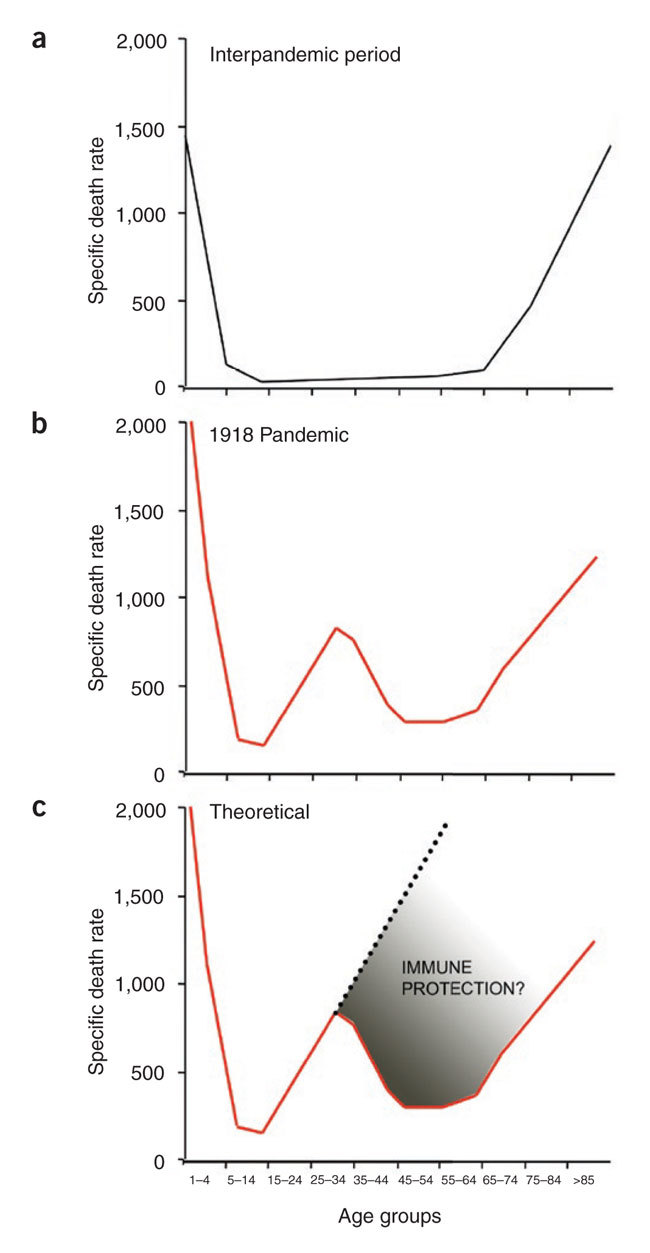
(a) A U-shaped mortality curve was observed for different age groups for the interpandemic period of 1911–1915. (b) A W-shaped mortality curve was observed for the pandemic year 1918. (c) A V-shaped mortality curve might have been observed in 1918, if the population had not been exposed previously (before 1889) to an H1-like influenza virus (the specific death rates were taken from ref. 50).
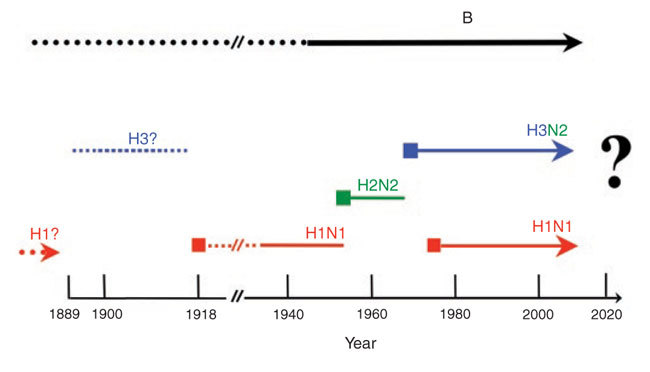
Influenza A viruses with three different hemagglutinin subtypes (H1, H2 and H3) and two different neuraminidase subtypes (N1 and N2) have been identified, and the introductions of these (antigenic shift as a result of reassortment) strains were associated with pandemics. All influenza viruses also undergo continuing antigenic change (antigenic drift as a result of mutation) during interpandemic years. Broken lines indicate that no virus isolates are available from that time period.
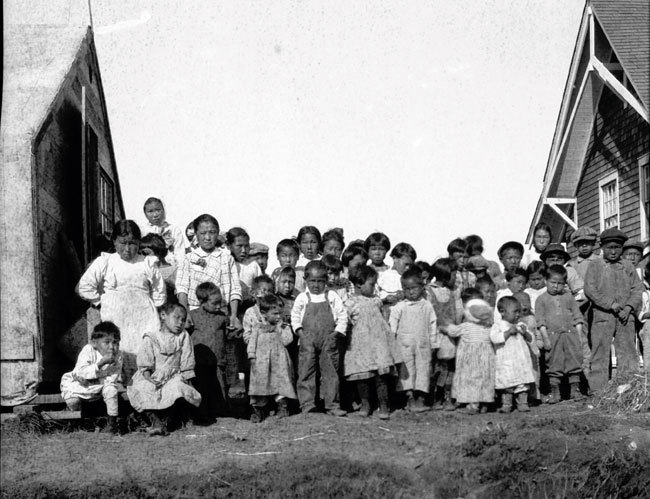
Children in the remote Alaskan village of Nushagak survived the 1918–1919 influenza pandemic. However, most of their parents and grandparents succumbed to the 1918 pandemic virus, probably because they had not been exposed to an earlier H1-like influenza virus as a result of their geographic isolation. The photograph was taken in the summer of 1919. Printed with permission from the Alaska State Library, Core: Nushagak-People-4, Alaskan Packers Association, PCA 01-2432.
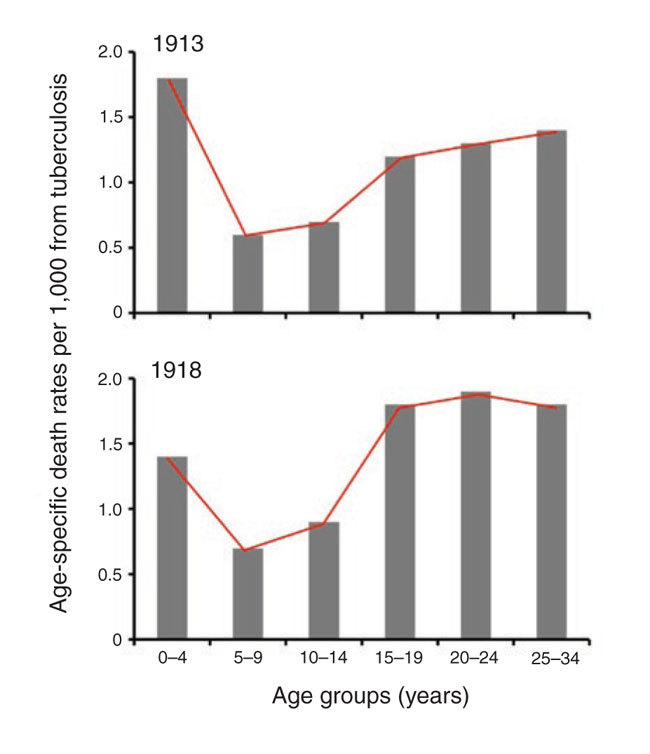
Age-specific death rates from tuberculosis (all forms) in England and Wales for 1913 and 1918. Note that the 5–14-year-old group had a lower mortality rate than the other age groups (data from ref. 10).
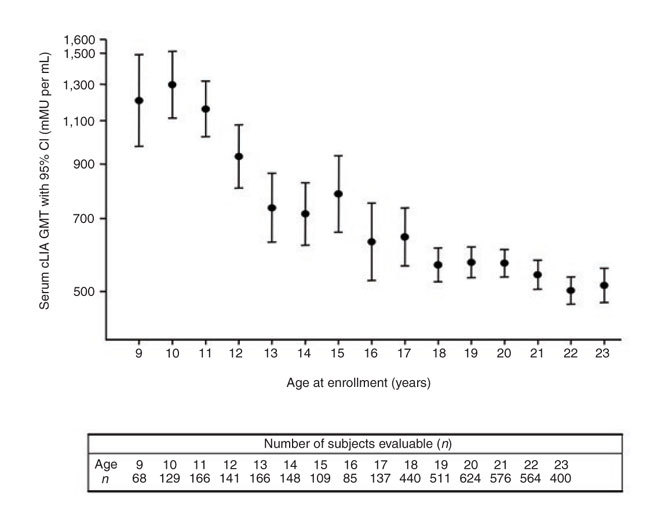
Note that 9–12-year-old girls made higher antibody responses than young women (18–23 year olds). The data shown in this figure are for HPV type 6 at 7 months after vaccination. A similar trend in the antibody responses was seen for the other three HPV types present in the vaccine,.
References
-
- Palese P, Shaw ML. Fields' Virology. 2007. Orthomyxoviridae: the viruses and their replication.
Publication types
MeSH terms
LinkOut - more resources
Full Text Sources
Other Literature Sources
Medical
