


Efficacy and safety of neutral pH superoxidised solution in severe diabetic foot infections
- PMID: 17953678
- PMCID: PMC7951458
- DOI: 10.1111/j.1742-481X.2007.00363.x
Efficacy and safety of neutral pH superoxidised solution in severe diabetic foot infections
Abstract
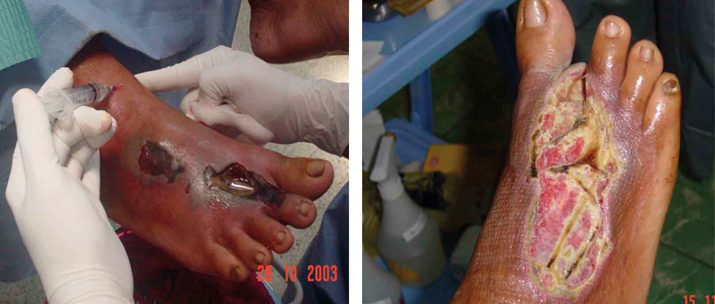
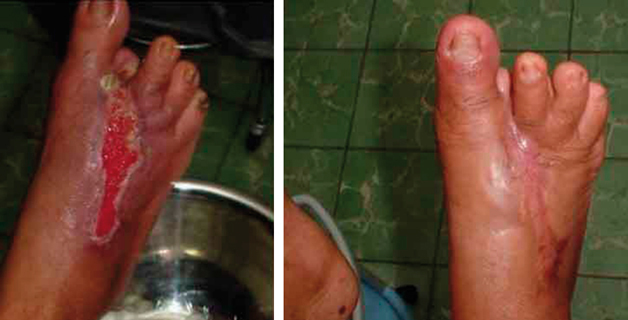
The use of antiseptics in wound care is often controversial and there is definitely a need for a non toxic, highly disinfective agent. This study assessed the efficacy of a neutral pH superoxidised aqueous solution (NpHSS) for infection control, odour reduction and surrounding skin and tissue damage on infected diabetic foot ulcerations. From November 2003 to March 2004, 45 patients with type 2 diabetes were randomised into a single-blind clinical trial comparing NpHSS (intervention group; n = 21) versus conventional disinfectant (control group; n = 16). All patients received comprehensive care including surgical debridement as appropriate, moist wound care, intensive glucose control and broad spectrum antibiotics. Treatment groups were matched in terms of sex, age (61.9 +/- 11.9 versus 67.8 +/- 11.6), years of diabetes duration (16.4 +/- 8.1 versus 17 +/- 10.2), obesity, HgAlc (7.1 +/- 2 versus 6.7 +/- 1.8), initial fasting glycaemia (163 +/- 59 versus 152 +/- 65.8 mg/dl), ulcer duration/week (13.7 +/- 24 versus 15.1 +/- 16.3), B/A Index (0.9 +/- 0.5 versus 1.14 +/- 0.7), depth and extent of infection/periwound cellulitis (groups B and C of the Tampico Hospital Classification) as well as aetiology (P = 0.647). Odour reduction was achieved in all NpHSS patients (100% versus 25%; P < 0.01) and surrounding cellulitis diminished (P < 0.001) in 17 patients (80.9% versus 43.7%). Nineteen patients in the NpHSS group showed advancement to granulating tissue stage (90.4% versus 62.5%; P = 0.05) with significantly less tissue toxicity (94% versus 31.2%; P < 0.01). A non toxic, NpHSS, as part of a comprehensive care regimen, may be more efficacious in infection control, odour and erythema reduction than conventional disinfectants in treatment of diabetic foot infections.
Figures

References
-
- Lipsky BA. Medical treatment of diabetic foot infections. Clin Infect Dis 2004;39:104–14. - PubMed
-
- International Working Group on the Diabetic Foot . International consensus on the diabetic foot. Maastricht: International Working Group on the Diabetic Foot, 1999.
-
- Andros G. Diagnostic and therapeutic arterial interventions in the ulcerated diabetic foot. Diabetes Metab Res Rev 2004;20:29–33. - PubMed
-
- Santos D, Carline T. Examination of the lower limb in high risk patients. J Tissue Viability 2000;10:97–105. - PubMed
-
- Martinez DA, Aguayo J, Morales G, Aguiran M, Illan F. Impact of a clinical pathway for the diabetic foot in a general hospital. An Med Interna 2004;21:420–4. - PubMed
Publication types
MeSH terms
Substances
LinkOut - more resources
Full Text Sources
Medical
