Parental weight estimation of their child's weight is more accurate than other weight estimation methods for determining children's weight in an emergency department?
- PMID: 17954827
- PMCID: PMC2658317
- DOI: 10.1136/emj.2007.047993
Parental weight estimation of their child's weight is more accurate than other weight estimation methods for determining children's weight in an emergency department?
Abstract
Objective: To compare the various paediatric weight estimation methods (Advanced Pediatric Life Support, Broselow Tape, Argall, and Best Guess) and parental estimate to measured weight.
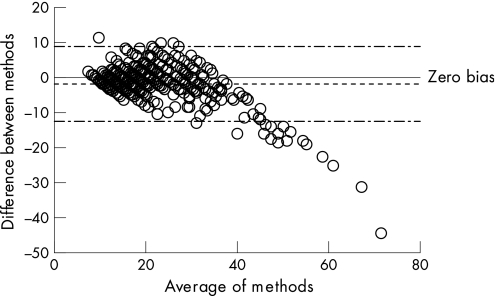
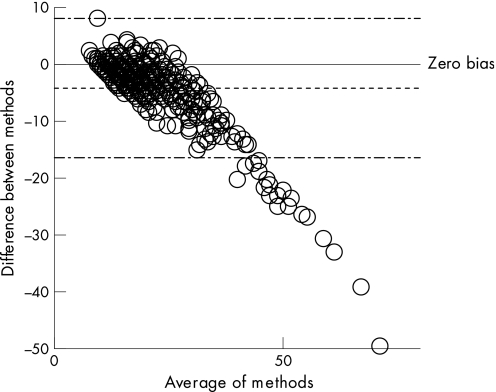
Patients and method: A convenience sample of children aged 1-11 years who presented to the emergency department over a 6 month period were eligible for inclusion. Data collected included height, age, ethnicity, parent estimate of weight and measured weight. Body mass index (BMI) was calculated. The outcome of interest was agreement between estimated weight and measured weight for each method. Data were analysed by descriptive statistics and performance of each weight estimation method was compared using mean difference (MD), root mean square error (RMSE) and agreement within 10%.
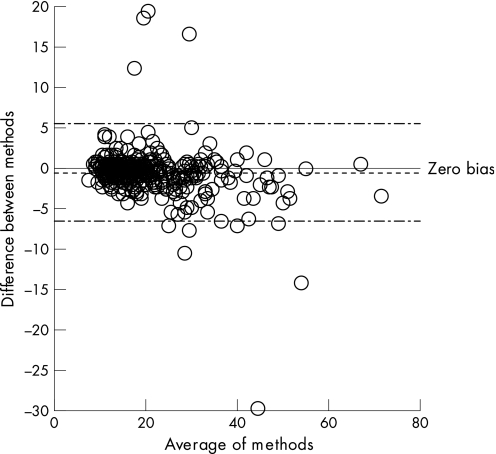
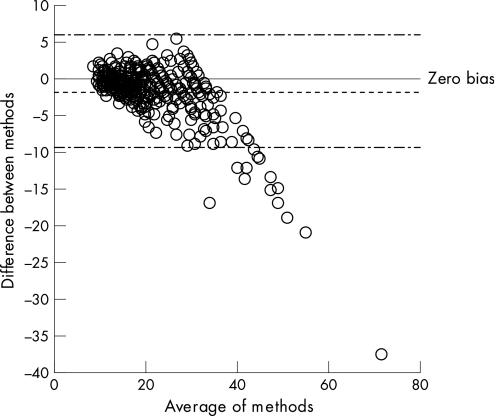
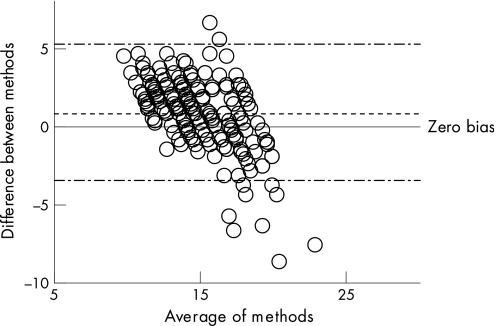
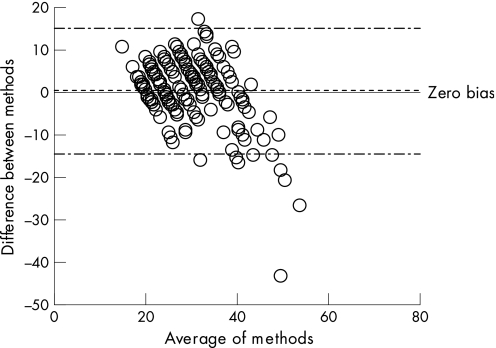
Results: 410 cases were included in this study. The median age was 4 years, there were more boys (54.4%), and the majority of cases were of Caucasian ethnicity (74.9%). The mean BMI of the sample was 17 kg/m2 and mean actual weight was 21.2 kg. Parent estimate was the most accurate method with 78% of parent estimates within 10% of measured weight and the lowest mean difference (-0.6 kg) and RMSE (3.1 kg). The Broselow tape was the most accurate of the other methods, with 61% of estimations within 10% of measured weight.
Conclusion: Parental estimation of weight is more accurate than the other weight estimation methods studied. When this is not available, the Broselow tape is the most accurate alternative method.
Conflict of interest statement
Competing interests: None declared
References
-
- Advanced Life Support Group Advanced paediatric life support: the practical approach, 4th ed. Oxford: BMJ Books/Blackwells, 2005
-
- DeBoer S, Seaver M, Broselow J. Color coding to reduce errors. Am J Nurs 200510568–71. - PubMed
-
- Tinning K K, Acworth J P.Make your best guess: an updated method for paediatric weight estimation. Proceedings of Annual Scientific Meeting. Australasian College for Emergency Medicine 2006
-
- Theron L, Adams A, Jansen K.et al Emergency weight estimation in Pacific Island and Maori children who are large‐for‐age. Emerg Med Australas 200517238–243. - PubMed
Publication types
MeSH terms
LinkOut - more resources
Full Text Sources
Medical