


Analysis of complete mitochondrial genome sequences increases phylogenetic resolution of bears (Ursidae), a mammalian family that experienced rapid speciation
- PMID: 17956639
- PMCID: PMC2151078
- DOI: 10.1186/1471-2148-7-198
Analysis of complete mitochondrial genome sequences increases phylogenetic resolution of bears (Ursidae), a mammalian family that experienced rapid speciation
Abstract
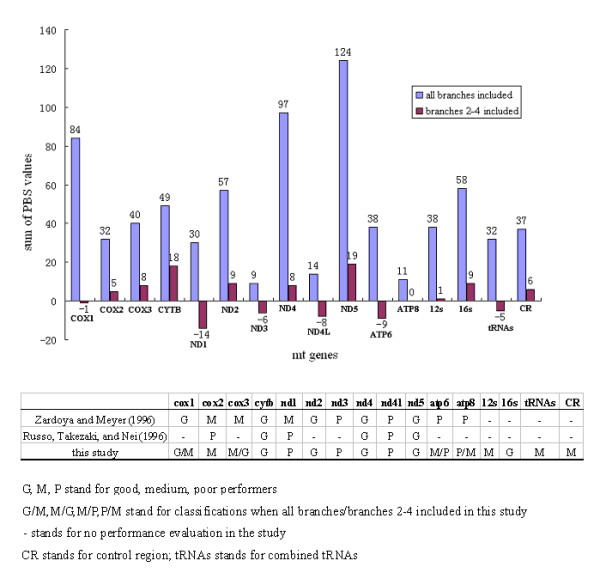
Background: Despite the small number of ursid species, bear phylogeny has long been a focus of study due to their conservation value, as all bear genera have been classified as endangered at either the species or subspecies level. The Ursidae family represents a typical example of rapid evolutionary radiation. Previous analyses with a single mitochondrial (mt) gene or a small number of mt genes either provide weak support or a large unresolved polytomy for ursids. We revisit the contentious relationships within Ursidae by analyzing complete mt genome sequences and evaluating the performance of both entire mt genomes and constituent mtDNA genes in recovering a phylogeny of extremely recent speciation events.
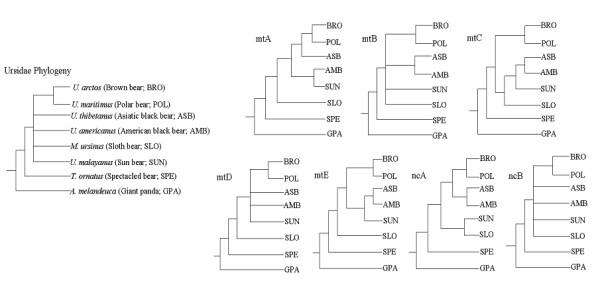
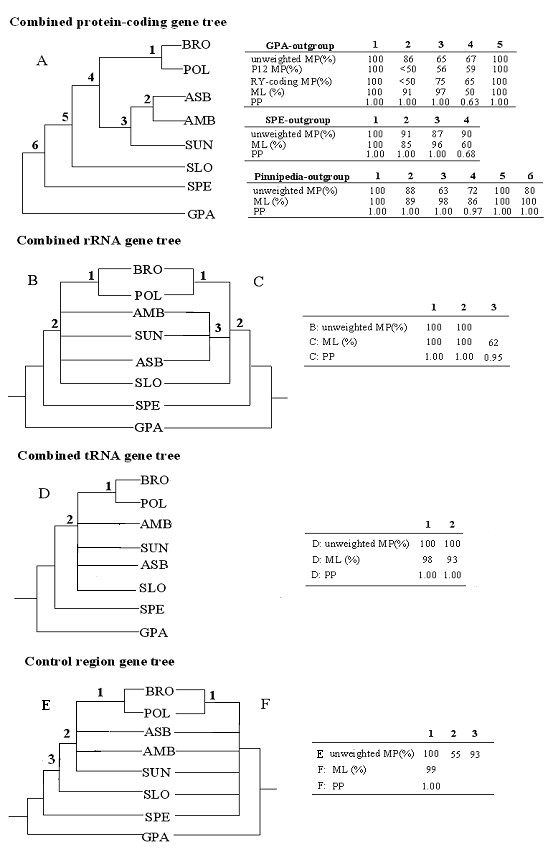
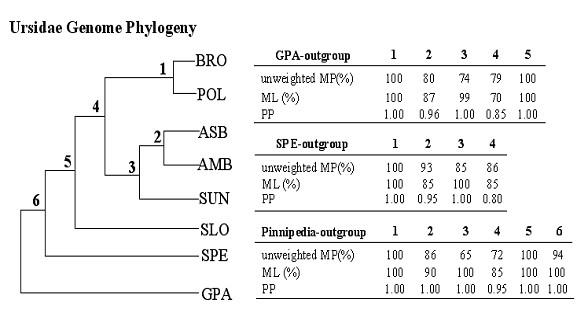
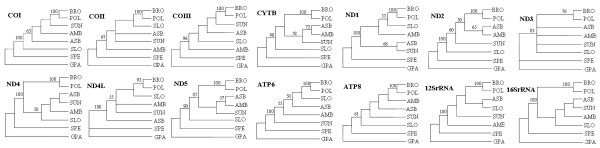
Results: This mitochondrial genome-based phylogeny provides strong evidence that the spectacled bear diverged first, while within the genus Ursus, the sloth bear is the sister taxon of all the other five ursines. The latter group is divided into the brown bear/polar bear and the two black bears/sun bear assemblages. These findings resolve the previous conflicts between trees using partial mt genes. The ability of different categories of mt protein coding genes to recover the correct phylogeny is concordant with previous analyses for taxa with deep divergence times. This study provides a robust Ursidae phylogenetic framework for future validation by additional independent evidence, and also has significant implications for assisting in the resolution of other similarly difficult phylogenetic investigations.
Conclusion: Identification of base composition bias and utilization of the combined data of whole mitochondrial genome sequences has allowed recovery of a strongly supported phylogeny that is upheld when using multiple alternative outgroups for the Ursidae, a mammalian family that underwent a rapid radiation since the mid- to late Pliocene. It remains to be seen if the reliability of mt genome analysis will hold up in studies of other difficult phylogenetic issues. Although the whole mitochondrial DNA sequence based phylogeny is robust, it remains in conflict with phylogenetic relationships suggested by analysis of limited nuclear-encoded data, a situation that will require gathering more nuclear DNA sequence information.
Figures
References
-
- Wayne RK, Benveniste RE, Janczewski DN, O'Brien SJ. Molecular and biochemical evolution of the Carnivora. In: Gittleman JL, editor. Carnivore Behavior, Ecology, and Evolution. Cornell Univ. Press, Ithaca; 1989. pp. 465–494.
-
- Nowak RM. Walker's Mammals of the World. Johns Hopkins Press, Baltimore; 1991.
-
- Kitchener AC. A review of the evolution, systematics, functional morphology, distribution and status of the Ursidae. Int Zoo News. 1994;242:4–24.
-
- Nash WG, O'Brien SJ. A comparative chromosome banding analysis of the ursidae and their relationship to other carnivores. Cytogene Cell Genet. 1987;45:206–212. - PubMed
Publication types
MeSH terms
Substances
LinkOut - more resources
Full Text Sources
