


Effect of a weight loss intervention on anthropometric measures and metabolic risk factors in pre- versus postmenopausal women
- PMID: 17961235
- PMCID: PMC2164948
- DOI: 10.1186/1475-2891-6-31
Effect of a weight loss intervention on anthropometric measures and metabolic risk factors in pre- versus postmenopausal women
Abstract
Background: The present study examines changes in body weight, fat mass, metabolic and hormonal parameters in overweight and obese pre- and postmenopausal women who participated in a weight loss intervention.
Methods: Seventy-two subjects were included in the analysis of this single arm study (premenopausal: 22 women, age 43.7 +/- 6.4 years, BMI 31.0 +/- 2.4 kg/m2; postmenopausal: 50 women, age 58.2 +/- 5.1 years, BMI 32.9 +/- 3.7 kg/m2). Weight reduction was achieved by the use of a meal replacement and fat-reduced diet. In addition, from week 6 to 24 participants attended a guided exercise program. Body composition was analyzed with the Bod Pod(R). Blood pressures were taken at every visit and blood was collected at baseline and closeout of the study to evaluate lipids, insulin, cortisol and leptin levels.
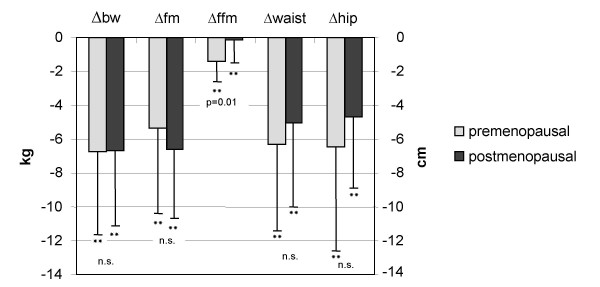
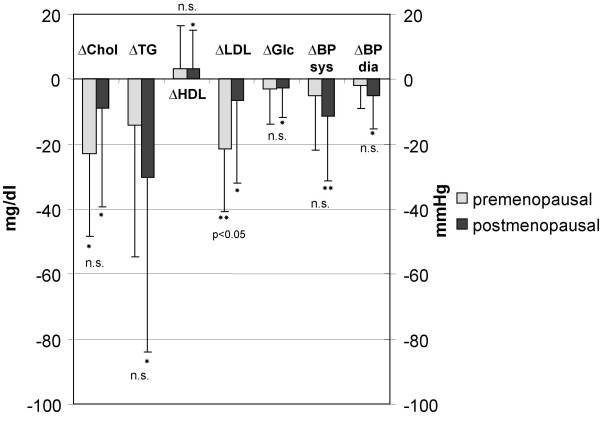
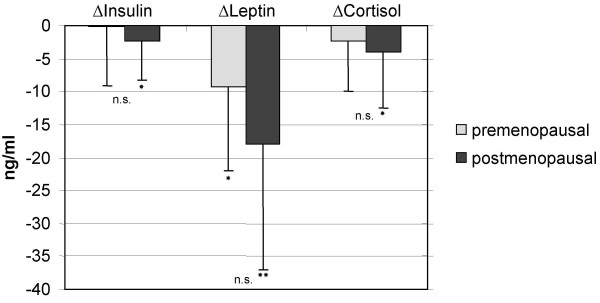
Results: BMI, fat mass, waist circumference, systolic blood pressure, triglycerides, glucose, leptin and cortisol were higher in the postmenopausal women at baseline. Both groups achieved a substantial and comparable weight loss (pre- vs. postmenopausal: 6.7 +/- 4.9 vs 6.7 +/- 4.4 kg; n.s.). However, in contrast to premenopausal women, weight loss in postmenopausal women was exclusively due to a reduction of fat mass (-5.3 +/- 5.1 vs -6.6 +/- 4.1 kg; p < 0.01). In premenopausal women 21% of weight loss was attributed to a reduction in lean body mass. Blood pressure, triglycerides, HDL-cholesterol, and glucose improved significantly only in postmenopausal women whereas total cholesterol and LDL-cholesterol were lowered significantly in both groups.
Conclusion: Both groups showed comparable weight loss and in postmenopausal women weight loss was associated with a pronounced improvement in metabolic risk factors thereby reducing the prevalence of metabolic syndrome.
Figures
References
-
- Tchernof A, Poehlman ET. Effects of the menopause transition on body fatness and body fat distribution. Obesity Res. 1998;6:246–254. - PubMed
-
- Faria AN, Ribeiro Filho FF, Gouveia F, Sr, Zanella MT. Impact of visceral fat on blood pressure and insulin sensitivity in hypertensive obese women. Obes Res. 2002;10:1203–1206. - PubMed
-
- Hernandez-Ono A, Monter-Carreola G, Zamora-Gonzalez J, Cardoso-Saldana G, Posadas-Sanchez R, Torres-Tamayo M, Posadas-Romero C. Association of visceral fat with coronary risk factors in a population-based sample of postmenopausal women. Int J Obes Relat Metab Disord. 2002;26:33–39. doi: 10.1038/sj.ijo.0801842. - DOI - PubMed
Publication types
MeSH terms
Substances
LinkOut - more resources
Full Text Sources
Medical
Miscellaneous
