


International Day for the Evaluation of Abdominal Obesity (IDEA): a study of waist circumference, cardiovascular disease, and diabetes mellitus in 168,000 primary care patients in 63 countries
- PMID: 17965405
- PMCID: PMC2475527
- DOI: 10.1161/CIRCULATIONAHA.106.676379
International Day for the Evaluation of Abdominal Obesity (IDEA): a study of waist circumference, cardiovascular disease, and diabetes mellitus in 168,000 primary care patients in 63 countries
Abstract
Background: Abdominal adiposity is a growing clinical and public health problem. It is not known whether it is similarly associated with cardiovascular disease (CVD) and diabetes mellitus in different regions around the world, and thus whether measurement of waist circumference (WC) in addition to body mass index (BMI) is useful in primary care practice.
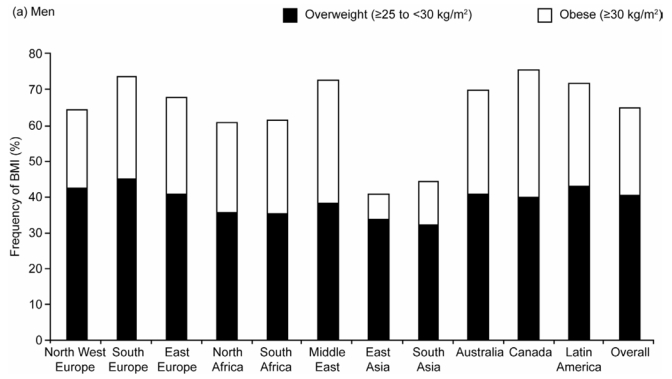
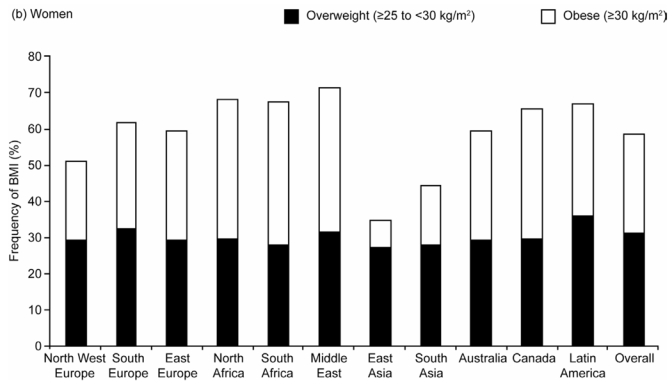
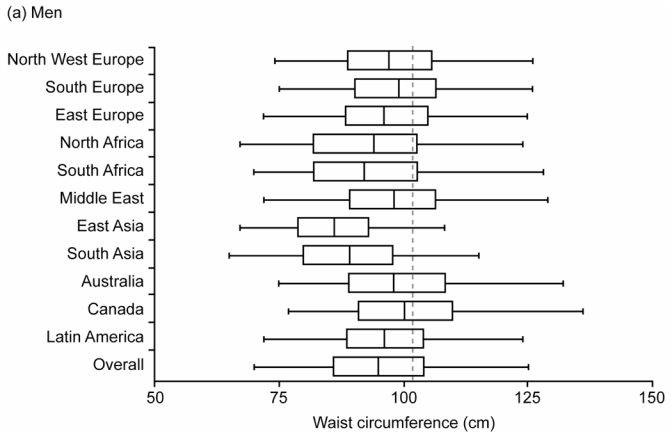
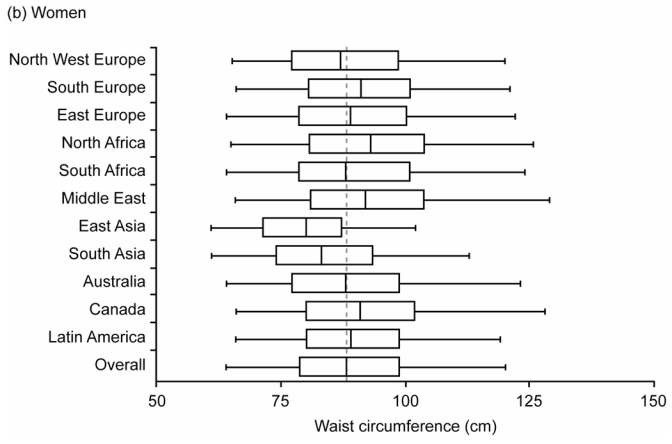
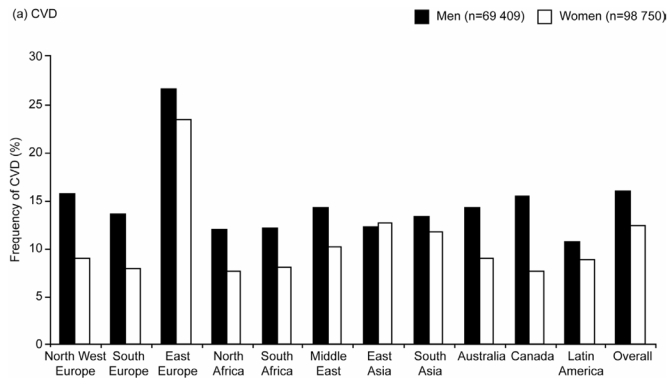
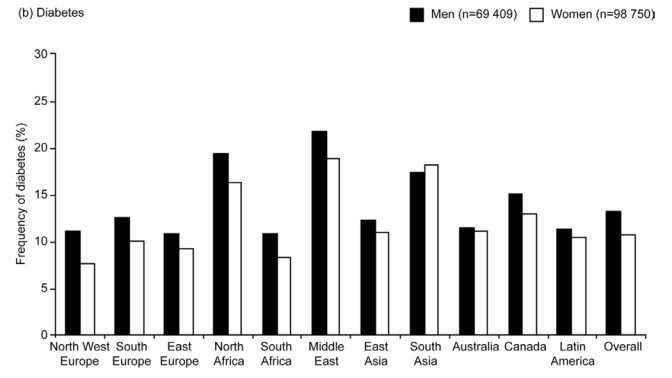
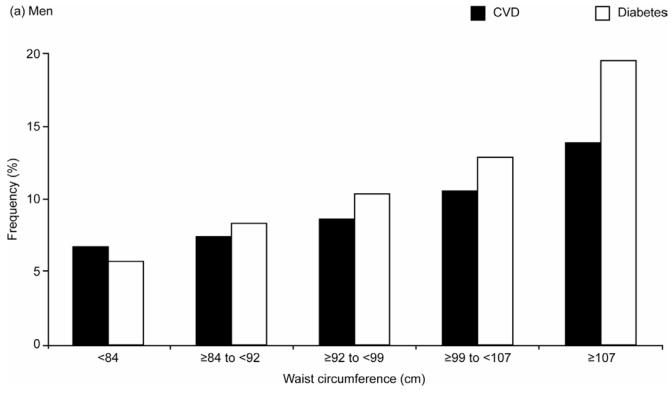
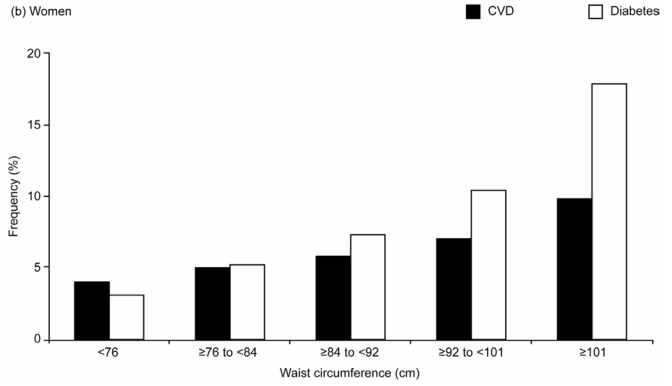
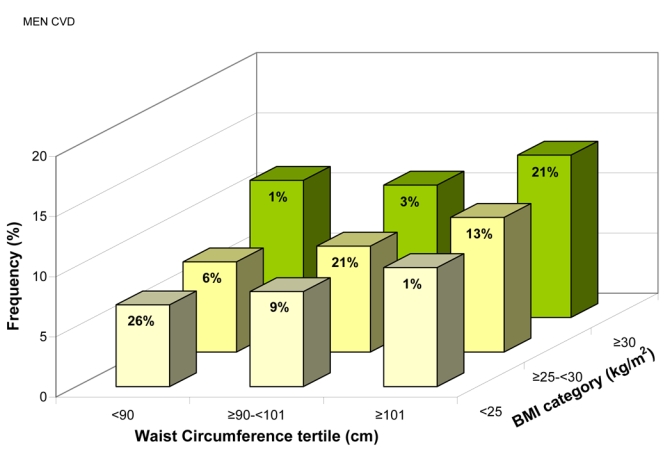
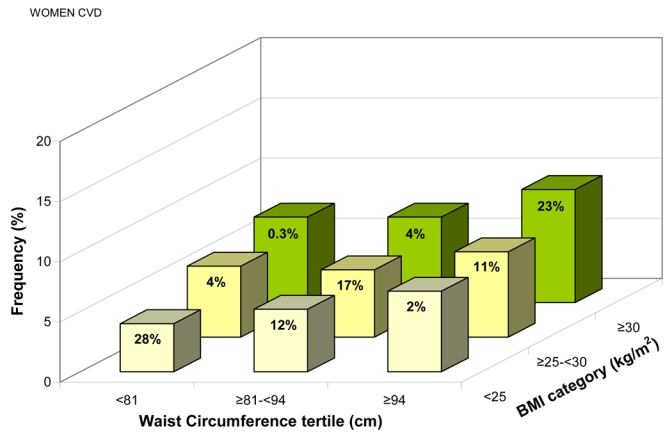
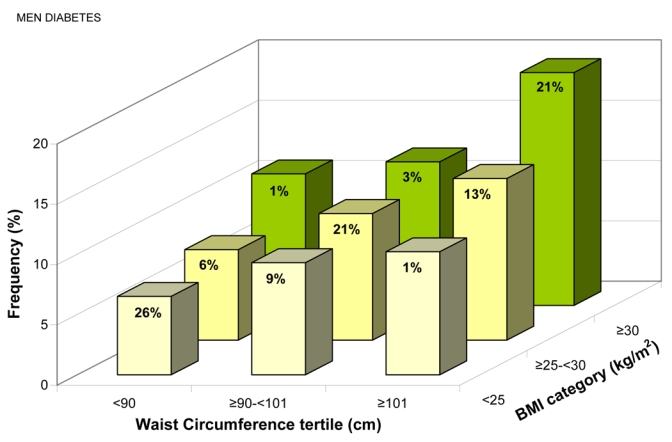
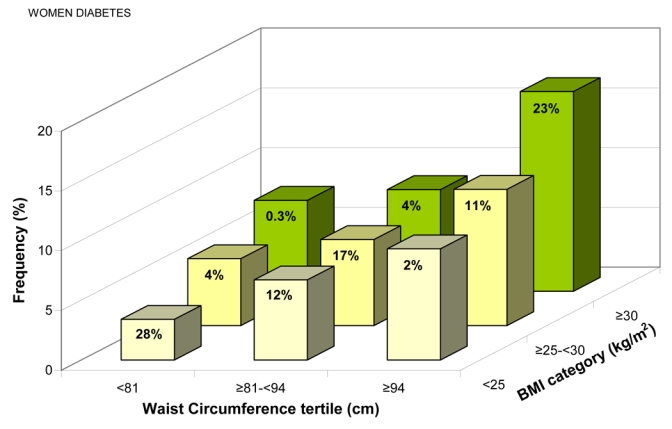
Methods and results: Randomly chosen primary care physicians in 63 countries recruited consecutive patients aged 18 to 80 years on 2 prespecified half days. WC and BMI were measured and the presence of CVD and diabetes mellitus recorded. Of the patients who consulted the primary care physicians, 97% agreed to participate in the present study. Overall, 24% of 69,409 men and 27% of 98,750 women were obese (BMI > or = 30 kg/m2). A further 40% and 30% of men and women, respectively, were overweight (BMI 25 to 30 kg/m2). Increased WC (> 102 for men and > 88 cm for women) was recorded in 29% and 48%, CVD in 16% and 13%, and diabetes mellitus in 13% and 11% of men and women, respectively. A statistically significant graded increase existed in the frequency of CVD and diabetes mellitus with both BMI and WC, with a stronger relationship for WC than for BMI across regions for both genders. This relationship between WC, CVD, and particularly diabetes mellitus was seen even in lean patients (BMI < 25 kg/m2).
Conclusions: Among men and women who consulted primary care physicians, BMI and particularly WC were both strongly linked to CVD and especially to diabetes mellitus. Strategies to address this global problem are required to prevent an epidemic of these major causes of morbidity and mortality.
Figures
References
-
- Seidell JC, Kahn HS, Williamson DF, Lissner L, Valdez R. Report from a Centers for Disease Control and Prevention Workshop on use of adult anthropometry for public health and primary health care. Am J Clin Nutr. 2001;73:123–126. - PubMed
-
- Caterson ID, Hubbard V, Bray GA, Grunstein R, Hansen BC, Hong Y, Labarthe D, Seidell JC, Smith SC, Jr the American Heart Association. Prevention Conference VII: Obesity, a worldwide epidemic related to heart disease and stroke: Group III: worldwide comorbidities of obesity. Circulation. 2004;110:e476–e483. - PubMed
-
- Grundy SM, Cleeman JI, Daniels SR, Donato KA, Eckel RH, Franklin BA, Gordon DJ, Krauss RM, Savage PJ, Smith SC, Jr, Spertus JA, Costa F the American Heart Association/National Heart, Lung, and Blood Institute. Diagnosis and management of the metabolic syndrome: an American Heart Association/National Heart, Lung, and Blood Institute Scientific Statement. Circulation. 2005;112:2735–2752. - PubMed
-
- Ogden CL, Carroll MD, Curtin LR, McDowell MA, Tabak CJ, Flegal KM. Prevalence of overweight and obesity in the United States, 1999–2004. JAMA. 2006;295:1549–1555. - PubMed
-
- Ford ES, Mokdad AH, Giles WH. Trends in waist circumference among U.S. adults. Obes Res. 2003;11:1223–1231. - PubMed
Publication types
MeSH terms
LinkOut - more resources
Full Text Sources
Medical
