. 2007 Nov 7;99(21):1623-33.
doi: 10.1093/jnci/djm198. Epub 2007 Oct 30.

Seneca Valley virus, a systemically deliverable oncolytic picornavirus, and the treatment of neuroendocrine cancers

Affiliations

Seneca Valley virus, a systemically deliverable oncolytic picornavirus, and the treatment of neuroendocrine cancers

P Seshidhar Reddy et al. J Natl Cancer Inst. .

Abstract

Background: Numerous clinical trials have demonstrated that oncolytic viruses can elicit antitumor responses when they are administered directly into localized cancers. However, the treatment of metastatic disease with oncolytic viruses has been challenging due to the inactivation of viruses by components of human blood and/or to inadequate tumor selectivity.

Methods: We determined the cytolytic potential and selectivity of Seneca Valley Virus-001 (SVV-001), a newly discovered native picornavirus, in neuroendocrine and pediatric tumor cell lines and normal cells. Suitability of the virus for intravenous delivery in humans was assessed by blood inactivation assays. Safety was evaluated in vivo using an immune-competent mouse model, and efficacy was evaluated in vivo in athymic mice bearing tumors derived from human small-cell lung cancer and retinoblastoma cell lines.

Results: Cell lines derived from small-cell lung cancers and solid pediatric cancers were at least 10,000-fold more sensitive to the cytolytic activity of SVV-001 than were any of the adult normal human cells tested. Viral infectivity was not inhibited by human blood components. Intravenous doses up to 1 x 10(14) virus particles (vp) per kg were well tolerated, and no dose-limiting toxicity was observed in immune-competent mice. A single intravenous dose of 1 x 10(8) vp per kg into athymic mice bearing preestablished small-cell lung or retinoblastoma tumors resulted in complete, durable responses in ten of ten and five of eight mice, respectively.

Conclusions: SVV-001 has potent cytolytic activity and high selectivity for tumor cell lines having neuroendocrine properties versus adult normal cells. Systemically administered SVV-001 has potential for the treatment of metastatic neuroendocrine cancers.


Figures
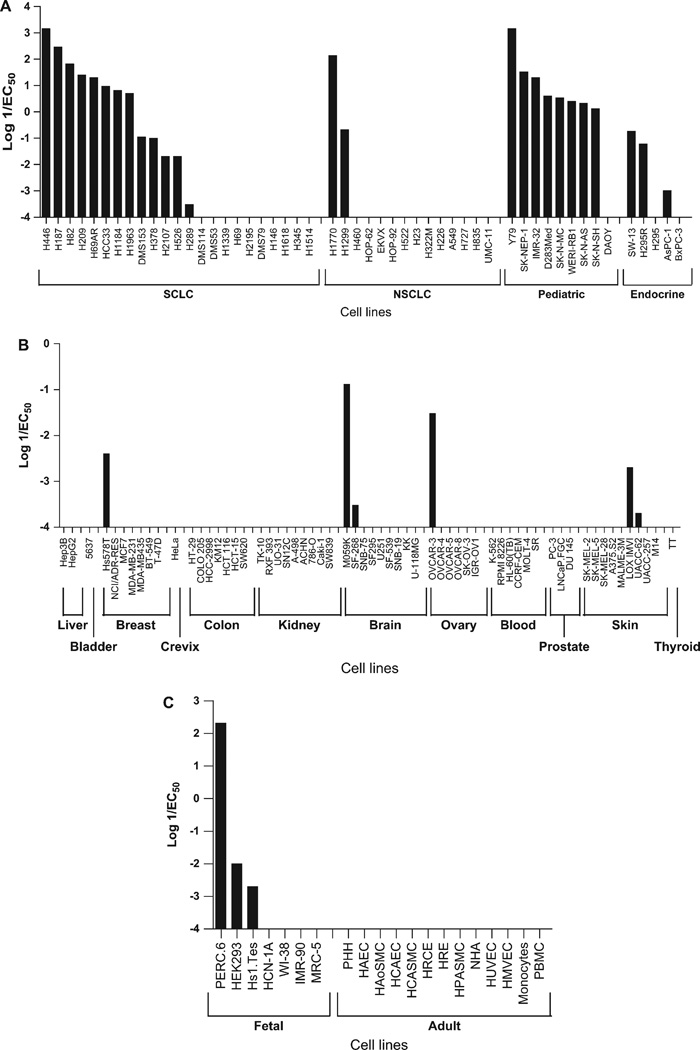
Fig. 1
Fig. 1
Cytotoxicity of Seneca Valley Virus-001 (SVV-001) in selected tumor cell lines and normal cells (described in Supplementary Table 1, available online). Cytotoxicity assays were performed as described in the text. Effective concentration 50 (EC50; number of viral particles per cell required to produce 50% cell death) was determined. Log of the inverse EC50 value is plotted for the cell lines listed. A) Small-cell lung cancer (SCLC), non–small-cell lung cancer (NSCLC), pediatric neuroendocrine, and endocrine (adrenal gland and pancreas) cell types. B) Other adult tumor cell types. C) Embryonic cell lines (fetal) and adult normal primary cells (PHH, primary human hepatocytes; HAEC, human aortic endothelial cells; HAoSMC, human aortic smooth muscle cells; HCAEC, human coronary artery endothelial cells; HCASMC, human coronary artery smooth muscle cells; HRCE, human renal cortical epithelial cells; HRE, human renal epithelial cells; HPASMC, human pulmonary artery smooth muscle cells; NHA, normal human astrocytes; HUVEC, human umbilical vein endothelial cells; HMVEC, human microvascular endothelial cells (skin); PBMCs, peripheral blood mononuclear cells). Means from one experiment performed in duplicate are shown.
Fig. 2
Fig. 2
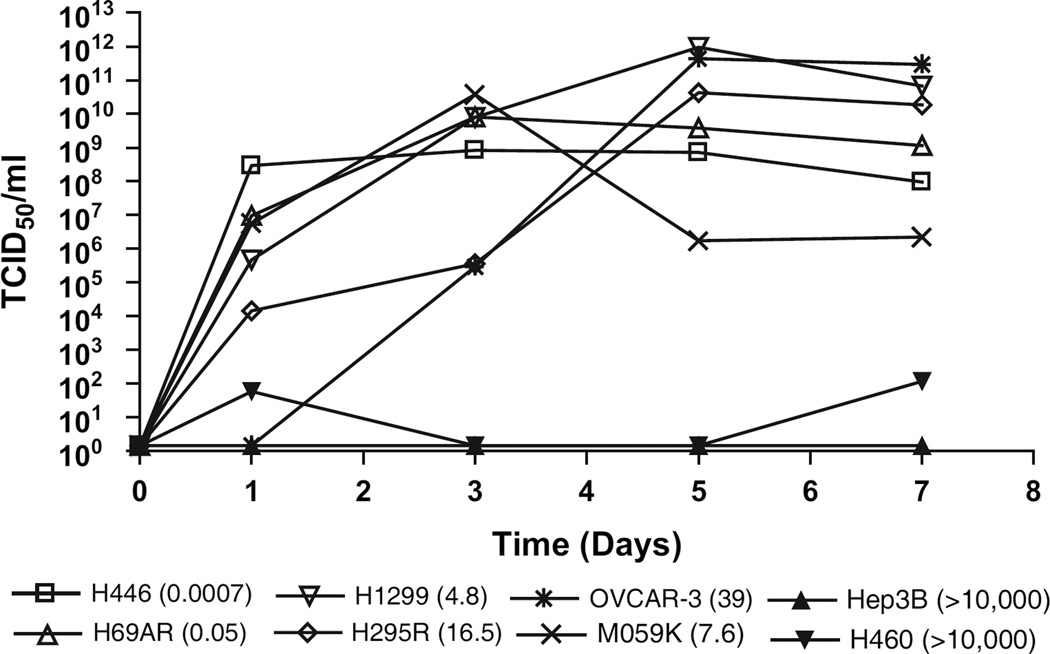
Seneca Valley Virus-001 (SVV-001) replication kinetic assay. The cell lines used for the assay had effective concentration 50 (EC50) values (given in parenthesis) that ranged from 0.0007 to greater than 10000 particles per cell (ppc). These included two cell lines with EC50 values less than 1 (H446 and H69AR), two cell lines with EC50 values greater than 1 and less than 10 (H1299 and M059K), and two cell lines resistant to SVV-001–mediated cytotoxicity and with EC50 values greater than 10000 (Hep3B and H460). Cells plated in tissue culture dishes were infected with SVV-001 at 10 virus ppc, and crude viral lysates taken at the indicated time points after infection were titered on PER.C6 cells. The amount of virus produced at each time point expressed as tissue culture infective dose 50 (TCID50 /mL) is plotted as a function of time. Means from one experiment of two performed are shown.
Fig. 3
Fig. 3
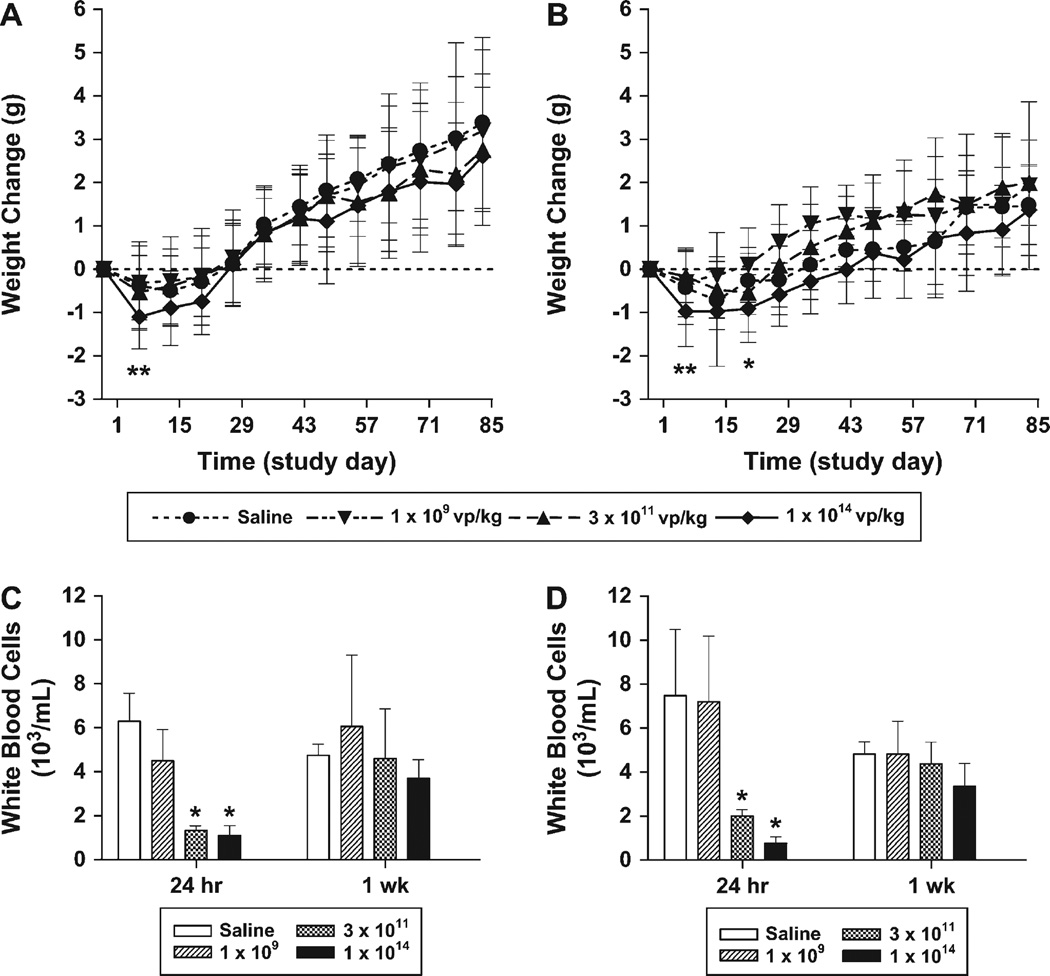
Toxicology parameters in A/J mice following intravenous injection of Seneca Valley Virus (SVV-001). Male and female A/J mice were injected with saline vehicle (n = 25 per sex) or SVV-001 at 1 × 10⁹ (n = 25 per sex), 3 × 10¹¹ (n = 25 per sex), or 1 × 10¹⁴ virus particles (vp) per kg (n = 25 per sex) on study day 1. A–B) Body weights (A, male; B, female) were recorded on a weekly basis, and body weight change was calculated from the predose weight. *, P <.05 for 1 × 10¹⁴ vp per kg SVV-001 versus vehicle groups; **, P <.01 for 1 × 10¹⁴ vp per kg SVV-001 versus vehicle groups. C–D) White blood cell counts from a complete blood count performed on whole blood collected at the indicated time points are shown (C, male; D, female). *, P <.01 for SVV-001 versus vehicle groups. Means and 95% confidence intervals are shown. All P values (two-sided) were calculated using Dunnett’s test.
Fig. 4
Fig. 4
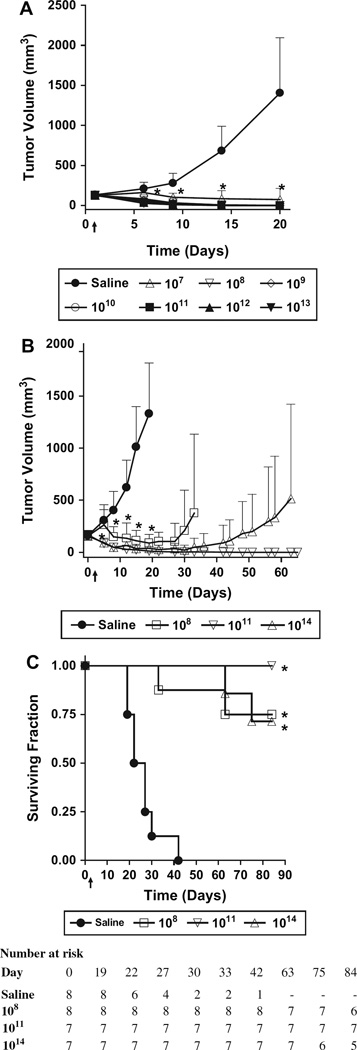
In vivo efficacy of systemically administered Seneca Valley Virus-001 (SVV-001). A single intravenous injection of saline vehicle or SVV-001 at the indicated doses (virus particles per kg) was given to athymic mice bearing preestablished xenograft tumors on study day 1 (denoted by ↑). A) Human small-cell lung tumor line, H446 (n = 10 per group). B) Human retinoblastoma Y79 (n = 7–8 per group). Mean tumor volumes and 95% confidence intervals are plotted as a function of time. *, P <.01 (two-sided, calculated using Dunnett’s test) compared with saline control for all SVV-001-treated groups with mean values appearing below the asterisk in the figure. C) Survival curves of nude mice bearing xenografts of the human retinoblastoma tumor line Y79. *, P <.001 (two-sided, calculated using the log-rank test) compared with saline control.
Fig. 5
Fig. 5
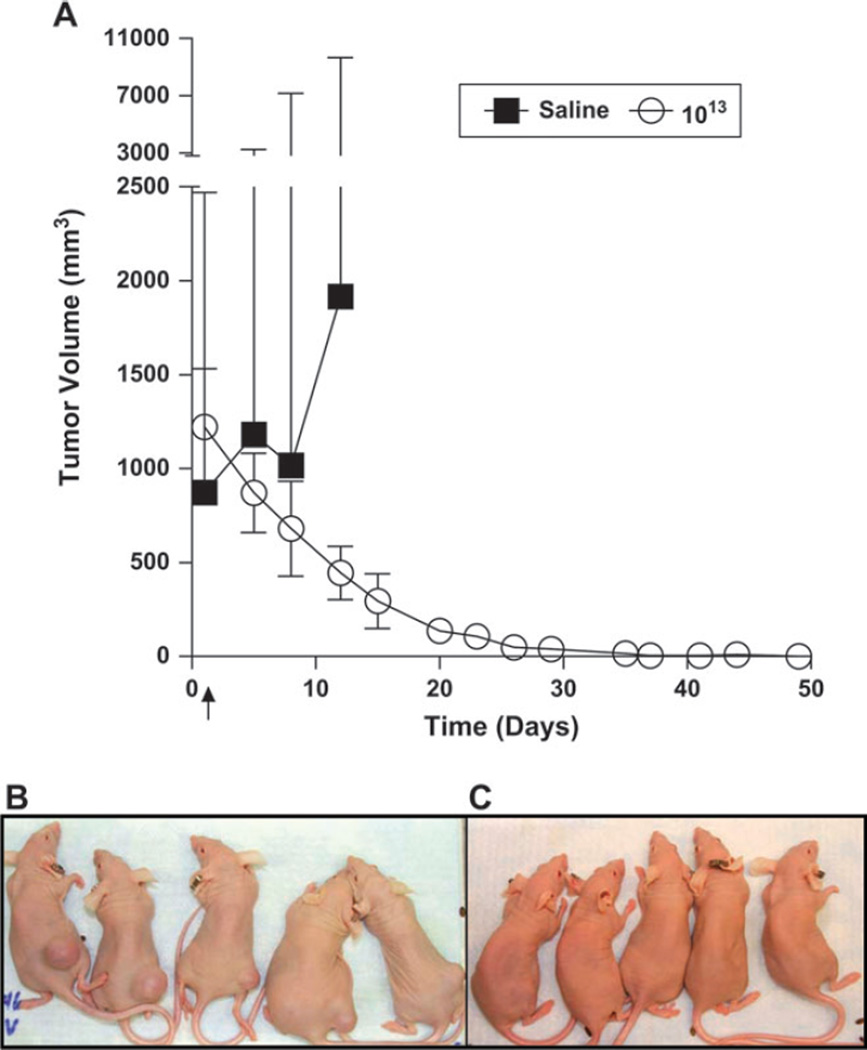
Eradication of large neuroendocrine SCLC H446 xenografts. A single injection of saline vehicle (n = 3) or Seneca Valley Virus-001 (SVV-001) at 1013 virus particles per kg (n = 10) was given to athymic mice bearing large H446 tumors (592–1996 mm3) on study day 1 (denoted by ↑). A) Mean tumor volumes and 95% confidence intervals are plotted as a function of time. B) Tumors on the flanks of mice before treatment. C) Tumors on the flanks of mice 57 days after treatment. Complete tumor regression was observed in all 10 mice treated with SVV-001 but in none of three mice treated with saline (P = .004; twosided, calculated using Fisher’s exact test).
Fig. 6
Fig. 6
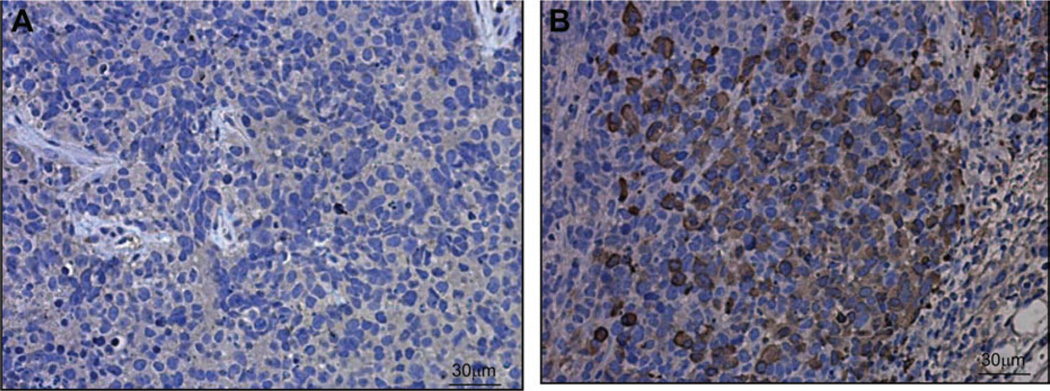
Immunohistochemical analysis of H446 human small-cell lung tumor xenografts from mice that were systemically treated with saline or 109 virus particles (vp) per kg Seneca Valley Virus-001 (SVV-001). Mice were killed 24 hours after injection, and tumor sections were subjected to immunohistochemistry using mouse polyclonal antibody against SVV-001 capsid proteins. Cells that are infected by SVV-001 are indicated by brown intracellular staining. A) Image from a tumor of a mouse injected with saline. B) Image from a tumor of a mouse injected with 109 vp per kg SVV-001. One representative image of three experiments is shown.

References

    1. Kasuya H, Takeda S, Nomoto S, Nakao A. The potential of oncolytic virus therapy for pancreatic cancer. Cancer Gene Ther. 2005;12:725–736. - PubMed
    1. Vidal L, Pandha H, Spicer J, Harrington KJ, Allen S, Leader D, et al. A phase I study of reolysin given intravenously to patients with advanced malignancies. J Clin Oncol. 2006;24:18S.
    1. Pecora AL, Rizvi N, Cohen GI, Meropol NJ, Sterman D, Marshall JL, et al. Phase I trial of intravenous administration of PV701, an oncolytic virus, in patients with advanced solid cancers. J Clin Oncol. 2002;20:2251–2266. - PubMed
    1. Heinzerling L, Kunzi V, Oberholzer PA, Kundig T, Naim H, Dummer R, et al. Oncolytic measles virus in cutaneous T-cell lymphomas mounts antitumor immune responses in vivo and targets interferon-resistant tumor cells. Blood. 2005;106:2287–2294. - PubMed
    1. Lichty BD, Power AT, Stojdl DF, Bell JC. Vesicular stomatitis virus: re-inventing the bullet. Trends Mol Med. 2004;10:210–216. - PubMed

Publication types

MeSH terms

Substances