


New therapies in multiple myeloma
- PMID: 17972050
- PMCID: PMC2779346
- DOI: 10.1007/s10238-007-0134-y
New therapies in multiple myeloma
Abstract
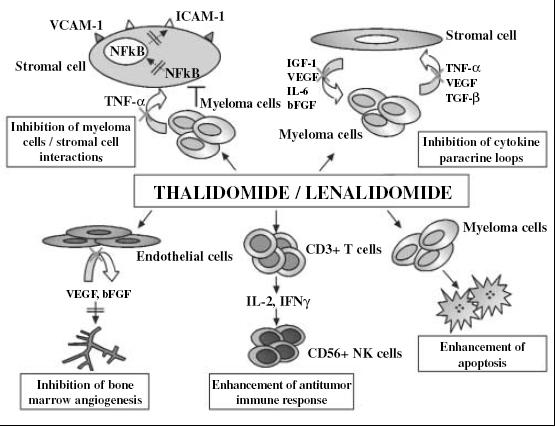
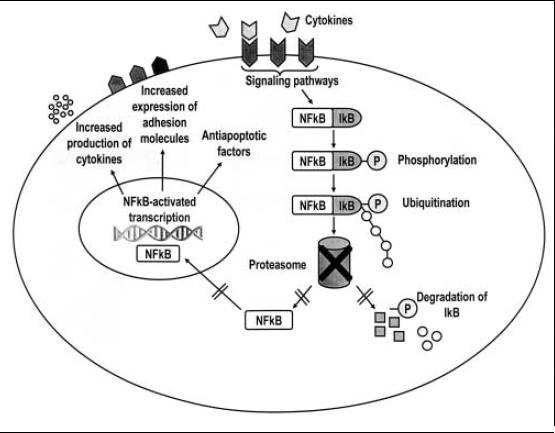
The melphalan-prednisone regimen has been considered as standard therapy for patients with multiple myeloma (MM) for many years. Recently, high-dose chemotherapy with stem-cell support has extended progression-free survival and increased overall survival, and it is now considered conventional therapy in younger patients. However, most patients relapse and the salvage treatment is not very effective. New active drugs, including immunomodulatory agents, thalidomide (Thal) and lenalidomide, and the proteasome inhibitor bortezomib, have shown promising anti-myeloma activity. These novel treatments are aimed at overcoming resistance of tumour cells to conventional chemotherapy, acting both directly on myeloma cells and indirectly by blocking the interactions of myeloma cells with their local microenvironment and suppressing growth and survival signals induced by autocrine and paracrine loops in the bone marrow. Thal has been widely studied, mostly in combination regimens in patients with relapsed MM and, more recently, in front-line therapy, showing efficacy in terms of response rate and event-free survival. Bortezomib has been found to possess remarkable activity, especially in combination with other chemotherapeutic agents, in relapsed/refractory and newly diagnosed MM, as well as in patients presenting adverse prognostic factors. Lenalidomide, in combination with dexamethasone, is showing high overall response rates in relapsed and refractory MM and promising results also in first-line therapy. In this paper, the results of the most significant trials with Thal, bortezomib and lenalidomide are reported. Several ongoing clinical studies will hopefully allow the identification of the most active combinations capable of improving survival in patients with MM.
Figures
References
-
- Riedel DA, Pottern LM (1992) The epidemiology of multiple myeloma. Hematol Oncol Clin North Am 6:225 - PubMed
-
- Kyle RA, Rajkumar SV (2004) Multiple myeloma. N Engl J Med 351:1860–1873 - PubMed
-
- Dammacco F, Perosa F, Procaccio P et al (2001) Mieloma multiplo e gammapatie monoclonali: quadri clinici, acquisizioni eziopatogenetiche e progressi terapeutici. Atti 102° Congr Naz Soc Ital Med Int. Annali Italiani di Medicina Interna 16:5s–40s
-
- Attal M, Harousseau JL, Facon T et al (2003) Single versus double autologous stem-cell transplantation for multiple myeloma. N Engl J Med 349:2495–2502 - PubMed
-
- Child JA, Morgan GJ, Davies FE et al (2003) High-dose chemotherapy with hematopoietic stem-cell rescue for multiple myeloma. N Engl J Med 348:1875–1883 - PubMed
Publication types
MeSH terms
Substances
LinkOut - more resources
Full Text Sources
Other Literature Sources
Medical
