


Survey: retrospective survey of monitoring/safety devices and incidents of cardiopulmonary bypass for cardiac surgery in France
- PMID: 17972449
- PMCID: PMC4680724
Survey: retrospective survey of monitoring/safety devices and incidents of cardiopulmonary bypass for cardiac surgery in France
Abstract
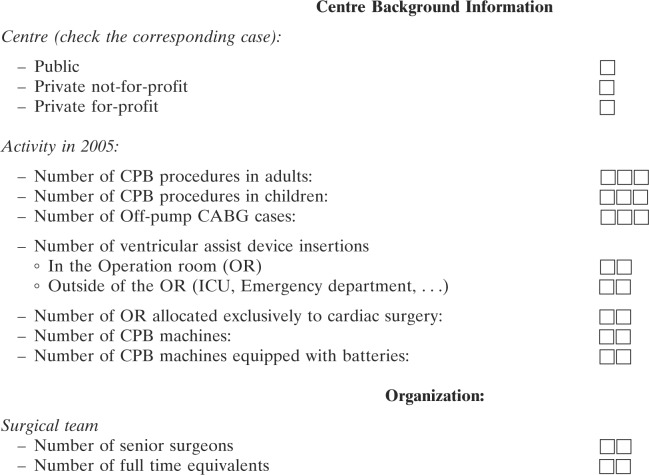
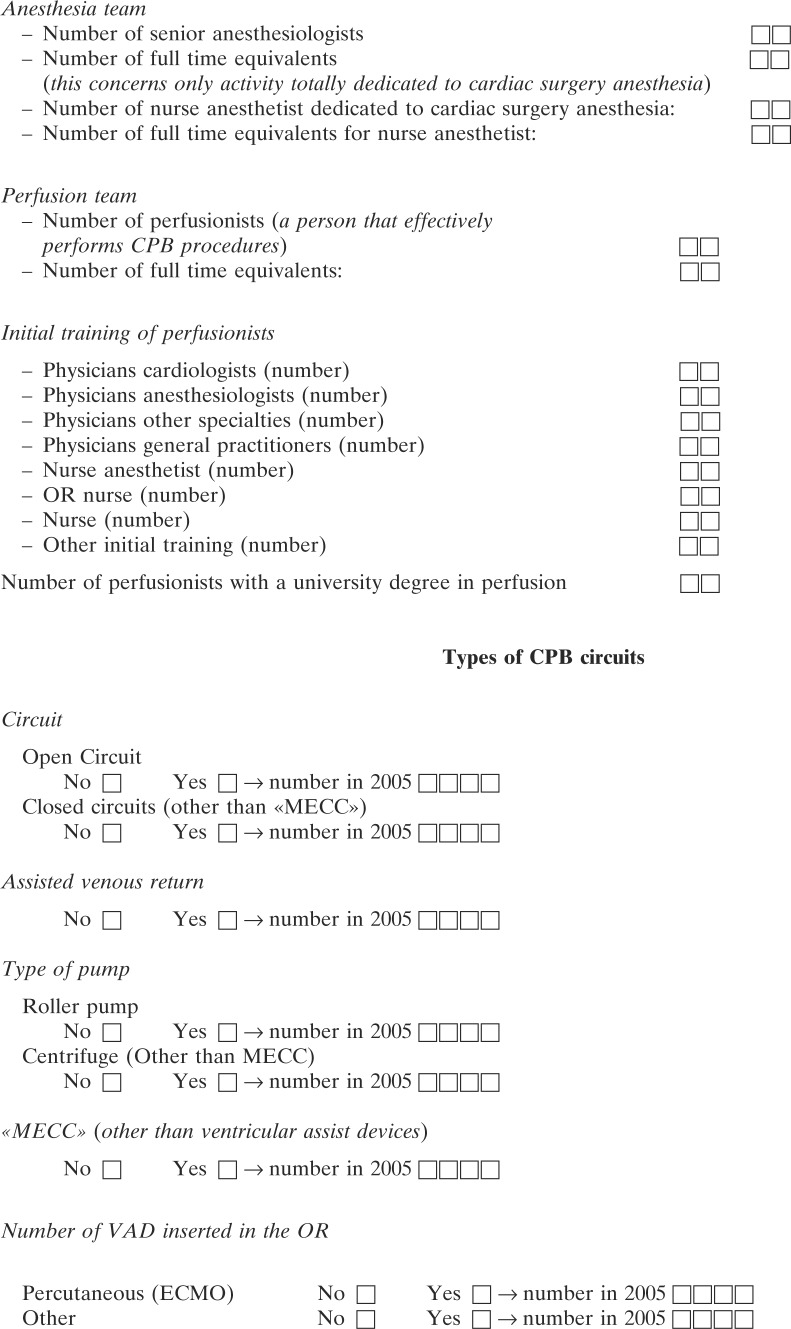
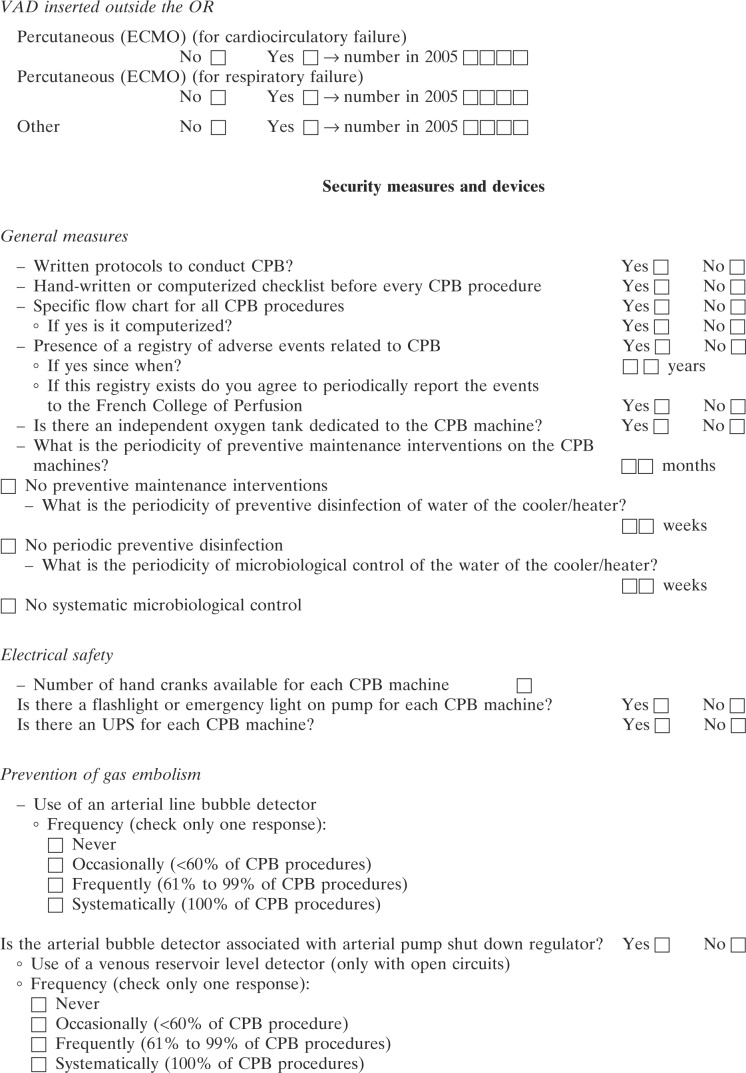
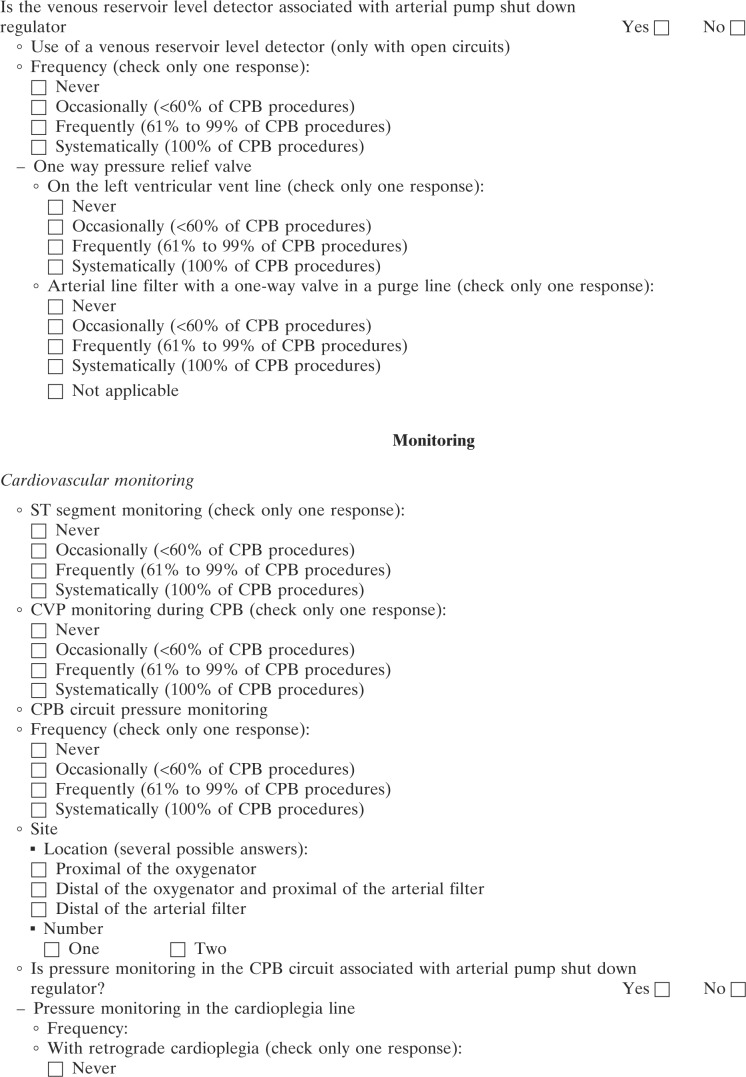
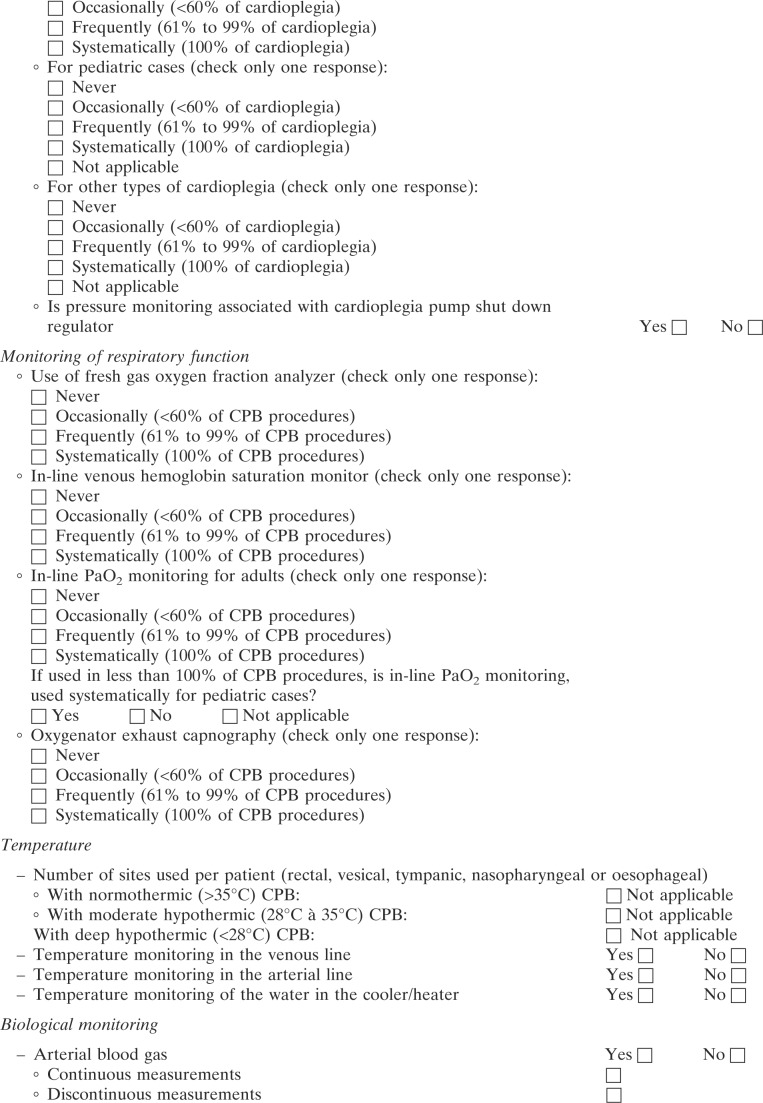
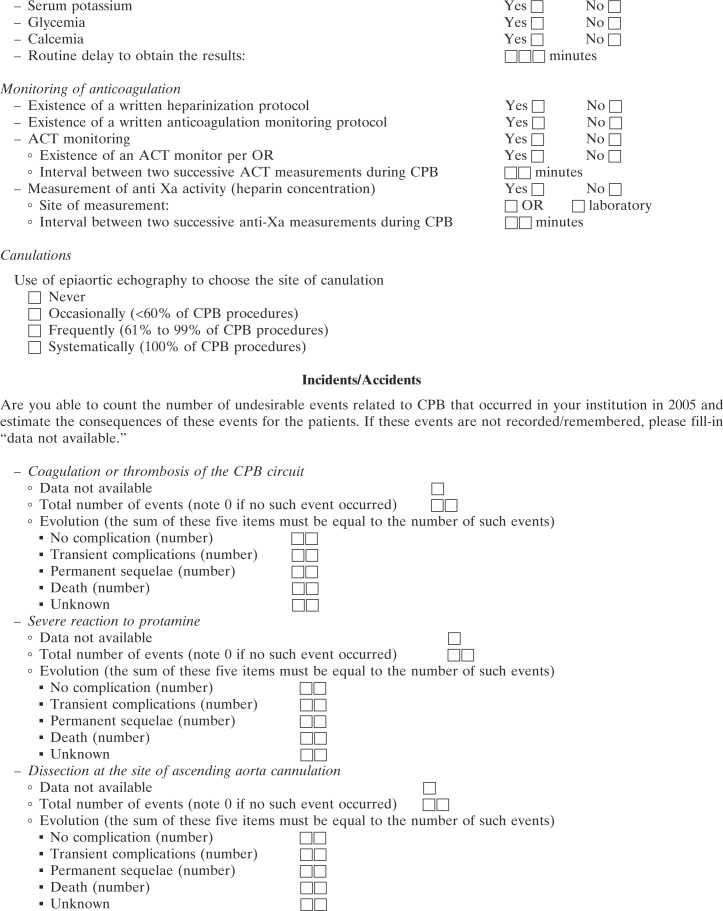
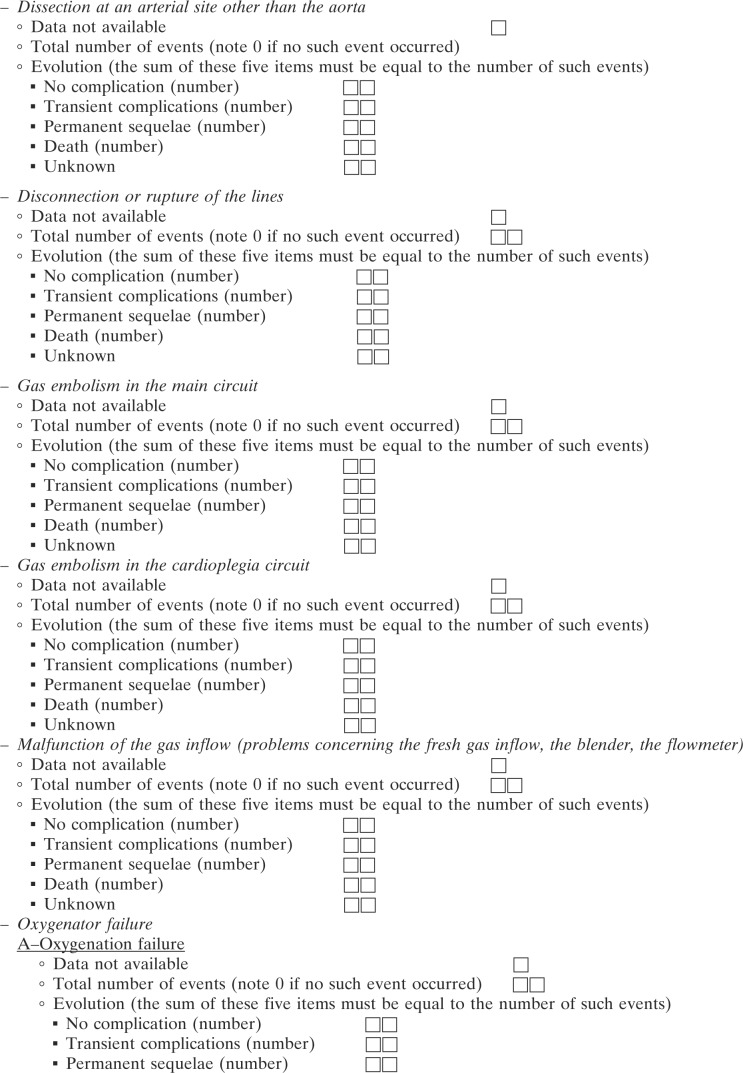
Several surveys showed that cardiopulmonary bypass (CPB) is associated with incidents that negatively affect outcome and suggested that improved monitoring and safety could be associated with a decreased rate of incidents. In 2004, the French "Haute Autorité de Santé" (an independent French government advisory agency) and the French College of Perfusion issued recommendations concerning safety and monitoring devices for CPB. The aims of this study were to investigate the difference between the recommendations and the clinical practice of CPB shortly after publication of the recommendations and compare the 2005 situation with the results of a previous survey performed in France and to investigate the rate of perfusion incidents and their outcome. A 62-item questionnaire was sent in January 2006 to all 66 centers performing cardiac surgery and CPB in France. The survey investigated the use of safety and monitoring devices as well as perfusion incidents for 2005. Fifty-seven centers (response rate, 86%) returned the questionnaire, totaling 34,496 CPB procedures. There was a wide difference between the recommendations and the reported use of safety and monitoring devices with no clinically relevant change from the previous French survey concerning 2001. An incident was reported for every 198 CPB procedures with death at a frequency of 1:4864 and permanent sequelae of 1:11,349, respectively (a permanent injury or death in 1:3220 procedures). The three most frequent perfusion incidents were adverse effects to protamine (1:1702), dissection at the arterial cannulation site (1:1792), and coagulation of the circuit (1:4864). In conclusion, this survey showed that an important effort must be made in France to implement into clinical practice the recommendations concerning CPB monitoring and safety devices. The analysis of CPB-related incidents suggest that, with the exception of protamine adverse effects, the majority of deaths and severe permanent injuries in this survey could probably be avoided by improved use of the monitoring and safety devices.
Conflict of interest statement
The senior editor has reported no material, financial or other relationship with any healthcare-related business or other entity whose products or services are discussed in this paper.
Figures
Comment in
-
Surveys and safety in perfusion practice.J Extra Corpor Technol. 2007 Sep;39(3):139-41. J Extra Corpor Technol. 2007. PMID: 17972448 Free PMC article. No abstract available.
References
-
- Society of Clinical Perfusion Scientists of Great Britain and Ireland. Recommendations for Standards of Monitoring and Alarms During Cardiopulmonary Bypass. Society of Clinical Perfusion Scientists of Great Britain and Ireland; 1988. Available at: http://www.sopgbi.org/perfusionists.html. Accessed July 9, 2007.
-
- American Society of Extra-Corporeal Technology. AmSECT Guidelines for Perfusion Practice. American Society of Extra-Corporeal Technology; 1998. Available at: http://www.amsect.org/index.html. Accessed July 9, 2007.
-
- Australasian Society of Cardio-Vascular Perfusionists. Standards of Clinical Practice of Perfusion for Cardiopulmonary Bypass. Australasian Society of Cardio-Vascular Perfusionists; 2000. Available at: http://www.anzcp.org/Documents/ANZCP%20Regulations.pdf. Accessed July 9, 2007.
-
- Stoney W, Alford WCJ, Burrus G, Glassford DJ, Thomas CJ.. Air embolism and other accidents using pump oxygenators. Ann Thorac Surg. 1980;29:336–40. - PubMed
-
- Wheeldon D.. Can cardiopulmonary bypass be a safe procedure? In: Longmore DB, ed. Towards Safer Cardiac Surgery. Lancaster, UK: MTP; 1981;427–46.
MeSH terms
LinkOut - more resources
Full Text Sources
Medical