


Age-dependent requirement of AKAP150-anchored PKA and GluR2-lacking AMPA receptors in LTP
- PMID: 17972919
- PMCID: PMC2099463
- DOI: 10.1038/sj.emboj.7601884
Age-dependent requirement of AKAP150-anchored PKA and GluR2-lacking AMPA receptors in LTP
Abstract
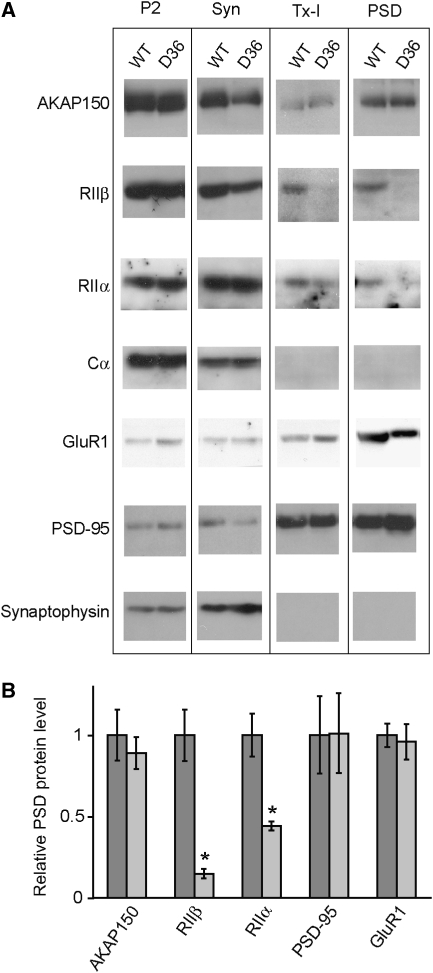
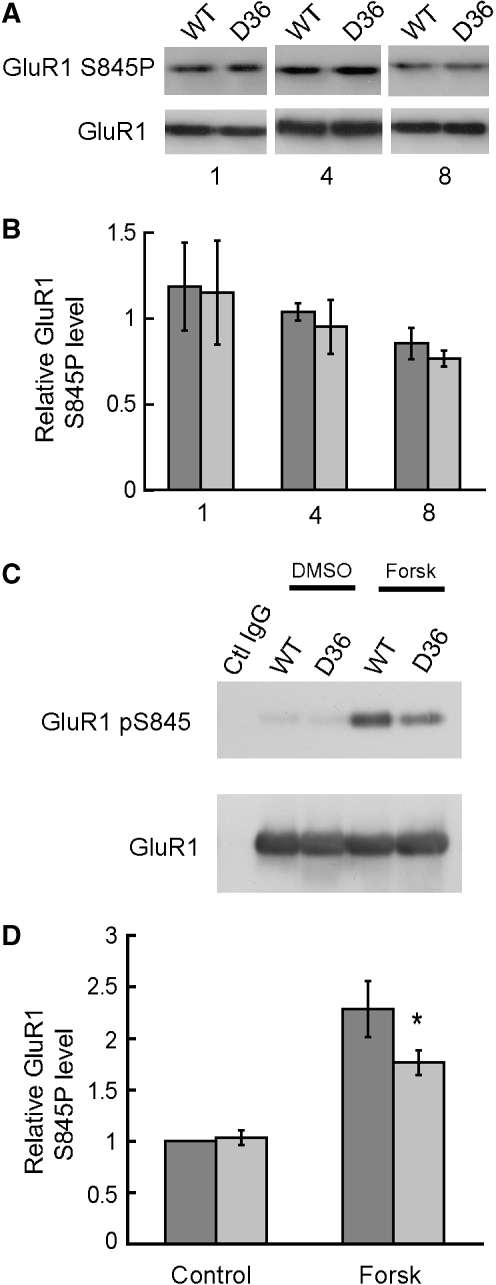
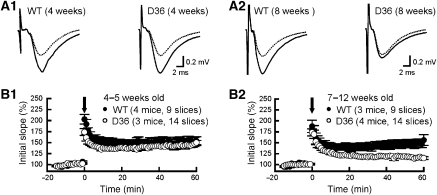
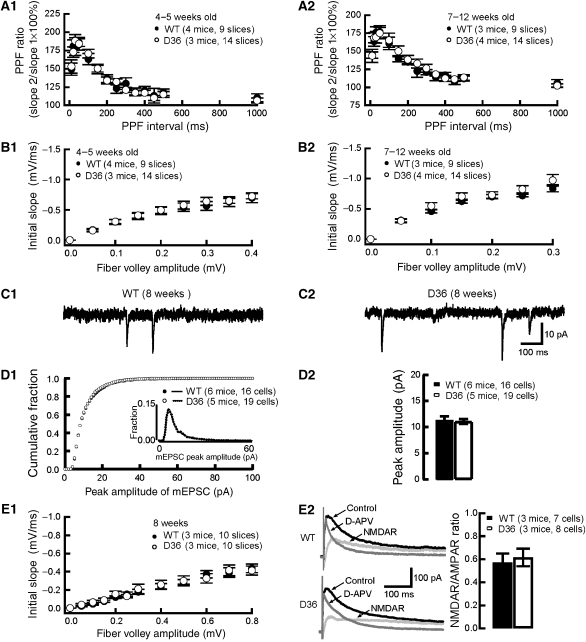
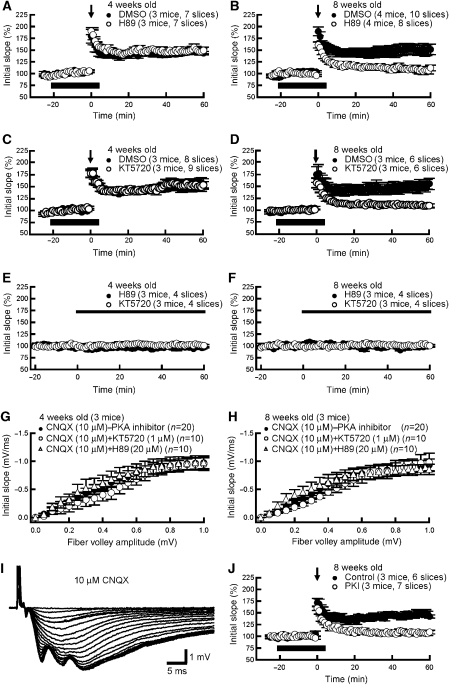
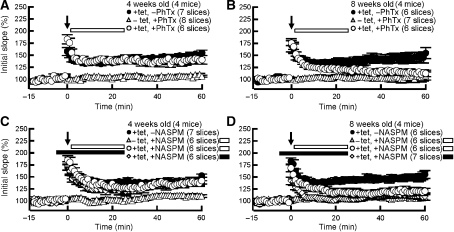
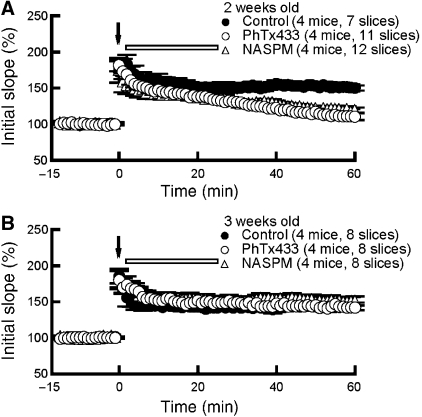
Association of PKA with the AMPA receptor GluR1 subunit via the A kinase anchor protein AKAP150 is crucial for GluR1 phosphorylation. Mutating the AKAP150 gene to specifically prevent PKA binding reduced PKA within postsynaptic densities (>70%). It abolished hippocampal LTP in 7-12 but not 4-week-old mice. Inhibitors of PKA and of GluR2-lacking AMPA receptors blocked single tetanus LTP in hippocampal slices of 8 but not 4-week-old WT mice. Inhibitors of GluR2-lacking AMPA receptors also prevented LTP in 2 but not 3-week-old mice. Other studies demonstrate that GluR1 homomeric AMPA receptors are the main GluR2-lacking AMPA receptors in adult hippocampus and require PKA for their functional postsynaptic expression during potentiation. AKAP150-anchored PKA might thus critically contribute to LTP in adult hippocampus in part by phosphorylating GluR1 to foster postsynaptic accumulation of homomeric GluR1 AMPA receptors during initial LTP in 8-week-old mice.
Figures
References
-
- Bellone C, Luscher C (2006) Cocaine triggered AMPA receptor redistribution is reversed in vivo by mGluR-dependent long-term depression. Nat Neurosci 9: 636–641 - PubMed
-
- Blitzer RD, Connor JH, Brown GP, Wong T, Shenolikar S, Iyengar R, Landau EM (1998) Gating of CaMKII by cAMP-regulated protein phosphatase activity during LTP. Science 280: 1940–1942 - PubMed
-
- Blitzer RD, Wong T, Nouranifar R, Iyengar R, Landau EM (1995) Postsynaptic cAMP pathway gates early LTP in hippocampal CA1 region. Neuron 15: 1403–1414 - PubMed
-
- Boehm J, Kang MG, Johnson RC, Esteban J, Huganir RL, Malinow R (2006) Synaptic incorporation of AMPA receptors during LTP is controlled by a PKC phosphorylation site on GluR1. Neuron 51: 213–225 - PubMed
Publication types
MeSH terms
Substances
Grants and funding
LinkOut - more resources
Full Text Sources
Molecular Biology Databases
