


Neuromodulation of thoracic intraspinal visceroreceptive transmission by electrical stimulation of spinal dorsal column and somatic afferents in rats
- PMID: 17974489
- PMCID: PMC2682554
- DOI: 10.1016/j.jpain.2007.08.007
Neuromodulation of thoracic intraspinal visceroreceptive transmission by electrical stimulation of spinal dorsal column and somatic afferents in rats
Abstract
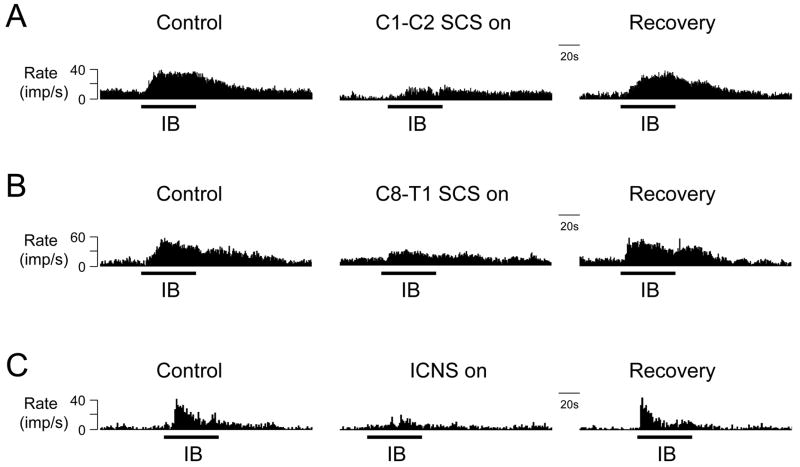
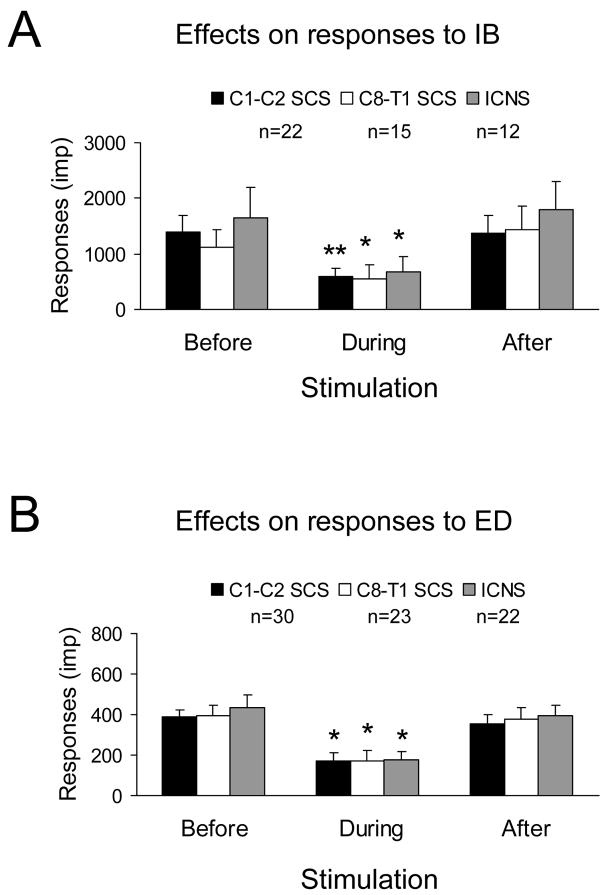
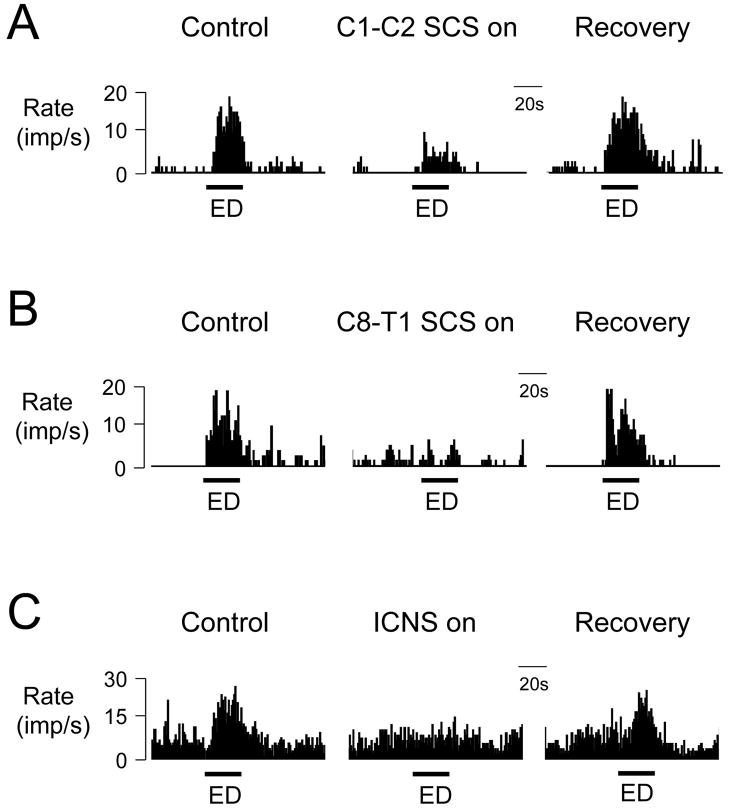
Clinical studies have shown that neuromodulation therapies, such as spinal cord stimulation (SCS) and transcutaneous electrical nerve stimulation (TENS), reduce symptoms of chronic neuropathic and visceral pain. The neural mechanisms underlying SCS and TENS therapy are poorly understood. The present study was designed to compare the effects of SCS and TENS on spinal neuronal responses to noxious stimuli applied to the heart and esophagus. Direct stimulation of an intercostal nerve (ICNS) was used to simulate the effects of TENS. Extracellular potentials of left thoracic (T3) spinal neurons were recorded in pentobarbital anesthetized, paralyzed, and ventilated male rats. SCS (50 Hz, 0.2 ms, 3-5 minutes) at a clinical relevant intensity (90% of motor threshold) was applied on the C1-C2 or C8-T1 ipsilateral spinal segments. Intercostal nerve stimulation (ICNS) at T3 spinal level was performed using the same parameters as SCS. Intrapericardial injection of bradykinin (IB, 10 microg/mL, 0.2 mL, 1 minute) was used as the noxious cardiac stimulus. Noxious thoracic esophageal distension (ED, 0.4 mL, 20 seconds) was produced by water inflation of a latex balloon. C1-C2 SCS suppressed excitatory responses of 16/22 T3 spinal neurons to IB and 25/30 neurons to ED. C8-T1 SCS suppressed excitatory responses of 10/15 spinal neurons to IB and 17/23 neurons to ED. ICNS suppressed excitatory responses of 9/12 spinal neurons to IB and 17/22 neurons to ED. These data showed that SCS and ICNS modulated excitatory responses of T3 spinal neurons to noxious stimulation of the heart and esophagus.
Perspective: Neuromodulation of noxious cardiac and esophageal inputs onto thoracic spinal neurons by spinal cord and intercostal nerves stimulation observed in the present study may help account for therapeutic effects on thoracic visceral pain by activating the spinal dorsal column or somatic afferents.
Figures
References
-
- Armour JA, Linderoth B, Arora RC, DeJongste MJ, Ardell JL, Kingma JG, Jr, Hill M, Foreman RD. Long-term modulation of the intrinsic cardiac nervous system by spinal cord neurons in normal and ischaemic hearts. Auton Neurosci. 2002;95:71–9. - PubMed
-
- Borjesson M, Eriksson P, Dellborg M, Eliasson T, Mannheimer C. Transcutaneous electrical nerve stimulation in unstable angina pectoris. Coron Artery Dis. 1997;8:543–550. - PubMed
-
- Borjesson M, Pilhall M, Eliasson T, Norssell H, Mannheimer C, Rolny P. Esophageal visceral pain sensitivity: effects of TENS and correlation with manometric findings. Dig Dis Sci. 1998;43:1621–1628. - PubMed
-
- Bueno EA, Mamtani R, Frishman WH. Alternative approaches to the medical management of angina pectoris: acupuncture, electrical nerve stimulation, and spinal cord stimulation. Heart Dis. 2001;3:236–241. - PubMed
-
- Cameron T. Safety and efficacy of spinal cord stimulation for the treatment of chronic pain: a 20-year literature review. J Neurosurg. 2004;100:254–267. - PubMed
Publication types
MeSH terms
Grants and funding
LinkOut - more resources
Full Text Sources
Medical
Miscellaneous
